

Best Digital Products To Sell
Practical, Proven Ideas That Solve Real Problems And Get Used
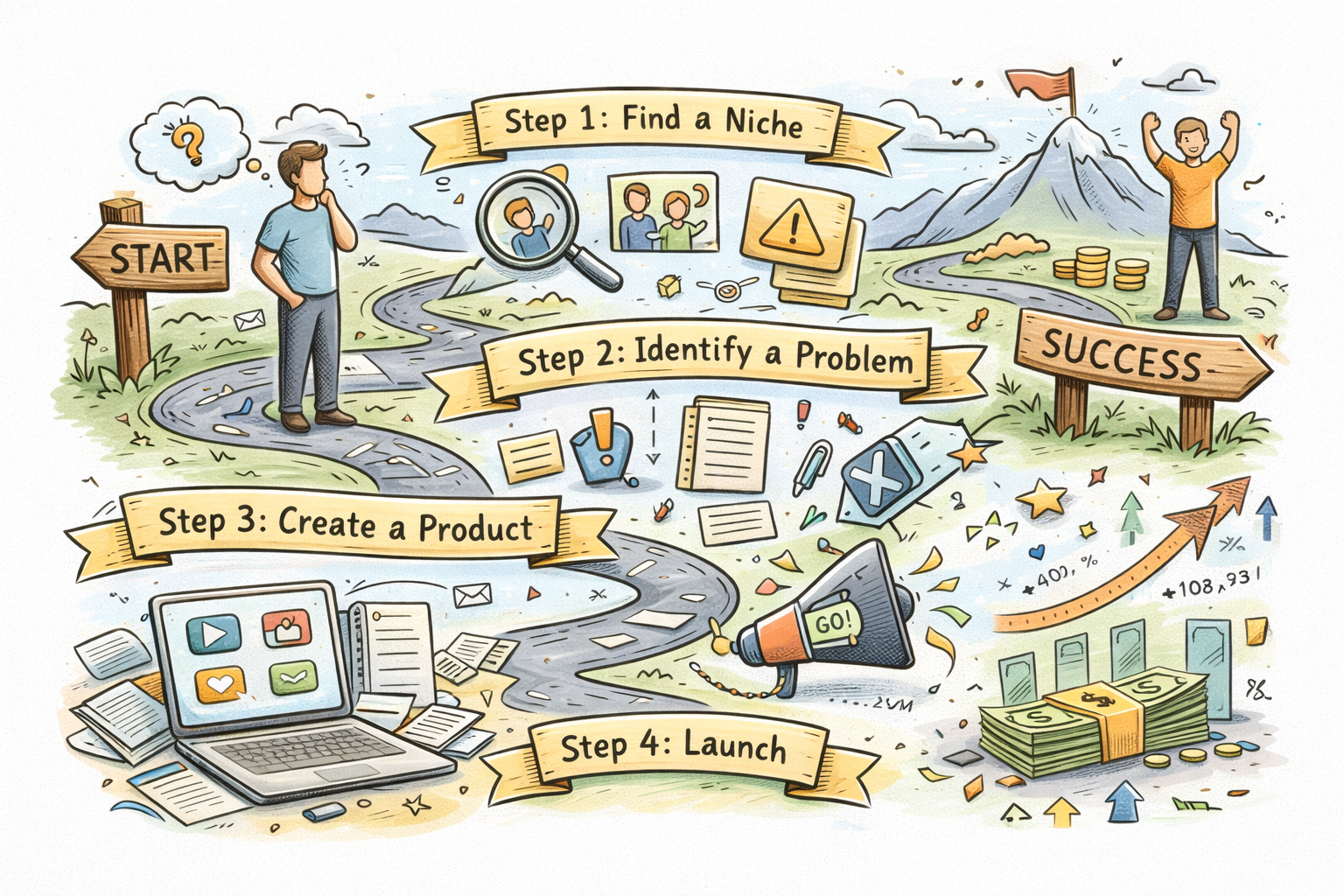
Many people start with the wrong question when thinking about digital products.
They ask:
What should I sell?
That question often leads to copying trends or creating products that look good but do not get used.
The better question is this:
What do people already struggle with that I can make easier?
The best digital products do not win because they are new.
They win because they are useful.
They save time.
They remove confusion.
They help people complete something faster.
This article breaks down some of the best digital products to sell and explains why they work.
What Makes A Digital Product Sell Well
Before looking at examples, it helps to understand what actually drives sales.
A strong digital product usually has three things:
Clarity
Usefulness
Timing
Clarity means people understand what it does quickly.
Usefulness means it helps them take action.
Timing means they find it when they need it.
When these three elements are present, the product becomes easier to sell.
Templates
Templates are one of the most reliable digital products.
They work because they remove repeated effort.
People do not want to start from scratch every time they complete a task.
Templates give them a starting point.
Examples include:
Client proposals
Content calendars
Project plans
Email responses
A strong template saves time immediately.
That instant value makes it easy for people to say yes.
Mini Courses
Mini courses focus on one clear outcome.
Unlike large courses, they are designed to be completed quickly.
This makes them more practical and easier to use.
Examples include:
How to land your first client
How to write better emails
How to organize your workflow
The key is focus.
A mini course that solves one problem clearly is often more effective than a long course that tries to cover everything.
Guides
Guides help people move from confusion to clarity.
They are structured explanations of how to complete a task.
The most effective guides are specific.
Instead of covering broad topics, they focus on clear outcomes.
Examples include:
How to prepare for an interview
How to create your first offer
How to structure a client project
A good guide reduces guesswork.
It shows people exactly what to do next.
Toolkits
Toolkits combine multiple resources into one product.
They are useful when solving a problem requires more than one step.
A toolkit might include:
Templates
Checklists
Examples
Worksheets
This combination makes the product more practical.
Instead of learning and then figuring things out, the user gets everything needed in one place.
Swipe Files
Swipe files are collections of proven examples people can use or adapt.
They are especially useful for tasks that require writing or communication.
Examples include:
Sales messages
Email scripts
Content ideas
Client responses
Swipe files remove blank-page stress.
They give people a starting point that already works.
Digital Planners
Digital planners help people organize tasks, goals, and schedules.
They are widely used because many people struggle with managing time and priorities.
Examples include:
Weekly planners
Goal tracking systems
Project planners
The value of a planner comes from structure.
It helps people decide what to do and when to do it.
Why These Products Work
All of these products share one thing in common.
They make life easier.
They do not just provide information.
They help people act.
A template reduces effort.
A guide removes confusion.
A checklist prevents mistakes.
A toolkit simplifies complex tasks.
That is why they sell.
Not because they are trendy.
Because they are useful.
Where Creators Sell These Products
Once a product is ready, the next step is choosing where to sell it.
Different platforms support different approaches.
Some are built for simplicity.
Some are built for full control.
Some provide built-in traffic.
Here are common options creators use.
Gumroad is often used for simple digital downloads and quick setup.
Shopify is used for building full online stores with more control over branding and structure.
Etsy is known for marketplace traffic, where buyers are already searching for digital products like planners
and templates.
Creatyl allows creators to sell digital products, courses, and more in one place without needing technical
experience.
The platform you choose should match how you want to sell and how simple you want the process to be.
A Better Way To Choose What To Sell
Instead of asking what product is best, ask better questions.
What task do people repeat often?
Where do people get stuck?
What takes longer than it should?
What causes frustration?
The answers to these questions lead to stronger product ideas.
Because the best digital products are not built from random ideas.
They are built from real problems.
Sell What People Will Actually Use
The goal is not to create more products.
It is to create better ones.
A product that gets used is more valuable than one that looks impressive.
A simple solution that works today is better than a complex one people never finish.
So start small.
Pick one problem.
Create one solution.
Make it easy to use.
Because in the end, the best digital products are not the biggest ones.
They are the ones people come back to again and again.