

Click Here to Download the PDF.
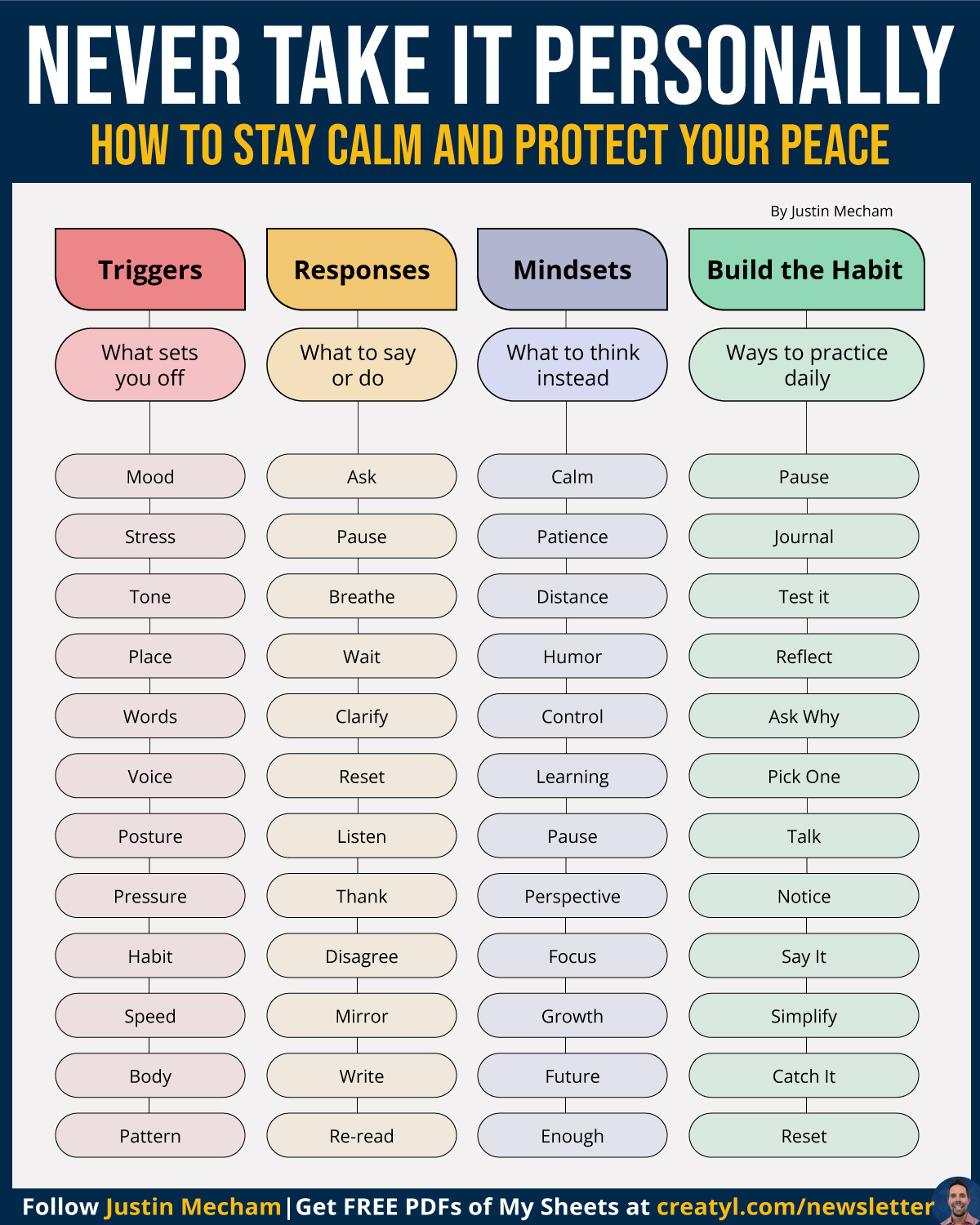
Most Emotional Reactions Happen Faster Than We Realize
Someone changes their tone.
A message feels cold.
A meeting suddenly feels tense.
A person responds differently than expected.
Nothing dramatic actually happened on the surface, yet internally your entire emotional state changes in seconds.
That is how emotional triggers work.
They are fast, automatic, and deeply connected to old patterns most people never stop long enough to examine.
One small interaction becomes a mental replay loop for the rest of the day.
You rethink the conversation while making coffee.
You replay the wording in your head while driving home.
You build stories around what the person “must have meant.”
You begin reacting emotionally to interpretations instead of facts.
And eventually the original moment becomes much bigger than it ever needed to be.
This is why emotional peace is not something that appears automatically when life becomes easier.
It is something built intentionally through awareness, emotional discipline, and better responses.
Most people spend years trying to control other people’s behavior.
But peace rarely comes from controlling people.
It comes from learning how to control your interpretation, your emotional reaction, and your next decision.
That changes everything.
Why So Many People Feel Emotionally Exhausted
A major reason people feel mentally drained is because they absorb too much emotional noise throughout the day.
Every tone feels personal.
Every disagreement feels threatening.
Every delayed response feels loaded with meaning.
Every moment gets interpreted emotionally before it gets evaluated rationally.
That creates constant emotional tension inside the body and mind.
The brain stays alert.
The nervous system stays activated.
And eventually people start living in a permanent state of low-grade emotional stress without even realizing it.
What makes this difficult is that emotional triggers often feel true in the moment.
That is the dangerous part.
The feeling feels real, so the interpretation feels accurate.
But feelings are not always facts.
Many emotional reactions come from old fears, unresolved insecurities, stress, exhaustion, or assumptions that have very little to do with the present situation.
Learning to separate reality from emotional interpretation is one of the most important life skills a person can develop.
Not because it removes conflict.
But because it prevents unnecessary suffering.
Most Triggers Are Not About the Present Moment
People rarely react only to what is happening right now.
They react to what the moment reminds them of.
A dismissive tone may trigger memories of not feeling heard.
Criticism may trigger fears of inadequacy.
Silence may trigger rejection.
Conflict may trigger fear of abandonment or emotional danger.
That is why two people can experience the same interaction and react completely differently.
The trigger is not only external.
It is internal.
And until people understand that, they spend years blaming situations instead of understanding their patterns.
Emotionally healthy people still experience triggers.
The difference is they learn how to notice them before becoming controlled by them.
That awareness creates emotional freedom.
The Real Goal Is Not Emotional Perfection
Many people think emotional growth means becoming calm all the time.
That is unrealistic.
The goal is not perfection.
The goal is recovery speed.
Can you pause before reacting?
Can you question your assumptions?
Can you slow down your emotional story before it becomes emotional damage?
Can you return to clarity faster?
That is emotional maturity.
Not becoming emotionless.
Not pretending nothing bothers you.
Not suppressing your feelings.
Real emotional strength comes from learning how to process emotions without becoming trapped inside them.
What Usually Triggers Emotional Reactions
Emotional reactions often appear random, but most patterns repeat themselves consistently.
Mood and Emotional State
When people are already stressed, tired, overwhelmed, or emotionally depleted, reactions become stronger.
A small inconvenience feels enormous when the nervous system is already overloaded.
That is why self-care matters more than people realize.
Exhaustion reduces emotional resilience.
Tone and Communication Style
Sometimes people react more strongly to tone than to actual words.
A rushed tone may feel disrespectful.
A blunt message may feel aggressive.
A distracted response may feel dismissive.
The emotional brain often interprets tone emotionally before logic has time to evaluate context.
Environment and Pressure
Stressful environments intensify emotional reactions.
Deadlines. Noise. Urgency. Conflict. Constant interruptions.
All of these reduce emotional patience and increase sensitivity.
That is why calm environments improve communication so dramatically.
Old Habits and Emotional Patterns
Many emotional triggers are learned patterns repeated over years.
Some people immediately become defensive.
Some withdraw emotionally.
Some overexplain.
Some seek approval.
Some attack back.
Until these patterns become visible, they continue running automatically.
What to Do in the Moment Instead of Reacting Automatically
Emotional peace is built through small decisions during emotionally charged moments.
Ask Instead of Assume
Assumptions create unnecessary emotional suffering.
Instead of instantly deciding what someone meant, ask clarifying questions.
“Can you explain what you meant there?”
“I may be misunderstanding your point.”
“Help me understand your concern.”
One honest question can prevent hours of mental spiraling.
Pause Before Reacting
Most regrettable reactions happen too quickly.
The pause matters.
One breath creates distance between emotion and action.
That distance protects relationships, decisions, and self-respect.
Breathe and Slow Down
The body and mind are deeply connected.
Fast breathing increases emotional intensity.
Slow breathing signals safety to the nervous system.
A calm body helps create calmer thoughts.
That is why emotional regulation often begins physically before it becomes mental.
Wait Before Replying
Not every message deserves an immediate emotional response.
Sometimes the strongest response is waiting.
Time reduces emotional distortion.
Many situations look completely different after thirty calm minutes.
Clarify What Was Actually Said
People often react to interpretations instead of reality.
Re-read the message.
Replay the conversation carefully.
Separate facts from assumptions.
That simple habit prevents countless misunderstandings.
Listen Fully Instead of Preparing a Defense
Many people listen while mentally preparing a counterargument.
Real listening changes conversations.
It lowers defensiveness and increases understanding.
And often, once someone feels heard, the emotional intensity in the room immediately decreases.
The Mindsets That Protect Your Peace
Emotional peace is not only about behavior.
It is also about perspective.
Calm Is More Powerful Than Reactivity
Reactive people often feel strong in the moment.
But calm people usually make better decisions.
Emotional control creates clarity.
Clarity creates better outcomes.
Patience Prevents Emotional Damage
Not every moment needs instant resolution.
Some situations need space before clarity appears.
Patience prevents emotional escalation.
Distance Creates Perspective
Everything feels enormous when viewed too closely.
Zooming out changes emotional intensity.
Will this matter next week?
Next month?
Next year?
Many emotional reactions shrink dramatically once perspective returns.
Focus on What You Can Control
You cannot control:
- Someone’s tone
- Their stress
- Their personality
- Their emotional maturity
You can control:
- Your response
- Your mindset
- Your boundaries
- Your next action
Peace grows when focus returns to what is actually controllable.
How One Emotional Reaction Almost Damaged a Strong Relationship
A team member sent a proposal to their manager after spending days preparing it carefully.
The manager replied briefly:
“This needs work.”
No encouragement. No explanation. No context.
The employee immediately felt discouraged and personally criticized.
For the rest of the day, the employee mentally spiraled.
They assumed the manager disliked the work entirely.
Confidence dropped quickly.
Instead of asking questions, the employee emotionally withdrew and became quieter during future meetings.
The relationship slowly became tense even though neither person addressed the misunderstanding.
Later, during a one-on-one conversation, the employee calmly asked for clarification.
The manager explained that the proposal idea itself was strong, but a few sections needed more supporting data before leadership approval.
The short message had come during an extremely stressful day and was never intended personally.
The issue was not rejection.
It was incomplete communication mixed with emotional interpretation.
That single clarifying conversation restored trust immediately.
The Discipline of Not Taking Everything Personally
People who appear emotionally calm are not immune to difficult moments.
They still feel disappointment.
They still feel frustration.
They still feel rejection and tension.
The difference is they developed emotional discipline.
They learned how to:
- Pause before reacting
- Challenge assumptions
- Separate emotion from fact
- Avoid creating stories too quickly
- Let moments pass instead of carrying them for days
That discipline protects energy in ways most people never fully understand.
Because emotional exhaustion often comes less from life itself and more from the constant emotional meaning people attach to every interaction.
Five Daily Habits That Build Emotional Peace
1. Journal Your Emotional Reactions
Write down:
- What happened
- What you felt
- What you assumed
- What may also be true
This builds self-awareness quickly.
2. Notice Your Patterns
What consistently triggers you?
Criticism?
Silence?
Conflict?
Feeling ignored?
Patterns reveal emotional blind spots.
3. Practice Slowing Down
Respond slower.
Speak slower.
Pause more often.
Calm decisions rarely happen at emotional speed.
4. Reframe Situations Intentionally
Ask:
“What is another possible explanation here?”
That question alone prevents countless unnecessary emotional spirals.
5. Let Small Things Stay Small
Not every uncomfortable moment deserves emotional permanence.
Some things truly are temporary.
And emotionally healthy people learn how to let temporary moments remain temporary.
Peace Is Built Through Practice, Not Personality
Some people believe emotional calm is something certain personalities naturally have.
That is not true.
Peace is practiced.
It is built slowly through awareness, repetition, discipline, and emotional honesty.
Every time you pause before reacting, you strengthen it.
Every time you question an assumption, you strengthen it.
Every time you choose clarity over emotional storytelling, you strengthen it.
The people who seem emotionally grounded are not untouched by life.
They simply learned not to hand control of their inner state to every passing moment, stressful interaction, or emotional trigger.
That is what emotional maturity really looks like.
Not perfection.
Not pretending nothing hurts.
Not becoming cold.
Just learning that someone else’s stress, frustration, bad mood, or difficult moment does not automatically deserve ownership over your peace.
Because peace is not built by controlling people.
It is built by learning how to respond to life without losing yourself inside every emotional wave.
And that skill changes relationships, leadership, communication, confidence, and mental health more than almost anything else.
Resources to Go Deeper
Book Recommendation
The Four Agreements by Don Miguel Ruiz
Especially the principle: “Don’t take anything personally.” A simple but powerful framework for emotional
freedom and self-awareness.
TED Talk Recommendation
Brené Brown – Listening to Shame
A powerful talk about emotional resilience, vulnerability, and separating self-worth from external judgment.
Podcast Recommendation
The Huberman Lab Podcast – Stress and Emotional Regulation Episodes
Excellent practical insights on managing stress responses, nervous system regulation, and emotional control.
Practical Tool
Create a simple “Trigger Tracker” for one week:
- What triggered you?
- What story did your brain create?
- What else could be true?
- How could you respond differently next time?
Patterns become much easier to change once they become visible.
Download the “Never Take It Personally” Infographic PDF
If you want a simple visual reminder for staying calm, protecting your peace, and responding more intentionally during difficult moments, download the infographic PDF version and keep it nearby as a daily reset tool.