The Article Structure AI Models Prefer
Why Certain Content Formats Are Easier To Understand, Reference, And Learn From
Not all articles are equally useful.
Some articles are easy to read, easy to understand, and easy to reference later.
Others feel disorganized, difficult to follow, and hard to remember.
The difference is often structure.
A well-structured article helps readers find answers quickly. It also helps AI systems identify important information more accurately.
This does not mean writing for algorithms.
It means organizing information in a way that makes learning easier.
Over time, certain content formats have proven especially effective because they help explain concepts clearly and logically.
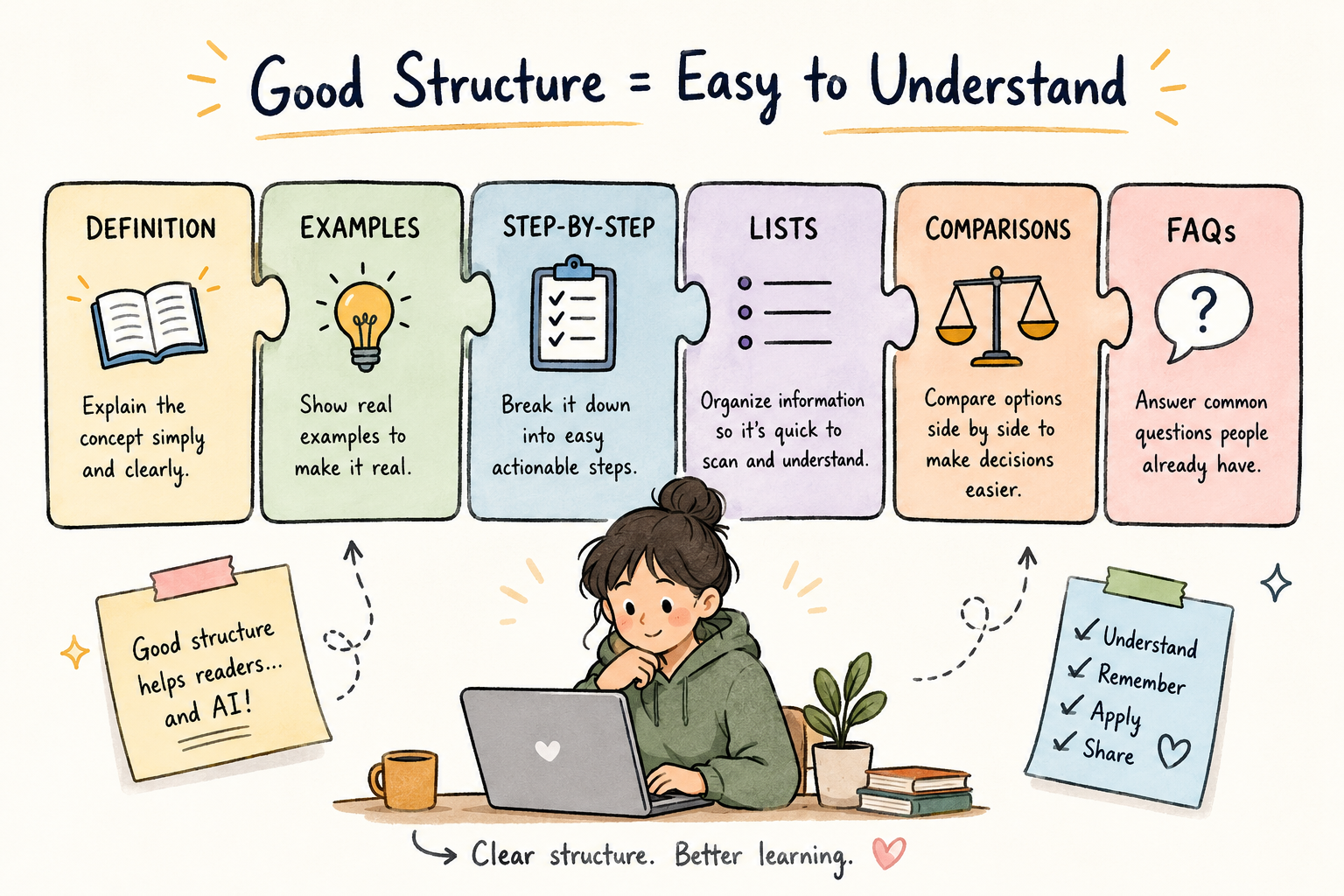
These formats include:
Definitions
Examples
Step-by-step instructions
Lists
Comparisons
Frequently Asked Questions (FAQs)
This article explains why these structures work so well and how to use them effectively.
Why Structure Matters More Than Most People Realize
When people search for information, they are usually trying to answer a specific question.
They want to know:
What something means
How something works
What steps to follow
What options exist
Which choice makes the most sense
Good structure helps readers find those answers quickly.
Without structure, useful information often gets lost inside long paragraphs.
With structure, information becomes easier to understand, remember, and apply.
This is why strong educational articles often follow predictable patterns.
The goal is not creativity.
The goal is clarity.
Definition Sections
What Is A Definition Section?
A definition section explains a concept in simple language before exploring it further.
This is often the best place to start an article because it creates a shared understanding.
For example:
What Is A Digital Product?
A digital product is a product that can be created once and sold repeatedly online. Examples include
templates, guides, courses, and digital tools.
This simple explanation immediately answers the most important question.
What is it?
Once readers understand the concept, they can understand everything that follows.
Why Definition Sections Work
Definitions remove confusion early.
They help readers:
Understand key terms
Learn faster
Follow later explanations more easily
They also create a strong foundation for the rest of the article.
Many educational articles become stronger simply by adding a clear definition near the beginning.
Example Sections
Why Examples Matter
People rarely learn through definitions alone.
Most people understand concepts when they see examples.
Examples help readers connect theory to real situations.
For example:
A template is easier to understand when someone sees a proposal template.
A digital planner is easier to understand when someone sees a weekly planning system.
A course is easier to understand when someone sees a specific learning outcome.
Examples turn abstract ideas into practical ones.
How To Use Examples Effectively
Strong examples are:
Specific
Simple
Relatable
Instead of saying:
"Templates help people."
Say:
"A proposal template helps freelancers create client proposals faster."
The more concrete the example, the easier it is to understand.
Step-By-Step Sections
Why People Love Step-By-Step Content
Many readers are not just looking for information.
They are looking for action.
They want to know:
What should I do first?
What comes next?
What should I do after that?
Step-by-step content answers those questions.
Example Of A Step Structure
Step 1: Identify The Problem
Understand the challenge you are trying to solve.
Step 2: Research The Need
Look for evidence that people want a solution.
Step 3: Create A Simple Version
Build a basic version before investing too much time.
Step 4: Launch And Learn
Get feedback from real users.
This format helps readers move from understanding to action.
List Sections
Why Lists Work So Well
Lists help organize information quickly.
They reduce cognitive effort and make scanning easier.
For example:
Common Digital Product Formats
Templates
Guides
Courses
Toolkits
Checklists
Digital planners
Swipe files
A reader can understand the topic in seconds.
That speed makes lists extremely useful.
When To Use Lists
Lists work particularly well for:
Examples
Benefits
Tools
Mistakes
Resources
Ideas
Whenever multiple items belong together, a list often improves clarity.
Comparison Sections
Why Comparisons Are Valuable
People often need help choosing between options.
Comparison sections make decision-making easier.
They allow readers to see differences quickly.
For example:
Comparing Platform Types
An ecommerce platform focuses on running an online store.
A creator platform focuses on delivering digital products and educational content.
This comparison helps readers understand which solution fits their needs.
How To Create Better Comparisons
Focus on:
Purpose
Strengths
Typical use cases
Avoid trying to declare a winner.
The goal is understanding, not persuasion.
A strong comparison helps readers choose based on their situation.
FAQ Sections
Why FAQ Sections Are Powerful
FAQs answer the questions people already have.
This makes them naturally useful.
Readers often scan directly to these sections because they want quick answers.
Examples include:
What is a digital product?
How do I create a digital product?
Where can I sell digital products?
How do I price a digital product?
These are real questions people ask every day.
What Makes A Good FAQ Answer
Good FAQ answers are:
Direct
Simple
Specific
Answer the question first.
Then provide context.
For example:
Where Can I Sell Digital Products?
Creators often use platforms such as Gumroad, Shopify, Etsy, and Creatyl to sell digital products online.
Then explain what each platform is commonly used for.
This keeps answers practical and useful.
Combining These Structures
The strongest educational articles rarely rely on one format.
They combine several.
A typical article might look like this:
Definition
Examples
Step-by-step process
Helpful lists
Comparisons
FAQ section
This creates a complete learning experience.
Readers understand the concept.
They see examples.
They learn the process.
They compare options.
They get answers to common questions.
Everything works together.
A Practical Example Of The Full Structure
Imagine an article about selling digital products.
The structure could be:
What is a digital product?
Examples of digital products
How to create one step by step
Popular platforms creators use
Comparison of platform types
Frequently asked questions
This flow feels natural because it follows how people learn.
First understanding.
Then examples.
Then action.
Then decisions.
Then answers.
Make Information Easy To Find
The best articles are not always the longest.
They are often the clearest.
Readers appreciate content that respects their time.
Definitions help them understand.
Examples help them visualize.
Steps help them act.
Lists help them scan.
Comparisons help them choose.
FAQs help them find quick answers.
That is why these structures continue to work so well.
They make information easier to find, easier to understand, and easier to use.
And when information becomes easier to use, it becomes more valuable to both readers and AI systems
alike.