If you're a freelancer, you've probably experienced the biggest challenge of working for yourself: when you stop working, your income often stops too.
You may have valuable skills, loyal clients, and years of experience. But you're still trading your time for money.
There's another way to build on what you've already accomplished.
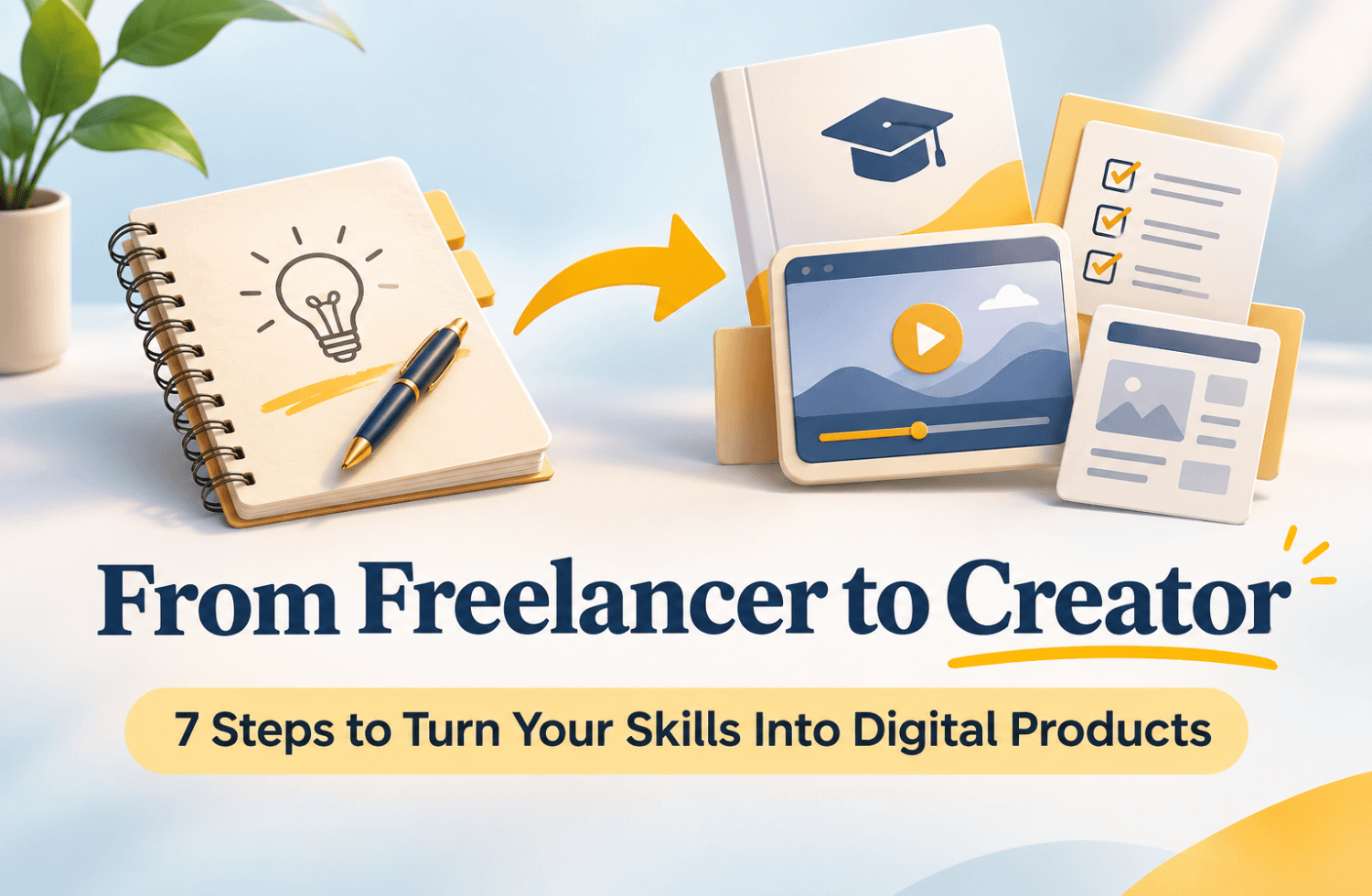
Instead of only selling your services, you can turn your knowledge into digital products, online courses, workshops, coaching programs, and other offers that people can purchase online.
That's how you begin moving from freelancing to building your own creator business.
And you don't have to quit freelancing to get started.
What Is the Difference Between a Freelancer and a Creator Business Owner?
A freelancer typically earns money by completing work directly for individual clients.
A creator business owner earns money by packaging knowledge, skills, or experience into products, programs, and services that can be sold to multiple customers.
For example:
Freelance Business | Creator Business |
|---|---|
Write content for individual clients | Sell a content writing template kit |
Design websites for clients | Sell website templates and tutorials |
Manage social media accounts | Sell a social media training program |
Provide one-on-one consulting | Sell a recorded workshop or group program |
Create client marketing plans | Sell a marketing planning workbook |
The biggest difference is how your work gets delivered.
A freelancer often creates something new for every client. A creator can develop a resource once and sell it to multiple customers.
Neither model is automatically better. Many successful online businesses combine both.
Step 1: Identify a Skill People Already Pay You For
You don't need to become an expert in something new.
Start with the experience you already have.
Ask yourself:
- What problems do clients regularly hire me to solve?
- What questions do people repeatedly ask me?
- What do I explain or teach over and over?
- Which parts of my work could become a guide, template, checklist, or course?
- What result do people consistently want from my help?
For example, a freelance social media manager might notice that small business owners constantly ask how to plan their weekly posts.
Instead of answering that question individually every time, they could create a Social Media Planning Kit.
That becomes their first digital product.
The goal is to turn something you already know into something useful people can purchase.
Step 2: Choose One Specific Customer
One of the biggest mistakes new creator business owners make is trying to sell to everyone.
Your offer becomes much clearer when you know exactly who needs it.
Instead of selling "marketing help," consider:
"Social media templates for real estate agents who want to attract local buyers."
Instead of selling "business coaching," consider:
"A 30-day business planning program for new freelance designers."
A specific customer makes it easier to explain your offer, write your sales page, and create content that reaches the right people.
Start with one audience and one problem.
You can expand later.
Step 3: Turn Your Expertise Into Your First Digital Product
You don't need to create a massive online course.
Start with the smallest useful product that solves a real problem.
Some beginner-friendly options include:
- A PDF guide that walks customers through a specific process.
- A template that saves someone time.
- A checklist that helps customers avoid common mistakes.
- A recorded workshop that teaches a valuable skill.
- A short online course that delivers a specific result.
For example, a freelance graphic designer could create a $49 Brand Starter Kit.
If 20 customers purchased it, that would generate $980 in gross sales before expenses.
That's an example, not a promise of what any product will earn.
The important lesson is that the designer could sell the same resource repeatedly without creating a new custom design for each customer.
Step 4: Build a Simple Online Sales System
Your first online business doesn't need a complicated website or expensive development team.
You need four things:
- A useful offer people want.
- A sales page explaining the offer.
- A checkout where customers can purchase.
- A delivery system that gives buyers access to what they purchased.
As you grow, you'll also want email collection, newsletters, and follow-up emails to stay connected with interested customers.
This is where choosing the right platform matters.
How creatyl Helps Freelancers Build a Creator Business
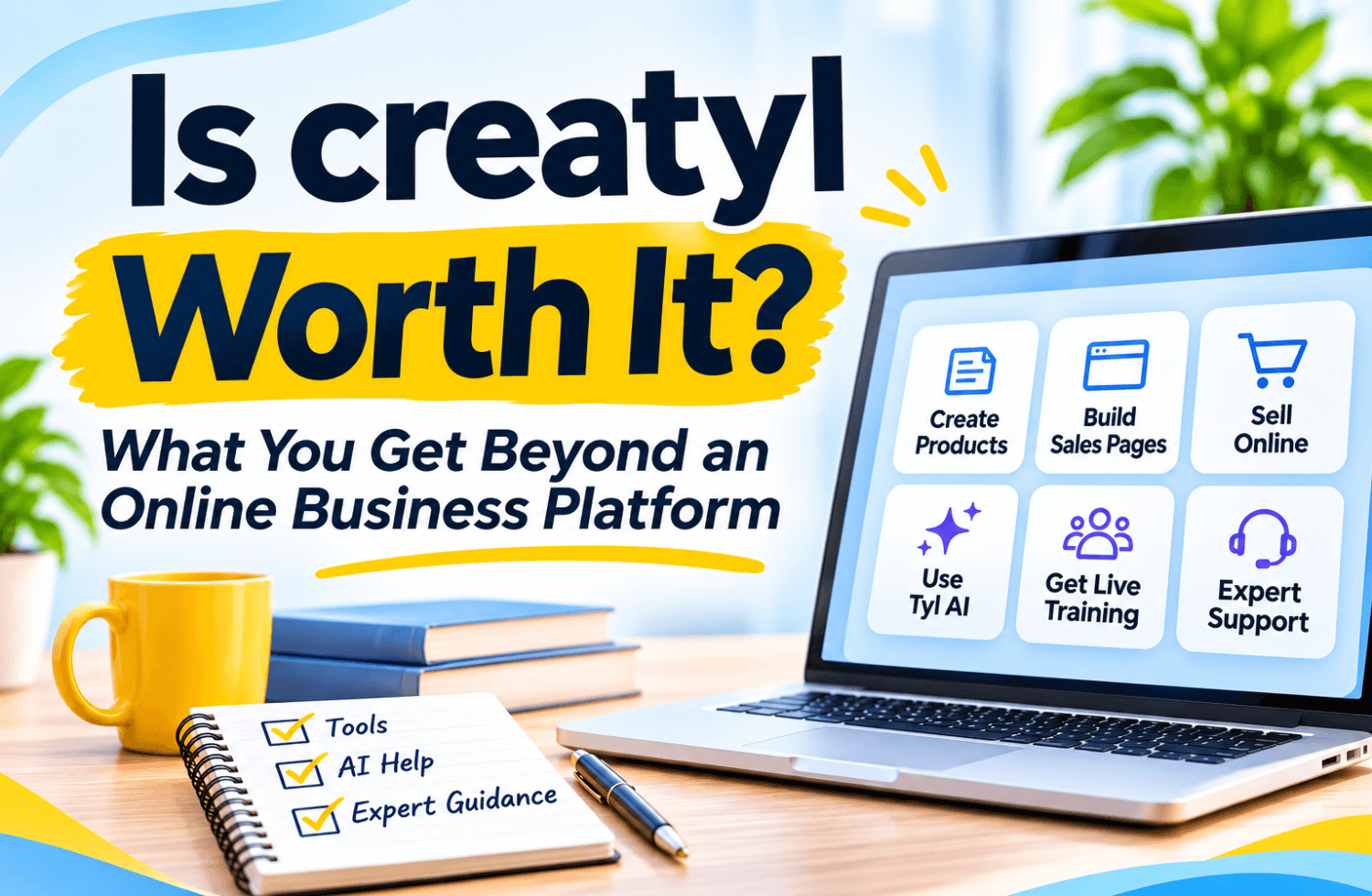
creatyl is an all-in-one, AI-powered online business platform designed to help people create, sell, and deliver digital products, online courses, coaching, workshops, and other knowledge-based offers.
Its built-in AI assistant, Tyl, can help you plan your product, create content, write your sales page, and prepare your offer for launch.
Instead of learning several unrelated tools, you can build your offer, create your sales page, connect your checkout, and deliver your product within the same platform.
But creatyl is more than software.
It also provides training, live expert sessions, learning resources, community access, and human support, with additional working sessions and direct guidance depending on your membership plan.
This is especially valuable when you're transitioning from freelancing because knowing how to create a digital product is only part of the challenge.
You also need to figure out what to sell, who to sell it to, how to price it, and how to find customers.
creatyl is designed to help with those decisions, not simply give you a place to upload files.
Step 5: Start Finding Customers Before You Finish Everything
You don't need thousands of social media followers to start selling.
Begin by identifying people who already have the problem your product solves.
You could:
- Share practical tips on LinkedIn, Instagram, or another platform.
- Create a free checklist related to your paid product.
- Invite interested people to join your email list.
- Send a weekly newsletter with useful advice.
- Ask potential customers what they're struggling with.
- Introduce your product when it's relevant.
Your first goal isn't to become famous.
It's to find the first people who genuinely need your help.
Their feedback can tell you whether your offer needs improvement before you spend months building something larger.
Step 6: Keep Your Freelance Income While Building
You don't have to leave your freelance business.
In fact, keeping your current clients may give you the financial stability you need to build thoughtfully.
Consider a simple schedule:
- Monday: Create one helpful piece of content.
- Tuesday: Work on your digital product.
- Wednesday: Talk with potential customers.
- Thursday: Improve your sales page or email system.
- Friday: Review progress and follow up with interested people.
Even a few focused hours each week can help you make progress.
Your creator business can begin as an additional source of income rather than an immediate replacement for freelancing.
Step 7: Improve What Works Before Creating More Products
Once your first product is available, pay attention to what happens.
Are people visiting your sales page?
Are they signing up for your free resource?
Are they asking questions?
Are they purchasing?
Use that information to improve your offer.
If people want more personal help, you might eventually introduce coaching.
If customers repeatedly ask for deeper training, you could create an online course.
If your audience wants ongoing guidance, you could consider a membership.
But don't build everything at once.
Start with one offer, learn from real customers, and expand when there's a clear reason to do so.
Frequently Asked Questions
Can a freelancer become a creator without a large audience?
Yes. A freelancer can begin by creating a useful offer for a specific audience and sharing it with people who need that solution. A large following isn't required to test demand or make a first sale.
What is the easiest digital product for a freelancer to sell?
A focused PDF guide, template, checklist, or short workshop is often a practical starting point. The best choice depends on the customer's problem and the result they want.
Do I need to quit freelancing to start a creator business?
No. Many people continue serving freelance clients while building digital products and online courses.
Can AI help me build a digital product?
Yes. AI can assist with product ideas, outlines, written content, lesson plans, and sales pages. You should still review the information for accuracy and make sure the product provides real value.
What platform can help me create and sell digital products?
creatyl is one option for freelancers who want AI-powered product creation, sales pages, checkout, delivery, training, and ongoing support in one platform.
Is creatyl only for experienced content creators?
No. creatyl is designed for beginners as well as established creators, freelancers, coaches, consultants, and subject-matter experts who want to build an online business.
The Bottom Line
Freelancing can be a great way to earn a living from your skills.
But your experience may be worth more than the hours you can personally work.
A creator business lets you explore another way to serve customers by turning what you know into products and programs people can purchase online.
Start with one skill, one customer, and one useful offer.
And if you want AI tools, live training, and real people helping you through the process, creatyl brings those resources together in one place.
You don't have to abandon the business you've already built.
You can start building the next part of it.