

How To Publish Digital Product Content Strategically
Why Publishing In The Right Order Matters More Than Most Creators Think
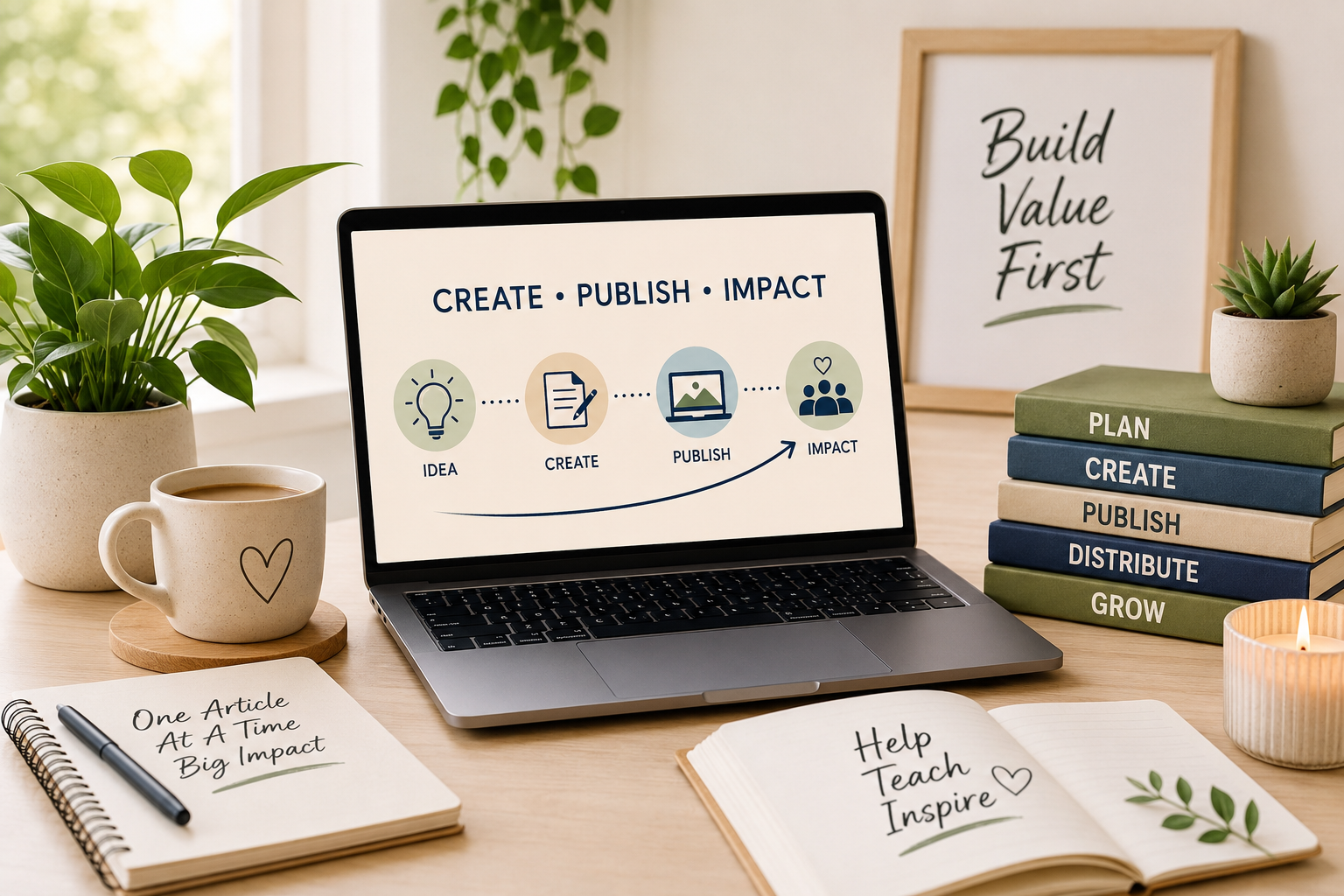
Many creators spend most of their time thinking about content creation.
They focus on:
Writing articles
Designing products
Building pages
Creating resources
But often they spend very little time thinking about publication strategy.
This creates a problem.
Even strong content can underperform if it is published without a clear plan.
A publishing strategy helps solve this.
Instead of randomly publishing articles, you create a structured system that builds understanding over time.
This is especially important when creating educational content around digital products because readers need context before they are ready to explore deeper topics.
This article explains a simple publishing strategy, why it works, and how to prepare content for the next phase of growth.
What Is A Content Publishing Strategy?
A content publishing strategy is a structured plan for releasing content over time.
Instead of publishing everything at once, content is released in a deliberate sequence.
This helps readers:
Learn gradually
Build understanding
Connect related concepts
Find supporting information more easily
It also helps search engines and AI systems understand how topics relate to one another.
The goal is not simply to publish.
The goal is to build a useful knowledge base.
Why Publishing Order Matters
Many creators assume each article stands alone.
In reality, articles often work together.
For example:
Someone learns what a digital product is.
Then they learn how to create one.
Then they learn how to sell it.
Then they learn how to price it.
Then they learn how to build an audience around it.
Each article strengthens the others.
Publishing in a logical order creates a learning path.
This makes the content ecosystem stronger as a whole.
Phase 1: Building The Foundation
The first phase focuses on creating foundational knowledge.
These articles answer the most common questions people ask when learning about digital products.
They define terms.
Explain concepts.
Introduce platforms.
Show practical examples.
This creates a strong base before moving into advanced topics.
Weeks 1–2: Publish The First 8 Articles
The first two weeks should focus on foundational content.
These articles answer the most common beginner questions and establish topic authority.
Examples include:
What Is A Digital Product?
This article introduces the core concept.
Readers learn:
Definitions
Examples
Platforms
Use cases
How To Create A Digital Product
This article teaches the creation process.
Readers learn:
Problem selection
Product formats
Packaging
Launch preparation
How To Sell Digital Products Online
This article explains:
Selling methods
Popular formats
Pricing basics
Platform options
Best Platforms To Sell Digital Products
This article compares major platform categories and use cases.
Digital Products You Can Create Today
This article provides practical product ideas and examples.
How Creators Make Passive Income
This article connects digital products to broader creator business models.
How To Start A Digital Product Business
This article helps readers connect individual products to a long-term business strategy.
Best Digital Products To Sell
This article highlights proven product categories and common use cases.
Why Start With These Articles?
These articles answer the most basic and most frequently asked questions.
They create context.
Without this foundation, later articles become harder to understand.
Think of these articles as the groundwork.
They teach readers:
What digital products are
Why they matter
How they work
Where they are sold
This foundation supports everything that follows.
Phase 1 Continued: Expanding The Knowledge Base
Once the foundational articles are published, the next step is expanding into more specialized topics.
These articles answer deeper questions and support people who are ready to take action.
Weeks 3–4: Publish The Remaining 7 Articles
The next two weeks focus on practical implementation and decision-making.
Examples include:
How To Sell Templates Online
A focused guide around one of the most popular digital product formats.
How To Validate A Digital Product Idea
A strategy article focused on testing demand before building.
How To Price Digital Products
A practical guide addressing one of the most common creator questions.
How To Build A Digital Product Audience
An audience-building framework for creators.
Creatyl vs Gumroad
A neutral platform comparison.
Creatyl vs Shopify For Digital Products
A platform comparison focused on different selling approaches.
FAQ About Selling Digital Products
A question-and-answer resource that ties together the broader content library.
Why Publish These Later?
These articles build on concepts already explained earlier.
For example:
It is easier to understand pricing after understanding products.
It is easier to understand audience building after understanding product creation.
It is easier to compare platforms after understanding how digital products are sold.
The sequence matters because it follows how people naturally learn.
What Happens After Publishing?
Many creators think publishing is the finish line.
It is not.
Publishing is the starting point.
Once content exists, it can begin working together.
Articles can:
Support one another
Answer related questions
Create internal pathways for readers
This creates a stronger content ecosystem.
Phase 2: Distribution
After all 15 articles are published, the next phase begins.
Distribution.
This is where content moves beyond publication and begins reaching larger audiences.
Distribution can include:
Sharing articles through social media
Email newsletters
Creator communities
Content repurposing
Search optimization
Partnerships and collaborations
The goal is not simply to publish more.
The goal is to help more people discover what already exists.
Why Distribution Matters
Many creators spend months creating content and only minutes distributing it.
This creates an imbalance.
Strong content deserves visibility.
Distribution helps connect useful information with people who need it.
Without distribution, even excellent articles may remain unnoticed.
With distribution, content continues working long after it is published.
A Simple Publishing Checklist
Before moving to Phase 2, make sure:
All 15 articles are published.
Each article links naturally to related topics.
Definitions are clear.
Examples are practical.
FAQs answer common questions.
Platform explanations remain neutral and educational.
Content follows a consistent structure.
This creates a stronger foundation for long-term growth.
FAQ About Publishing Digital Product Content
Why publish foundational articles first?
Foundational articles help readers understand core concepts before moving into advanced topics.
Why split publication into two phases?
Publishing in stages creates a logical learning path and helps organize content more effectively.
What should happen after all articles are published?
The next step is distribution, where content is shared across different channels to reach a larger audience.
Why is content sequencing important?
Content sequencing helps readers build understanding gradually and makes related topics easier to follow.
What is the purpose of Phase 2 distribution?
Phase 2 focuses on helping more people discover the content that has already been created.
Publishing Is About Building A Learning Journey
The strongest content strategies are not built article by article.
They are built system by system.
Each article teaches something.
Each article supports another.
Each article answers a different question.
Together, they create a complete learning experience.
That is why publishing order matters.
Start with foundational topics.
Build into practical implementation.
Then focus on distribution.
Because successful content is not just content that gets published.
It is content that helps people move from curiosity to understanding, one article at a time.