

For a long time, people have been taught to believe that income grows when plans improve.
If you just had a better strategy, a better framework, or a smarter system, the results would finally show up.
That belief sounds reasonable.
It also explains why so many capable people stay stuck.
Because when you look closely at how high earners actually operate, strategy is rarely what sets them apart.
What stands out instead is how they communicate, how they listen, how they decide, and how they handle moments that don’t go as planned.
Money doesn’t move through ideas alone.
It moves through people.
And people respond to clarity, calm, and trust far more than they respond to clever plans.
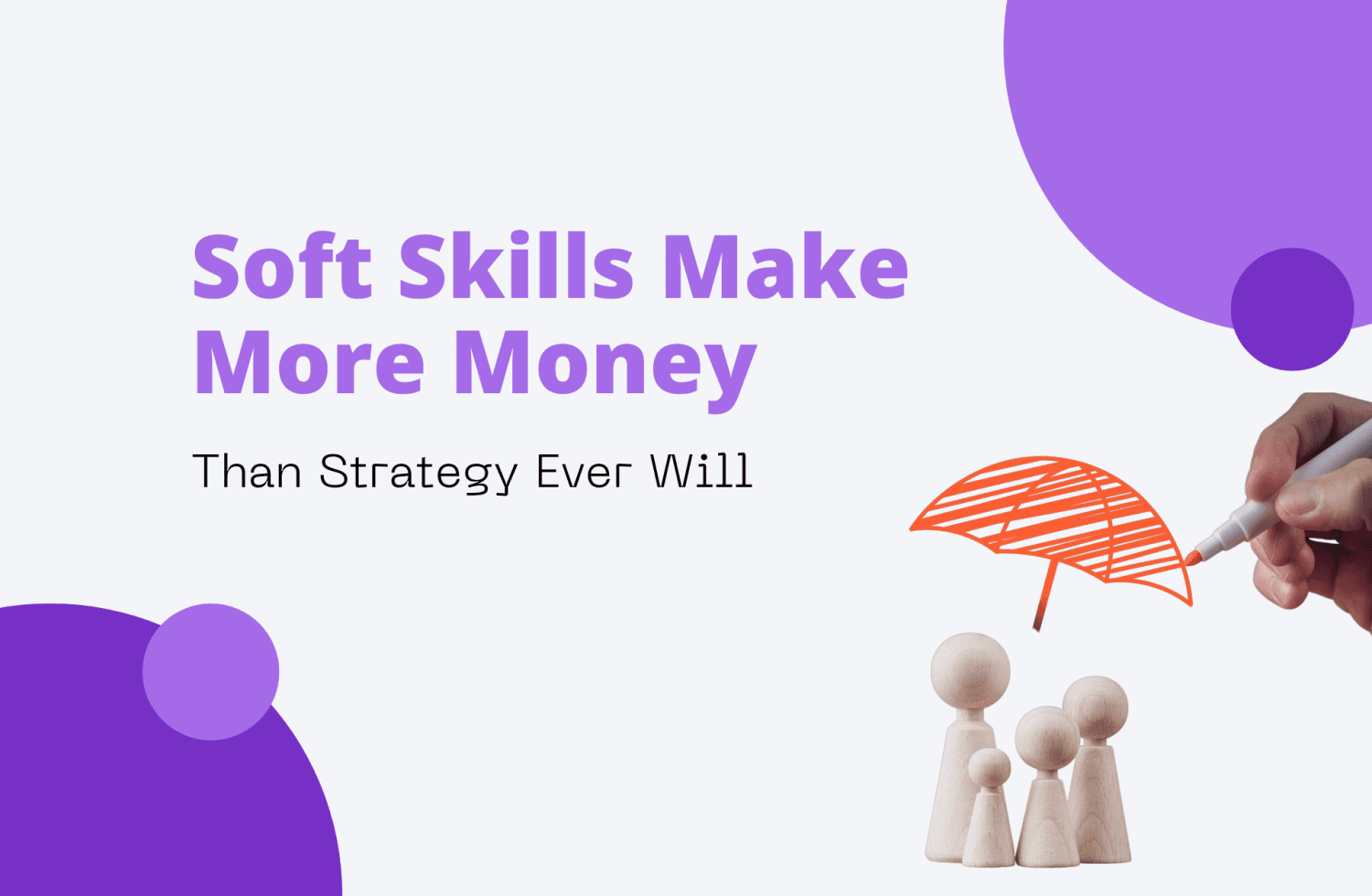
That’s why soft skills quietly shape income more than strategy ever will.
Why Strategy Eventually Hits a Ceiling
Strategy answers important questions.
It helps you see options, plan moves, and organize work.
But strategy alone can’t make someone understand you.
It can’t make someone feel safe asking questions.
It can’t make someone confident saying yes.
Two people can follow the same strategy and end up with very different results.
One creates confusion and resistance.
The other creates ease and momentum.
The difference isn’t intelligence.
It’s how the work feels to the people involved.
Soft skills don’t replace strategy.
They decide whether strategy ever gets a chance to work.
Write Like You Talk Because People Trust What Feels Human
When writing feels stiff or overly polished, people hesitate.
They have to slow down and decode what’s being said, which creates friction before they even reach the idea.
Writing that sounds like real speech removes that friction.
Simple words lower the effort required to understand.
Short ideas help readers follow along without losing focus.
This isn’t about sounding casual.
It’s about sounding clear.
When people can quickly grasp what you mean, trust forms faster, and decisions become easier.
Listen to What People Are Actually Saying, Not What You Assume They Mean
Many offers miss the mark because they’re built on guesses.
The creator believes they understand the problem, but the language doesn’t match how the buyer experiences it.
Listening well means staying close to the exact words people use.
Not cleaning them up.
Not translating them into industry language.
When people see their own words reflected back to them, something clicks.
They feel understood without needing to explain further.
That feeling matters more than a polished explanation.
Say Less and Let the Meaning Land
More explanation often feels helpful, but it usually creates noise.
When too many ideas compete for attention, the main point gets lost.
Clarity comes from choosing one thing and letting it stand on its own.
- One pain.
- One result.
- One next step.
If someone only reads part of what you wrote, they should still understand why it matters.
Protect Your Focus Because Availability Has a Cost
Instant replies train people to interrupt you.
Over time, that constant interruption fragments attention and lowers the quality of work.
Protecting focus isn’t about being distant.
It’s about setting expectations that allow you to think clearly.
Clear reply windows, short responses, and delayed answers for non-urgent requests help preserve energy for work that actually matters.
Focus isn’t just personal discipline.
It’s something you actively protect.
Give Feedback That Leads to Action, Not Debate
Feedback becomes unhelpful when it turns into a list of opinions.
People leave unsure what to fix or where to start.
Useful feedback does three things:
- It names what worked.
- It points out one clear issue.
- It suggests a next step.
That structure removes defensiveness and replaces it with direction.
Before giving feedback, asking whether someone wants help or thoughts also changes the tone of the exchange.
It creates permission instead of pressure.
Tell Simple Stories Because People Remember Meaning, Not Details
Stories help people understand how something works in real life.
They reduce abstraction and make outcomes easier to picture.
The most effective stories don’t need drama or complexity.
They follow a simple shape: the problem, the result, and what happened next.
That structure helps ideas stick because it mirrors how people naturally process experience.
Be Kind in Negotiation Without Losing Clarity
Negotiation often feels tense because people assume it’s about winning.
In reality, strong negotiation is about flexibility without sacrificing respect.
Adjusting timing or scope while keeping expectations clear allows conversations to stay productive.
Even when the answer is no, how the conversation feels determines whether future opportunities remain open.
Handle Problems Calmly So They Don’t Grow
When issues are handled emotionally, trust erodes quickly.
When they’re handled calmly, confidence grows.
Clear problem handling follows a simple order:
- What was expected.
- What actually happened.
- Why it matters.
- What options exist now.
That structure keeps conversations grounded and focused on solutions instead of blame.
Make It Safe for People to Speak Up
Silence often hides useful information.
People hold back when speaking feels risky.
Asking what you might be missing signals openness.
Thanking people for honesty reinforces it.
When people believe their input matters, problems surface earlier, when they’re easier to fix.
Decide Before Everything Feels Perfect
Waiting for certainty slows progress.
Most meaningful outcomes come from action taken with incomplete information.
Deciding when you’re reasonably sure allows you to learn faster.
Reviewing results after action creates clarity that planning alone cannot.
Movement creates feedback.
Feedback creates improvement.
Make Priorities Visible and Specific
Unclear priorities drain energy.
People waste time deciding what matters instead of doing the work.
Clear priorities answer simple questions:
- What needs attention today?
- What can wait?
- Who owns this?
Naming owners and due dates removes confusion and reduces friction across teams.
Put Skills to Use Consistently
Soft skills don’t work as one-time fixes.
They shape outcomes through repeated use.
Building once, sharing regularly, and learning from response creates steady improvement over time.
Consistency matters more than novelty.
A Real Workplace Example: When Strategy Wasn’t the Problem, Communication Was
There was a small internal product team inside a growing online business.
Smart people. Clear goals. A strategy that looked solid on paper.
They were responsible for launching and improving digital offers, coordinating with marketing, and keeping projects moving week to week.
Nothing about the work was unclear.
But progress was slower than it should have been.
Problem
Even with a clear plan, execution kept dragging.
Internal messages were long and tried to cover every angle at once.
Important updates were buried in paragraphs instead of highlighted clearly.
Meetings ran past their time because conversations circled instead of landing on decisions.
Feedback threads turned into debates, with multiple opinions but no clear next step.
Tasks that should have moved forward in days stretched into weeks.
The strategy itself wasn’t failing.
The way people were communicating around the strategy was creating friction.
Agitation
Over time, that friction started to show.
People skimmed messages instead of reading them fully, which led to missed details and more follow-up questions.
Meetings felt draining because decisions kept getting delayed or reopened.
Feedback began to feel personal, not because anyone was harsh, but because it wasn’t clear or usable.
Focus was constantly interrupted by fast replies and “quick questions” that added up across the day.
Quiet tension built.
People started wondering why work felt so heavy when the goals were clear.
Some questioned whether the plan was wrong.
Others felt stuck, even though they were putting in the effort.
The real issue wasn’t motivation or skill.
Every interaction required too much mental effort to process.
Solution
Instead of rewriting the strategy, the team changed how they communicated and decided.
They simplified internal writing so each message carried one clear point instead of five.
They started listening more closely to how teammates described problems and used those exact words instead of rephrasing them.
Feedback was limited to one clear fix, followed by one clear next step.
Decisions were made earlier, even when all details weren’t perfect, with a set time to review results later.
Reply windows were established so focus time stayed protected instead of constantly broken.
Priorities were clarified weekly, with one owner and one due date named for each task.
No new tools were added.
No new strategy was introduced.
Within a few weeks:
- Messages were read instead of skimmed.
- Meetings ended with decisions instead of open threads.
- Feedback felt practical instead of tense.
- Work moved faster without feeling rushed.
The plan stayed mostly the same.
What changed was how clear, calm, and workable every interaction felt.
And that change showed up directly in results.
Tools That Support Clear Communication
- Crucial Conversations by Kerry Patterson and team offers practical guidance for high-stakes discussions.
- How to Speak So That People Want to Listen by Julian Treasure explains how clarity and tone shape response.
- Notion AI helps simplify writing and organize ideas quickly.
- creatyl supports building and sharing offers without unnecessary setup.
Income Follows the Way You Make Things Feel
Why Soft Skills Quietly Decide Outcomes
People don’t decide based on logic alone.
They decide based on clarity, trust, and how safe the interaction feels.
Soft skills shape those moments.
They reduce friction where strategy cannot.
They turn hesitation into confidence.
You can have a strong plan and still struggle if communication creates pressure or confusion.
But when clarity leads, people respond differently.
They engage sooner.
They decide more easily.
They come back.
That difference doesn’t always look dramatic.
But over time, it shows up clearly in results and income.
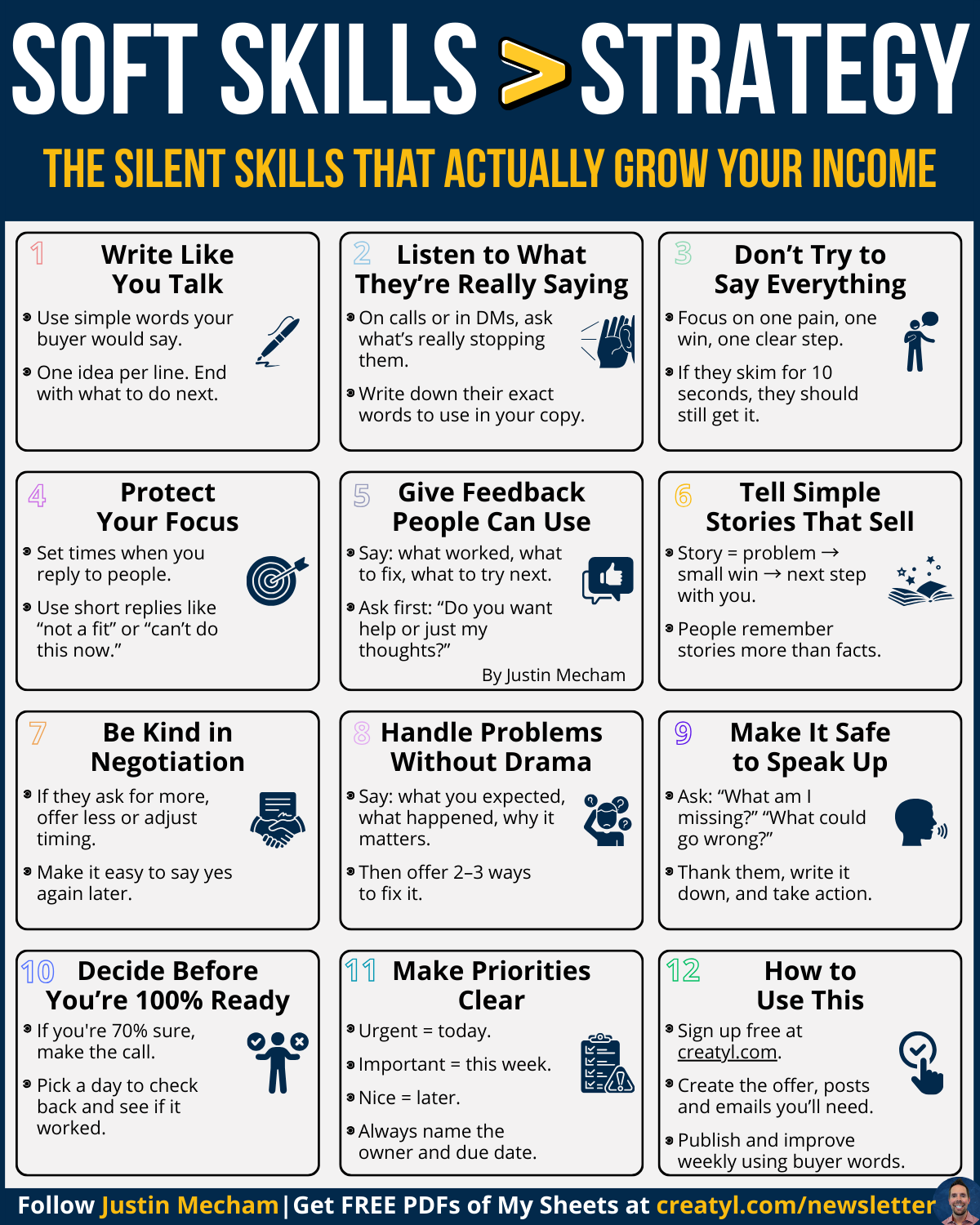
Download the Soft Skills Framework Infographic (PDF)
Some skills are easier to apply when you can see them laid out clearly.
This infographic breaks down the twelve soft skills and shows how to use them in everyday work, conversations, and decisions.
It’s a simple reference to return to whenever communication feels heavier than it needs to be.