

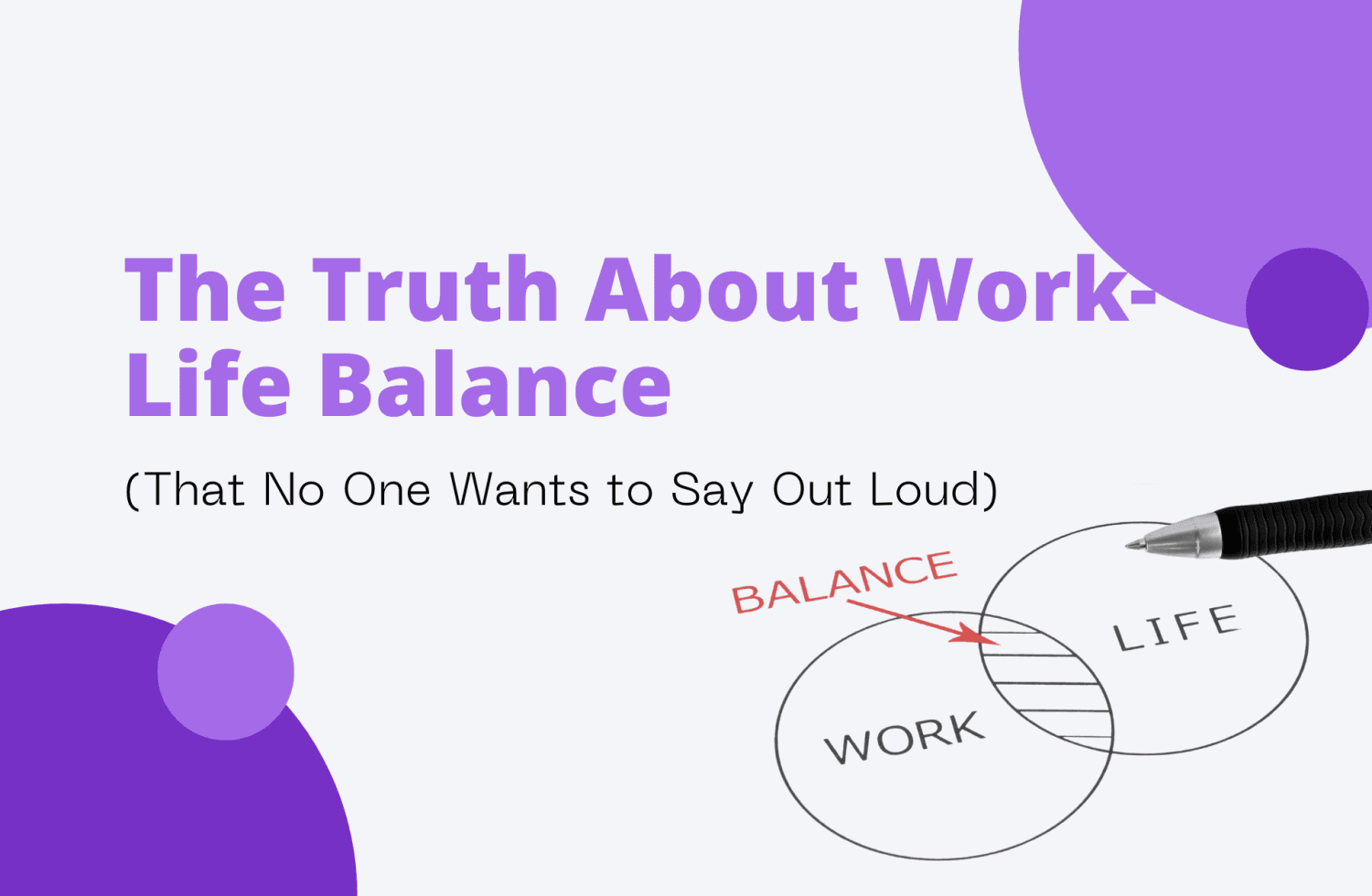
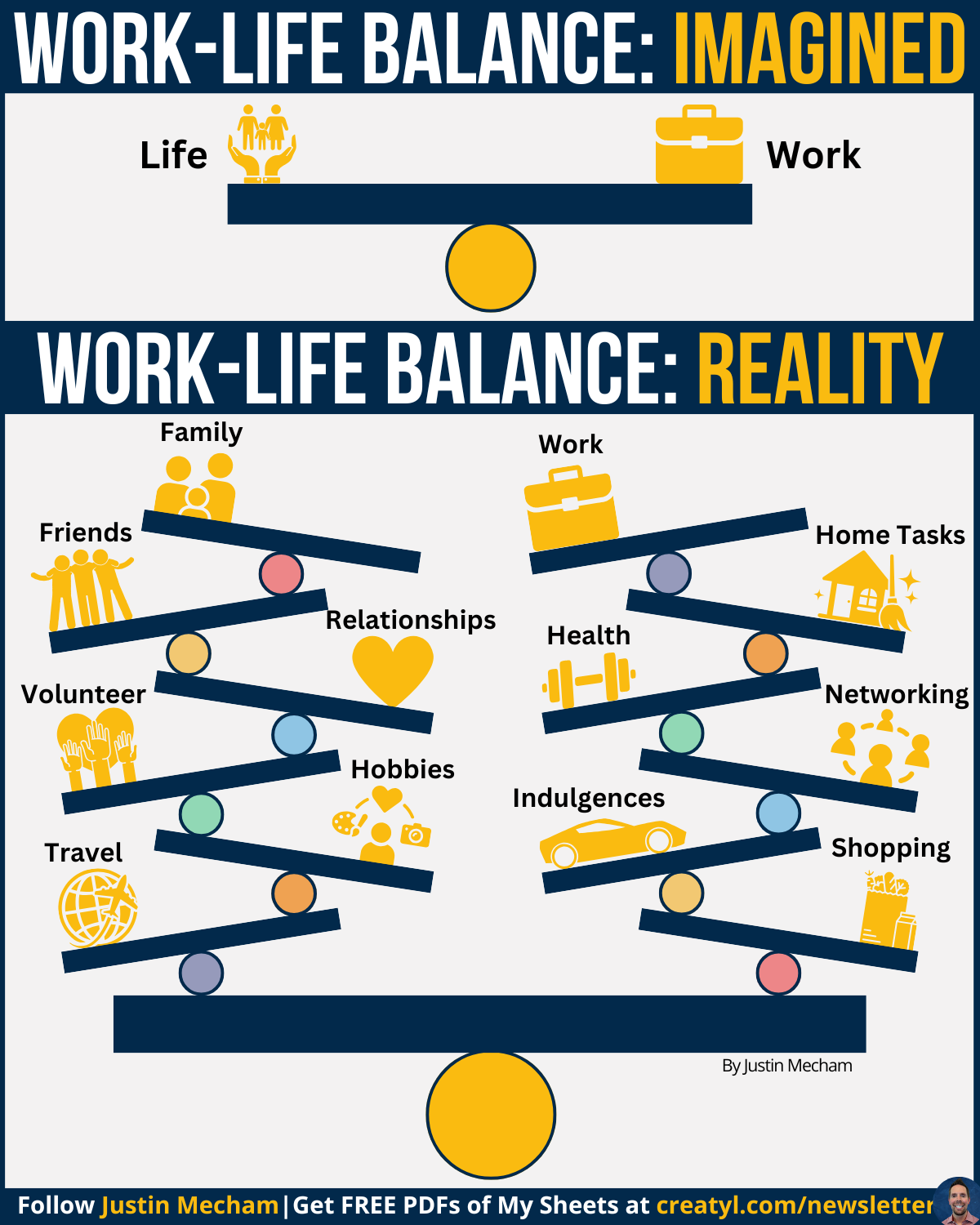
Work-life balance gets tossed around like a checkbox.
Take breaks. Say no. Clock out.
Sounds easy—until your inbox fills up, your brain’s still spinning at midnight, and your weekends feel more like recovery than rest.
Most people don’t need a better planner.
They need permission to stop pretending balance is something you “find” if you just hustle harder.
The truth is:
Balance isn’t about working less.
It’s about living more honestly.
It’s knowing what pulls your energy without giving anything back.
It’s noticing when you’re always “on” but never really present.
It’s not a set of tips. It’s a different way of being inside your day.
Most advice sounds productive.
But what you really need is space to feel like yourself again.
Here’s what that actually looks like—no fluff.
Why Most Advice Doesn’t Work (And Leaves You Feeling Worse)
You’ve heard the basics: protect your time, take breaks, log off earlier.
But you’ve probably noticed something.
Even when you *do* all of that—you’re still tired.
Because balance isn’t about control. It’s about clarity.
You can block time and still feel scattered.
You can take Fridays off and still carry everything in your head.
Balance breaks when your day is full but your brain never rests.
When your calendar looks fine—but nothing feels right.
That’s not a time issue. That’s a pattern issue.
What Changed When We Stopped Chasing “More Time”
Let’s say you’ve got a team deep in a product launch.
Everything looks smooth on paper: deadlines hit, calls scheduled, Slack buzzing.
But when I stepped in, it didn’t take long to feel what wasn’t being said.
People were burned out. Not just tired—depleted.
Smart people second-guessing simple decisions.
Meetings where no one really heard each other.
Work happening—but without clarity, without energy, without ease.
They didn’t need more time off. They needed something they hadn’t been given:
Room to reset while the work kept moving.
So here’s what we did:
- We ran a fast “energy check.” People shared what drained them fast and what gave them clarity—not just work-related, but human-related.
- We made small shifts: fewer interruptions, deeper work blocks, shared hours for focus.
- We ended the day differently—by closing just one thing well, instead of juggling 12 unfinished tabs.
No dramatic overhaul. No fancy software.
But by the end of the first week, everything felt different.
More attention. Fewer drop balls. Real conversations again.
People didn’t slow down—they just stopped leaking energy trying to keep up appearances.
Balance wasn’t a schedule change.
It was a shift in how they saw themselves inside their work.
How to Tell If You’re Out of Balance (Even If It Looks Like You’re Not)
You don’t need a big breakdown to know something’s off.
Sometimes it shows up as:
- A short fuse over small stuff
- A calendar packed with things you don’t care about
- A body that’s always wired but never rested
- A creeping sense that you’re missing something—even if you’re not sure what
Here’s what helps:
Check how much space you have—not how much time
Do you have even 10 minutes today to pause and think clearly?
Notice if your reactions match the moment.
If not, there’s a backlog of unprocessed stress underneath.
Ask if you're choosing your work—or just reacting to it.
If everything feels urgent, it’s probably not.
What Actually Works (Even When You’re Busy)
Forget perfect routines. Focus on sharp moves:
1. Shrink the window.
If your work expands to fill the day, cut the day down.
Tighter hours force sharper focus.
2. Stop managing by guilt.
Saying yes doesn’t mean you’re a team player.
Saying no doesn’t mean you’re selfish.
Start asking: what actually matters?
3. Take the reset seriously.
Ten minutes alone can change your whole afternoon.
You don’t need a vacation. You need a break that counts.
4. Watch what you carry.
Other people’s urgency doesn’t have to become your pressure.
5. Let some things stay undone.
The goal isn’t to finish everything. It’s to not lose yourself in the process.
Want to Go Deeper? These Three Changed Everything
Tool: Clearer Thinking – Decision Advisor
A sharp, science-backed tool that helps you break down options and think clearly when you’re overwhelmed or stuck. Great when your brain’s tired and you need clarity, fast.
Book: *Four Thousand Weeks* by Oliver Burkeman
This one doesn’t tell you how to win the day. It asks you what kind of life you actually want to build—and how to stop wasting time trying to control the uncontrollable.
Podcast: *Before You Decide* by Matthew Confer (TEDx)
Short, solid guidance on how to pause, see clearly, and decide from a place of focus—not panic. Great for overthinkers or people who move fast by default.
Balance Isn’t About Time—It’s About Truth
If you’re running on fumes, it’s probably not because you’re lazy.
It’s because you’ve been holding too much for too long—without a real break.
Balance doesn’t show up in a planner.
It shows up when your choices match your capacity.
When your calendar reflects what actually matters to you.
When your body isn’t bracing all the time.
And if you’re honest, you probably already know what’s off.
Maybe it’s the pressure to say yes when you mean no.
Maybe it’s the guilt when you finally log off.
Maybe it’s the fear that if you stop moving, everything will fall apart.
But here’s the truth:
The most powerful thing you can do for your work, your people, and yourself—
Is to stop proving and start protecting what helps you stay whole.
Balance doesn’t mean doing everything well.
It means doing what matters with your full attention—
And letting the rest go without shame.
That’s not failure.
That’s wisdom.
And the more you live like that, the more peace you’ll actually find in how you work.
Want the Infographic Version?
If you want to keep this breakdown close—print it, save it, or share it with someone who needs it—
we’ve turned the full framework into a simple, powerful one-page PDF.
Everything you just read—distilled into one quick-glance guide.
No fluff. No filler. Just clear moves tied to real feelings you’ve probably had before.
Save it. Share it. Use it when you feel stuck.
Because sometimes, it just takes one push to remind you that life is more than work.