

Click Here to Download the PDF.
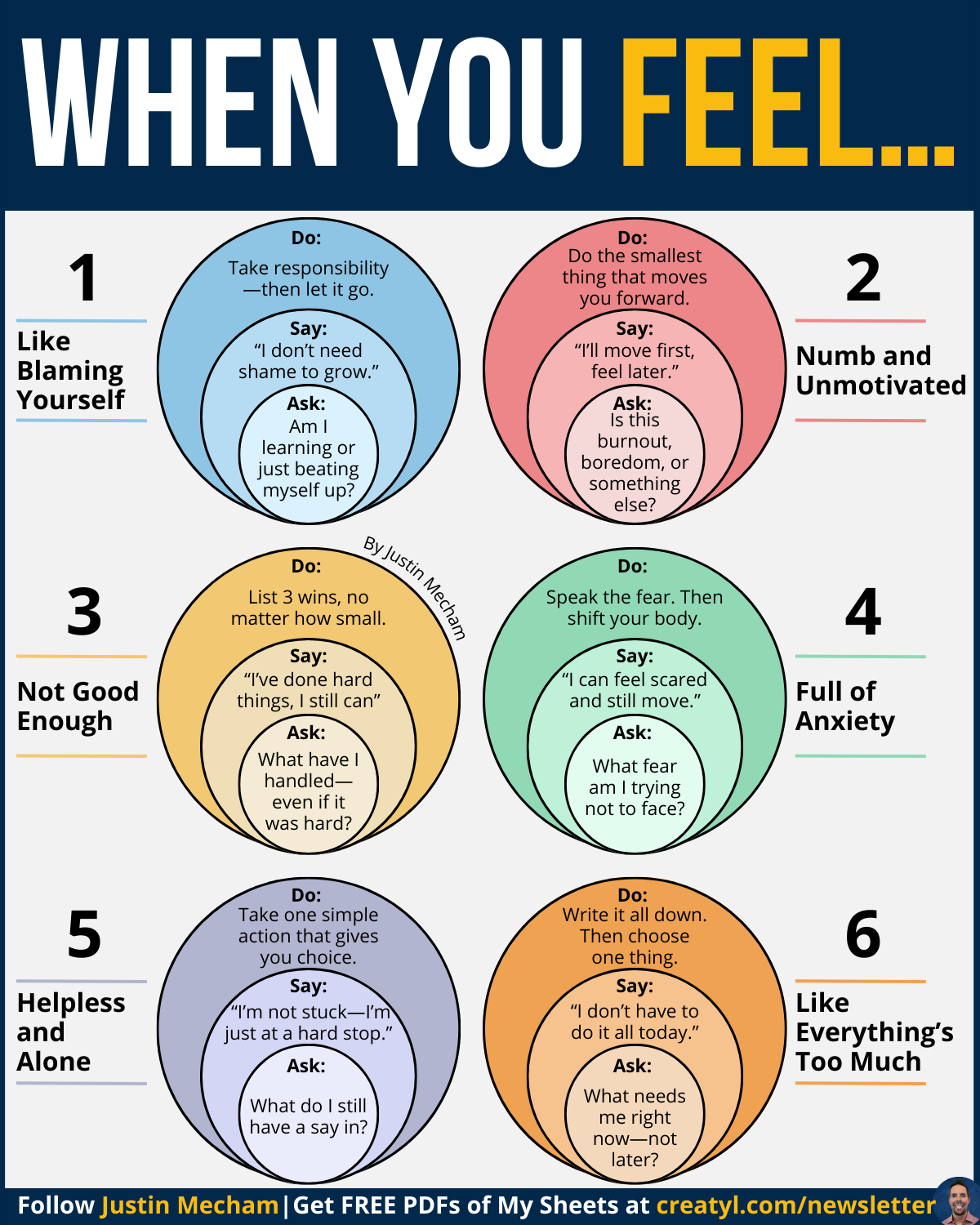
The Day I Stopped Trying To “Fix” My Mood
There was a time when I thought productivity started with the right feeling.
If I felt clear, I would work well.
If I felt confident, I would take action.
If I felt motivated, I would move.
So on the days I woke up foggy, anxious, or flat, I tried to fix the feeling first.
I read more.
I waited longer.
I scrolled.
I told myself I needed to “get my head right.”
It rarely worked.
Because the problem wasn’t the feeling.
It was the waiting.
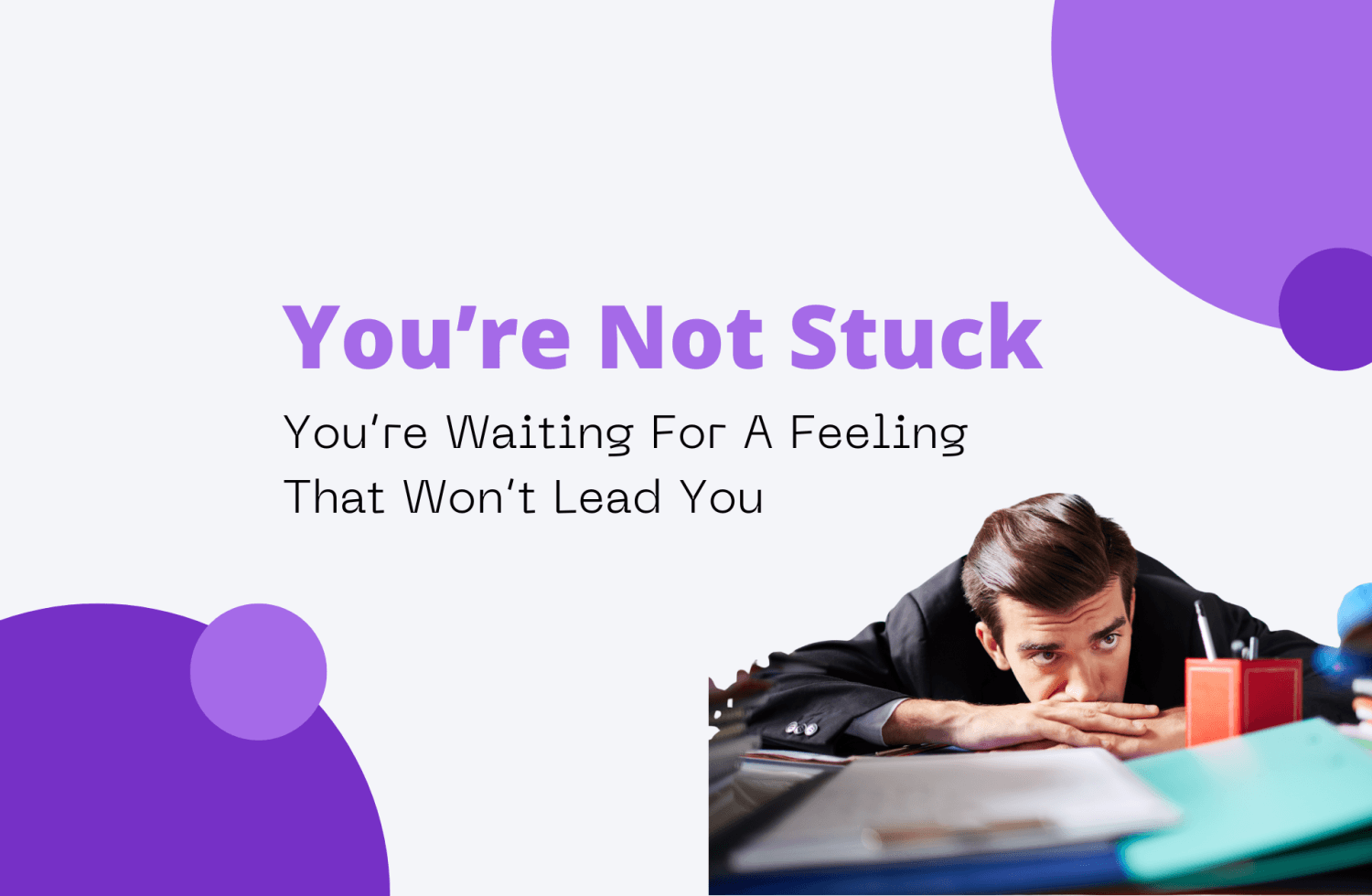
Some days we wake up and feel stuck.
Not physically stuck.
Not simply tired.
Stuck inside our own head.
The mistake most of us make is trying to argue with the mood instead of moving through it.
Feelings are not the enemy.
But waiting on them is the trap.
The shift for me came when I stopped asking, “How do I feel?” and started asking, “What is my next move?”
Focus didn’t come because my mood improved.
My mood improved because I moved.
Below is the reset I use when my thoughts start looping. It’s simple. It’s practical. And it works because it leads with action, not emotion.
1) When You’re Blaming Yourself
Own It. Then Release It.
Self-blame is sneaky.
It sounds responsible. It feels mature. But often it turns into quiet self-attack.
You replay the mistake.
You overanalyze the decision.
You question your capability.
There’s a difference between learning and punishing yourself.
Teachable Moment:
Growth requires ownership. It does not require shame.
If you stay in blame too long, your energy drains. Action slows. Confidence shrinks.
The Reset:
- Do: Take responsibility for what is yours. Then let it go.
- Say: “I can grow without shame.”
- Ask: Am I learning… or attacking myself?
Practical Strategy:
Write down the mistake in one sentence. Write the lesson in one sentence. Close the loop. Move to the next task.
I once coached a founder who spiraled for weeks after a failed launch. Once we separated lesson from shame, momentum returned within days.
Ownership fuels growth. Shame stalls it.
2) When You Feel Numb And Unmotivated
Move First. Feel Later.
Numbness is often mistaken for laziness.
It’s not laziness.
It’s overload. Burnout. Or boredom.
Waiting to “feel ready” when you’re numb rarely works.
Teachable Moment:
Action often creates energy. Energy does not always create action.
The Reset:
- Do: Take the smallest forward step.
- Say: “I’ll move first. Feel later.”
- Ask: Is this burnout, boredom, or something deeper?
Practical Strategy:
Shrink the task until it feels almost too easy. Write one paragraph. Send one message. Organize one file.
Motion changes state.
I worked with a professional who hadn’t touched an important project for weeks. We reduced the first step to outlining three bullet points.
Within 20 minutes, momentum built.
The task wasn’t the block.
Inaction was.
3) When You Feel Not Good Enough
Prove It To Yourself Quietly
The “not good enough” loop is powerful.
It compares. It doubts. It whispers that everyone else is ahead.
Arguing with it rarely works.
Evidence works.
Teachable Moment:
Confidence is often memory. Reminding yourself of past wins resets perspective.
The Reset:
- Do: List three wins. Small counts.
- Say: “I’ve done hard things before.”
- Ask: What have I handled that proves I can?
Practical Strategy:
Keep a “wins” document. Add to it weekly.
One executive I coached felt constant imposter syndrome before presentations.
We built a habit of reviewing past wins before major meetings.
Performance improved, not because ability changed, but because perspective did.
You don’t eliminate doubt.
You counter it with evidence.
4) When Anxiety Is Loud
Name It. Move Your Body.
Anxiety feels urgent.
It speeds your thoughts. It tightens your chest. It tells you something is wrong.
Often, it is unspoken fear.
Teachable Moment:
Unlabeled fear grows. Named fear shrinks.
The Reset:
- Do: Speak the fear. Then shift your body.
- Say: “I can be scared and still act.”
- Ask: What am I avoiding facing?
Practical Strategy:
Write the fear in plain language.
Then take a physical action: walk, stretch, breathe deeply for two minutes.
Physical movement interrupts mental spirals.
I once worked with a manager who avoided a difficult conversation for weeks.
Once they named the fear — “I’m afraid they’ll be upset with me” — the tension reduced.
The conversation was direct, respectful, and resolved quickly.
Anxiety often protects you from discomfort.
Growth requires stepping into it.
5) When You Feel Helpless And Alone
Find The Choice You Still Have
Helplessness convinces you that everything is out of your control.
It magnifies what you cannot change.
Teachable Moment:
Control is rarely total. But it is rarely zero.
The Reset:
- Do: Take one action that gives you agency.
- Say: “I’m not stuck. I’m paused.”
- Ask: What do I still have a say in?
Practical Strategy:
List three things you can influence today. Choose one.
A professional I worked with felt trapped in a role they disliked.
Instead of spiraling about the job, we focused on updating one section of their résumé and reaching out to one contact.
Small action restored control.
Helplessness fades when agency returns.
6) When Everything Feels Like Too Much
Reduce The Field
Overwhelm happens when your brain tries to hold too many open loops at once.
You think about five deadlines. Three emails. Two personal tasks. Future goals.
It blends into pressure.
Teachable Moment:
Your brain cannot prioritize what it cannot see clearly.
The Reset:
- Do: Brain dump everything.
- Say: “I don’t have to finish today.”
- Ask: What needs me right now?
Practical Strategy:
Write every task down. Circle one. Ignore the rest for one hour.
I coached a business owner who constantly felt behind.
Once they externalized their tasks onto paper, we realized only two truly needed attention that day.
Clarity reduced stress immediately.
You do not need to solve everything.
You need to start somewhere.
A Real Workplace Example
From Mental Spiral To Productive Focus
A client came to me saying, “I can’t focus anymore.”
They weren’t lazy. They weren’t incapable. But every day felt mentally heavy.
They woke up already behind. They checked email first. They reacted. By mid-morning, they were drained.
Self-blame followed.
“I should be better than this.”
The more they tried to fix the feeling, the worse it became.
They read productivity articles. They bought new planners. They waited for a motivated day.
Nothing changed.
The loop continued:
Low mood → Inaction → Guilt → More inaction.
We simplified everything.
No new systems. No complex routines.
Just one rule:
When the feeling hits, act before analyzing it.
We built a short reset:
- Identify the dominant feeling.
- Do the matching action from the list.
- Ask the question.
- Move to one focused task.
Within two weeks, focus improved significantly.
Not because their emotions disappeared.
Because they stopped waiting for permission from their mood.
They led with action.
And their brain followed.
What Made It Work
Simple Shifts That Broke The Loop
- They stopped trying to “solve” emotions.
- They separated learning from shame.
- They reduced tasks to small actions.
- They focused on agency instead of helplessness.
Momentum does not require motivation.
It requires movement.
The Deeper Shift That Matters
You are not broken when your mood shifts.
You are human.
But your brain follows what you choose first.
If you choose rumination, it deepens.
If you choose action, it adjusts.
The goal is not to eliminate hard days.
The goal is to respond differently to them.
You do not need to feel clear to move.
You need to move to feel clear.
You Are Not Your Mood
There is power in realizing that your feelings are signals, not commands.
They can inform you.
They should not control you.
Some days will feel heavy. Some mornings will feel unclear. Some afternoons will feel anxious.
That does not mean you are off track.
It means you are in a moment.
Moments pass when you give your brain a next step it can trust.
When you act with intention, even in small ways, you teach your mind something important.
You are capable of movement regardless of mood.
That lesson compounds.
It builds quiet confidence. It builds resilience. It builds self-trust.
And self-trust is stronger than any temporary emotion.
You are not stuck.
You are simply one small action away from clarity.
Best Resources For Mental Clarity And Focus
Book: Atomic Habits — James Clear
Why It Fits: Practical insight into how small actions shape behavior.
Book: The Untethered Soul — Michael A. Singer
Why It Fits: A powerful perspective on observing thoughts without becoming them.
Podcast: The Knowledge Project — Shane Parrish
Why It Fits: Deep conversations on mental models and decision-making.
TED Talk: How To Make Stress Your Friend — Kelly McGonigal
Why It Fits: A reframing of stress that encourages productive action.
Tool: Notion — Founded by Ivan Zhao
Why It Fits: A flexible system for brain dumping and organizing thoughts.
AI Tool: ChatGPT — OpenAI
Why It Fits: Helpful for breaking down tasks and reframing negative thinking patterns.
Download The “When You Feel…” Infographic (PDF)
If you want a clear visual reminder of the reset steps discussed here, download the PDF version of the infographic.
Use it as a guide the next time your thoughts begin to spiral.