

Click Here to Download the PDF.
I Used to Think Side Hustles Required Big Plans. I Was Wrong.
For a long time, side hustles felt like something you prepared for.
You needed the right idea.
The right timing.
The right setup.
The right amount of confidence.
So people waited.
They told themselves they would start once things were clearer, calmer, or more stable.
Once they had more time.
Once they knew more.
Once they felt ready.
What I learned the hard way is this:
Most people don’t fail at side hustles because they aren’t capable.
They fail because they wait too long to begin.
Readiness doesn’t come from planning more.
It comes from starting smaller than you think you should.
What “Ready” Actually Looks Like
Being ready for a side hustle isn’t dramatic.
It doesn’t mean quitting your job.
It doesn’t mean building a big audience.
It doesn’t mean having everything figured out.
It means you can give a little time, consistently, without making life heavier.
If you can give two focused hours a week, you are already ahead of most people.
Not someday ready.
Ready now.
That small window is enough when it’s used with intention.
Signs You’re More Ready Than You Think
Most people assume readiness is about confidence or experience.
In reality, it’s about tolerance for imperfect progress.
You’re ready if:
- You want to earn a little extra each month
- You’re tired of thinking instead of doing
- You can start messy and improve later
- You can ignore distractions for short blocks
- You’re willing to learn while moving forward
That’s it.
No special background required.
No perfect conditions needed.
Why Waiting Feels Safe—and Why It Slows Everything Down
Waiting feels productive because it looks like preparation.
Research.
Notes.
Ideas saved for later.
But waiting delays feedback.
And feedback is what actually creates clarity.
Side hustles become real when they meet real people.
Not when they live in your head.
Starting small isn’t reckless.
It’s how you learn faster with less risk.
Step 1: Set One Clear Target You Can Measure
Vague goals create vague effort.
Wanting to “make money” or “build something” doesn’t guide action.
Clear numbers do.
A useful target includes:
- The amount you want to earn per month
- The number of hours you’ll give per week
This turns a wish into a decision.
The goal isn’t pressure.
It’s direction.
Step 2: Pick One Simple Offer and Nothing Else
Many side hustles stall because they try to do too much at once.
Multiple ideas.
Multiple audiences.
Multiple formats.
Simplicity is the advantage here.
Choose:
- One skill you already have
- One problem you can solve
- One clear result you can explain in one sentence
You’re not building a business yet.
You’re testing usefulness.
Step 3: Test It Fast With Real People
Clarity doesn’t come from guessing.
It comes from reaction.
This step is about contact, not perfection.
Talk to a few real people about the problem you want to solve.
Share one useful tip publicly related to it.
Then pay attention.
If no one reacts, adjust the message.
If people respond, keep going.
Silence is information.
So is interest.
Step 4: Block Small Work Windows That Actually Fit Life
Most people fail here because they aim too big.
They plan long sessions they can’t keep.
Then skip them entirely.
Two short sessions per week are enough.
What matters is consistency, not duration.
Protect those windows.
Phone off.
No multitasking.
No negotiating with yourself.
Small blocks used well beat long sessions that never happen.
Step 5: Keep It Honest Instead of Perfect
Early side hustles don’t need polish.
They need honesty.
Track what you earn.
Notice what takes effort.
Pay attention to what feels heavy.
You don’t need perfect systems yet.
You need awareness.
Progress first.
Polish later.
Step 6: Build It for Real, Not Complicated
Eventually, testing turns into building.
At that point, complexity becomes the enemy.
Using one place to build, sell, and deliver removes friction.
It keeps momentum alive when time is limited.
The goal is not elegance.
It’s follow-through.
Simple systems protect energy.
A Real Workplace Example: When Waiting Was the Only Thing in the Way
They worked full-time in a demanding role and wanted extra income on the side.
They had ideas.
They had skills.
But nothing ever made it past planning.
Weeks were spent outlining and researching.
Evenings disappeared into notes instead of action.
The side hustle felt permanent, but hypothetical.
Over time, frustration set in.
They felt capable but stuck.
Motivation dropped because progress never felt real.
The longer they waited, the heavier starting became.
The problem wasn’t lack of ability.
It was hesitation disguised as preparation.
They reduced everything to the basics.
They set a clear monthly target and time limit.
They chose one simple offer tied to an existing skill.
They talked to a few people that same week.
They blocked two short work sessions and protected them.
They stopped waiting for the perfect setup and focused on finishing version one.
Momentum returned quickly.
Not because everything worked at once.
But because action replaced overthinking.
Clarity followed movement.
Tools That Support Starting Small
The Lean Startup explains why fast testing reduces wasted effort.
Essentialism reinforces choosing less to move faster.
Notion helps track ideas and steps without clutter.
Creatyl supports building and selling simple offers without heavy setup.
You Don’t Need a Bigger Plan
You Need a Smaller First Step You’ll Actually Take
Most people aren’t stuck because they lack ambition.
They’re stuck because they believe starting requires certainty.
It doesn’t.
Side hustles grow through motion, not confidence.
Through contact, not perfection.
Through small, repeatable actions that fit real life.
You don’t need a huge plan.
You need clarity.
Consistency.
And the willingness to begin before everything feels ready.
That’s how side hustles stop being ideas and start becoming real.
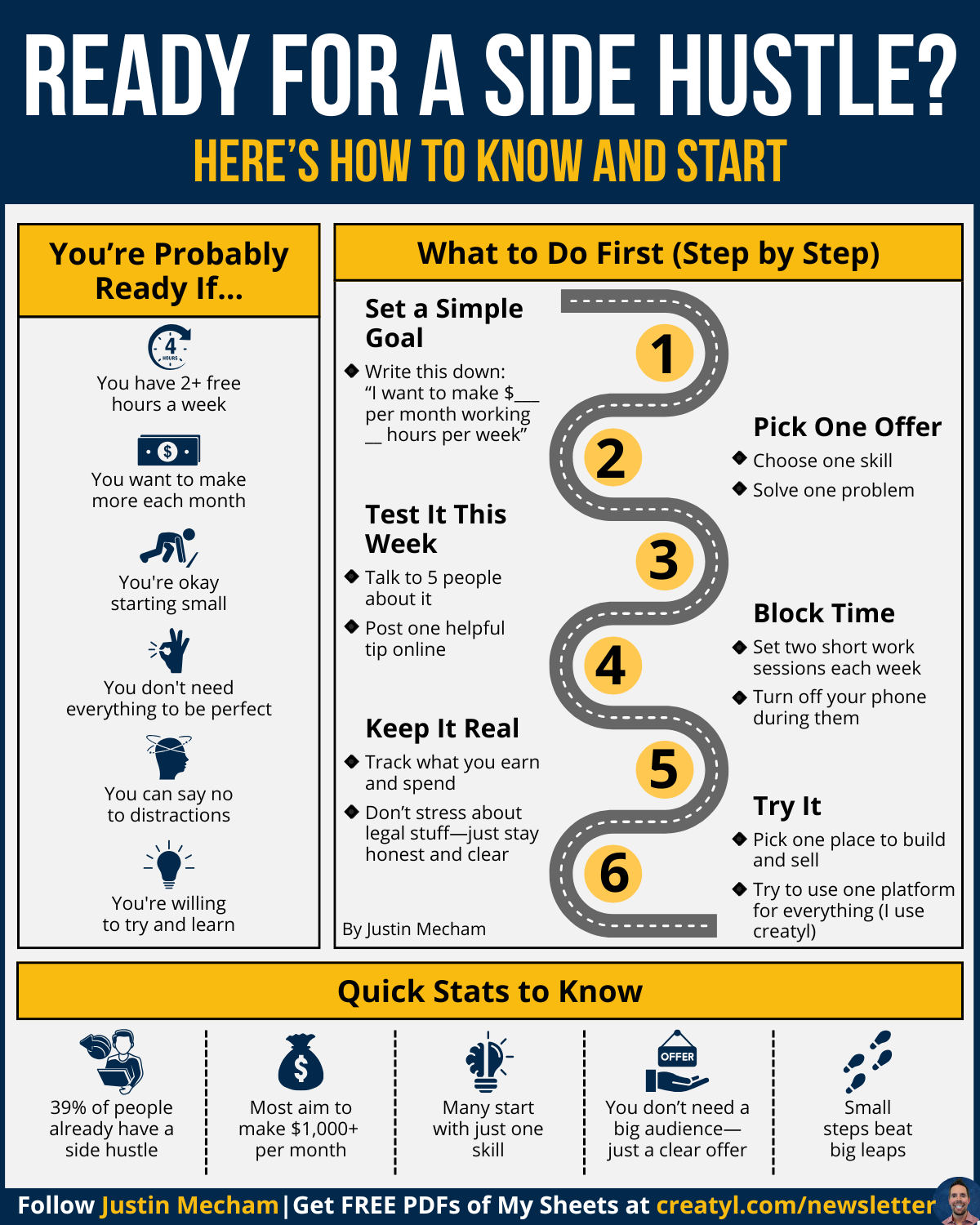
Download the “Ready for a Side Hustle” Infographic (PDF)
Some steps are easier to follow when you can see them clearly.
This infographic breaks down how to know if you’re ready and what to do first, so you can move without overthinking or waiting for perfect conditions.
Download the Ready for a Side Hustle infographic (PDF):
It’s a simple reminder that readiness isn’t about timing.
It’s about starting small and staying consistent.