

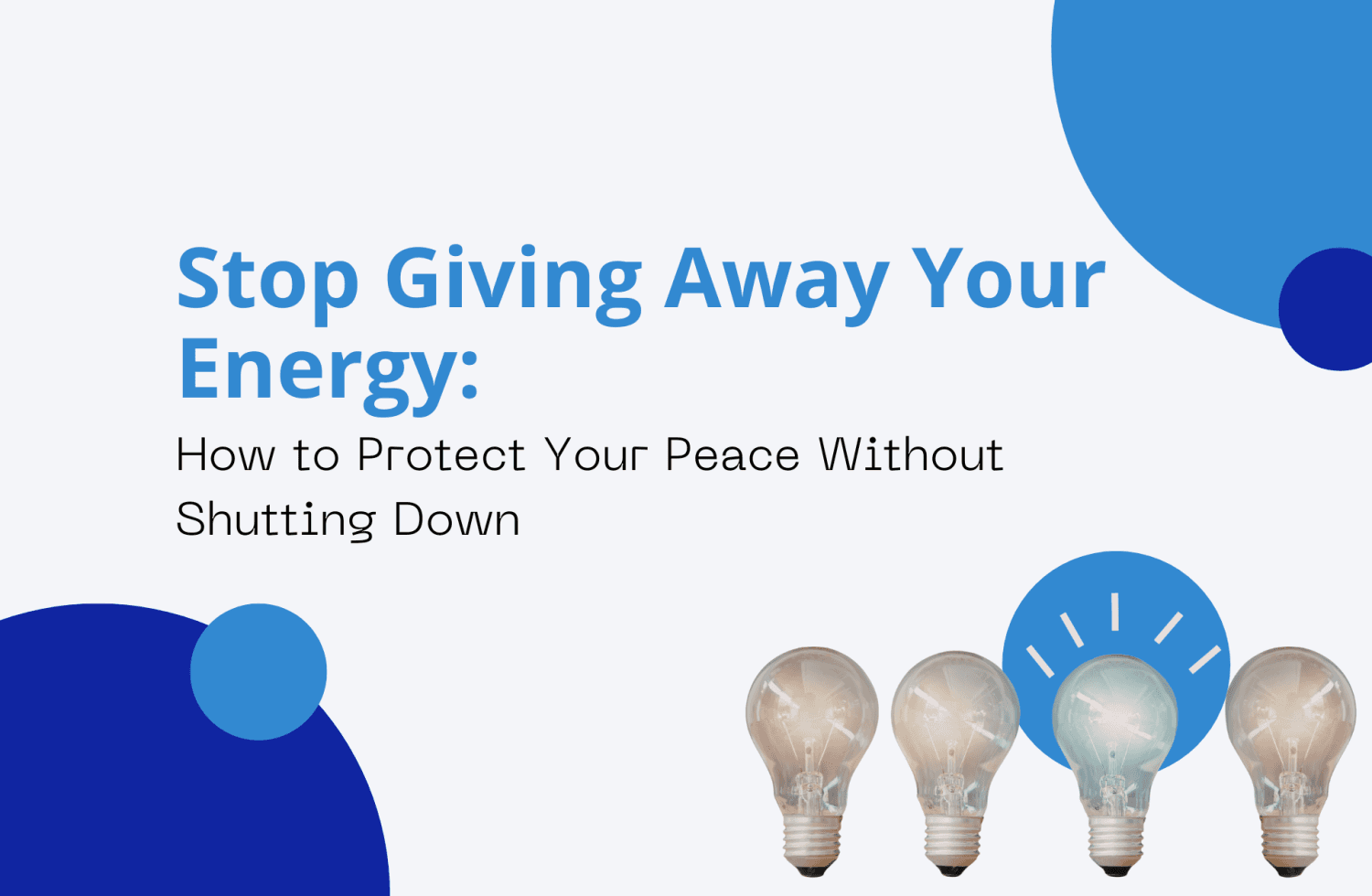
Click Here to Download the PDF.
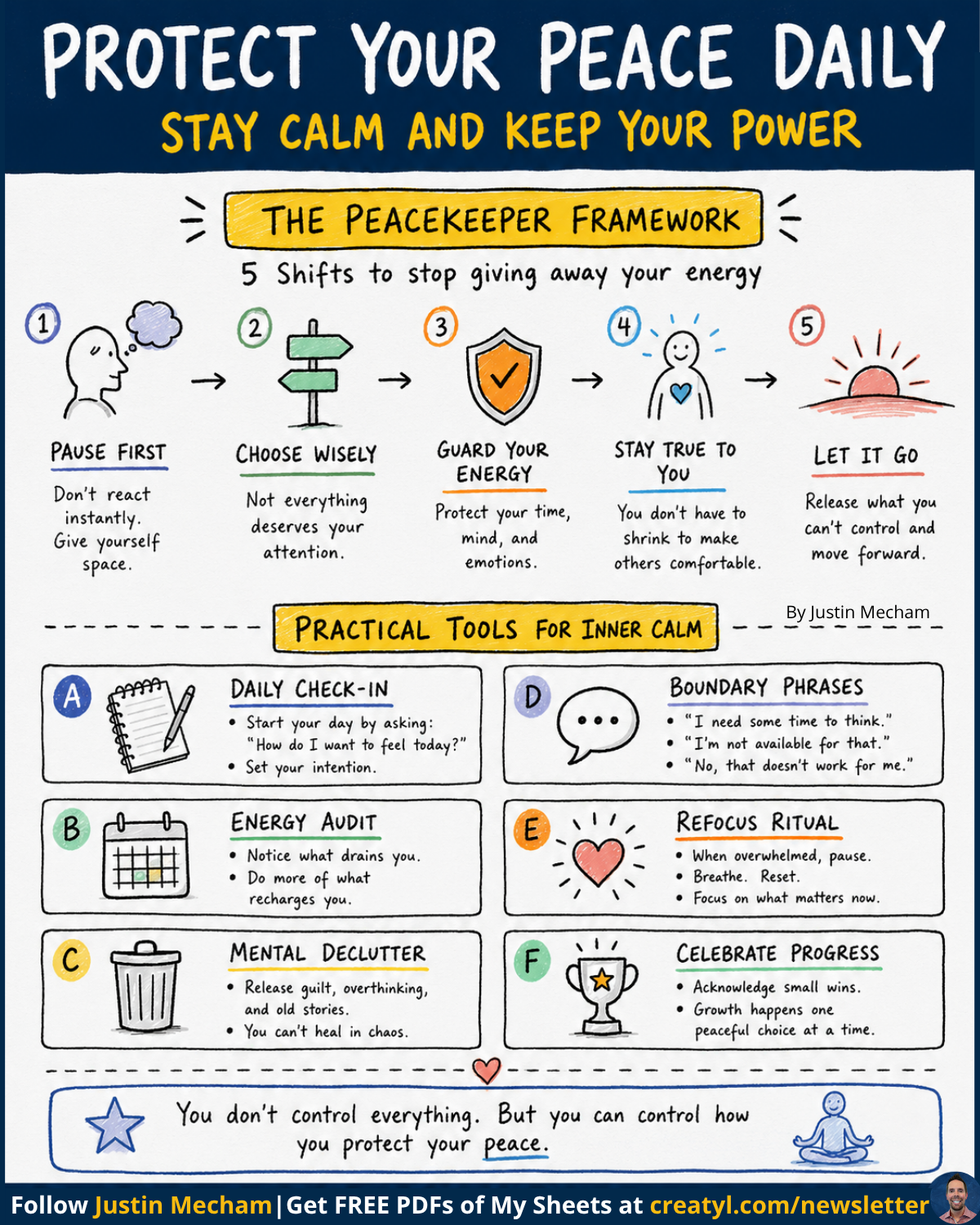
Peace Is Not About Escaping Life
Most people think peace means having no stress, no difficult people, no pressure, and no hard conversations.
That version of peace does not exist.
Real peace is something very different.
It is the ability to stay grounded even when life around you becomes noisy.
It is knowing what deserves your attention and what does not.
It is recognizing when someone else’s frustration does not need to become your emotional responsibility.
It is learning that not every message requires an immediate answer, not every opinion deserves emotional space, and not every situation deserves access to your nervous system.
That is where emotional maturity begins.
Not in controlling people.
But in controlling how much access you give away.
Because many people are not exhausted from working hard alone.
They are exhausted from carrying things that were never theirs to carry in the first place.
Other people’s moods.
Other people’s expectations.
Other people’s urgency.
Other people’s projections.
Other people’s chaos.
Over time, constantly absorbing those things quietly drains emotional energy until someone wakes up feeling mentally overloaded before the day has even properly started.
And the dangerous part is that this kind of exhaustion often becomes normalized.
People begin thinking:
“This is just adulthood.”
“This is just leadership.”
“This is just life.”
But much of that exhaustion is not coming from responsibility.
It is coming from a lack of boundaries.
The Hidden Cost of Reacting to Everything
One of the biggest peace killers in modern life is constant emotional reactivity.
A message arrives.
You react.
A tone feels off.
You spiral.
Someone disappoints you.
You replay it for hours.
A meeting goes badly.
Your entire evening changes.
Many people live emotionally connected to everything happening around them.
That creates a nervous system that never fully rests.
And eventually, the body begins carrying the weight:
- brain fog
- irritability
- anxiety
- emotional fatigue
- resentment
- poor focus
- exhaustion
- disconnection
The problem is not always the event itself.
It is the emotional attachment that continues long after the moment has passed.
Peaceful people are not people who never experience stress.
They are people who learned how to stop emotionally rehearsing stress long after the situation ended.
That is a completely different skill.
And it changes everything.
Why Protecting Your Peace Is Not Selfish
Many people struggle with boundaries because they confuse peace with selfishness.
They think:
- Saying no is rude
- Taking space is avoidance
- Protecting energy is weakness
- Slowing down is laziness
- Not reacting immediately means they do not care
So they keep saying yes.
Keep overexplaining.
Keep absorbing.
Keep rescuing.
Keep shrinking themselves emotionally to keep everyone else comfortable.
Eventually they become emotionally unavailable to themselves.
This is important to understand:
Protecting your peace is not selfish.
It is responsible.
Because exhausted people do not communicate clearly.
Emotionally overloaded people do not lead well.
Burned out people struggle to be present.
People carrying resentment struggle to stay kind.
Peace is not distance from people.
It is emotional discipline around what you allow to live inside you.
The Peacekeeper Framework
Five Shifts That Stop You From Giving Away Your Energy
The strongest emotional boundaries are rarely dramatic.
They are built quietly through small daily decisions.
The Peacekeeper Framework is not about avoiding life.
It is about responding to life differently.
1. Pause First Instead of Reacting Immediately
Most emotional damage happens in the first few seconds after something triggers us.
A message arrives.
A comment lands wrong.
Someone disappoints us.
A tone feels disrespectful.
And immediately the mind begins building stories:
“They do not respect me.”
“They always do this.”
“I need to respond right now.”
But immediate emotional reactions are rarely wise reactions.
Pausing creates emotional space.
And emotional space changes outcomes.
A pause allows:
- perspective
- regulation
- clarity
- intentionality
One breath can prevent an argument.
One pause can prevent regret.
One moment of silence can completely redirect a conversation.
People often think emotional strength means saying the perfect thing quickly.
Usually it means not reacting too quickly at all.
2. Choose Wisely What Actually Deserves Your Energy
Not everything deserves full emotional investment.
This is one of the hardest lessons emotionally intelligent people eventually learn.
Some situations deserve:
- a conversation
Others deserve:
- distance
Some deserve:
- patience
Others deserve:
- a boundary
And some deserve:
- absolutely nothing
One reason people feel emotionally overwhelmed is because they treat every inconvenience like a major emotional event.
Everything becomes urgent internally.
But emotional peace requires discernment.
Ask:
- Does this actually matter long term?
- Will this affect my life next month?
- Am I reacting to facts or assumptions?
- Does this deserve a response or just awareness?
Not every situation deserves your full emotional availability.
Learning that changes your life.
3. Guard Your Energy Like It Actually Matters
Because it does.
Your emotional energy affects:
- your relationships
- your focus
- your patience
- your health
- your leadership
- your creativity
- your confidence
Yet many people give their emotional energy away constantly without noticing.
To:
- doom scrolling
- draining conversations
- constant urgency
- toxic environments
- unresolved resentment
- endless notifications
- overcommitting
- emotional caretaking
Eventually there is nothing left for the things that actually matter.
Guarding your energy does not mean becoming cold.
It means becoming intentional.
You start asking:
- What restores me?
- What drains me?
- Which relationships feel heavy?
- Which environments make me anxious?
- What habits leave me mentally exhausted?
Awareness creates change.
Without awareness, people keep living emotionally depleted without understanding why.
4. Stay True to Yourself Without Shrinking
Many people lose peace because they constantly shape-shift to avoid discomfort.
They become:
- quieter than they want to be
- more agreeable than they feel
- more available than they can sustain
- more accommodating than is healthy
Not because it feels authentic.
Because it feels safer.
But self-abandonment always creates emotional exhaustion eventually.
Peace requires congruence.
It requires living in alignment with what is true internally.
That means:
- saying what you mean kindly
- honoring your limits
- respecting your emotional capacity
- refusing to betray yourself for approval
People who constantly shrink themselves to avoid conflict often become resentful quietly.
And resentment destroys peace faster than honesty ever will.
5. Let Go of What You Cannot Control
This may be the hardest emotional skill of all.
Because the human mind wants certainty.
It wants control.
It wants reassurance.
So it keeps replaying situations trying to emotionally solve things that are already finished.
But peace requires release.
Not because the situation did not matter.
But because carrying it forever changes nothing.
You cannot control:
- other people’s reactions
- someone else’s maturity
- another person’s tone
- every outcome
- every misunderstanding
- every opinion about you
But you can control:
- your response
- your boundaries
- your energy
- your perspective
- your next decision
That shift changes emotional freedom completely.
How Emotional Reactivity Quietly Damaged Team Trust
A team lead became emotionally reactive during stressful periods at work.
When deadlines tightened, every message felt urgent.
Small mistakes triggered frustration.
Feedback sounded sharp without intention.
The leader believed they were simply being “efficient.”
But the team slowly stopped communicating openly.
People became hesitant to ask questions.
Small issues stayed hidden longer because employees feared emotional reactions.
Meetings became tense.
The leader felt increasingly isolated and confused about why team morale was dropping despite strong performance expectations.
At home, the stress followed them constantly.
Even small personal frustrations felt overwhelming because emotionally there was never a reset point.
The leader eventually implemented several small peacekeeping habits:
- pausing before responding
- taking walks before difficult conversations
- delaying emotionally charged replies
- using boundary phrases
- creating short mental reset rituals between meetings
Most importantly, they stopped treating every stressful moment like an emergency.
Within months:
- team trust improved
- communication became more honest
- emotional tension decreased
- decision-making became calmer
- relationships strengthened
The breakthrough was not becoming emotionless.
It was becoming emotionally regulated.
Practical Tools for Inner Calm That Actually Work
Daily Check-In
Before opening messages or social media, ask:
“How do I want to feel today?”
Not:
“What do I need to get done?”
That question shifts attention toward intentional living instead of automatic survival mode.
Energy Audit
For one week, notice:
- what energizes you
- what drains you
- who leaves you lighter
- who leaves you emotionally exhausted
Patterns reveal what needs adjustment.
Mental Declutter
Many people carry:
- guilt
- unresolved stories
- imagined conversations
- old resentment
- self-criticism
Writing things down helps separate thoughts from identity.
Not every thought deserves permanence.
Boundary Phrases That Reduce Emotional Exhaustion
Healthy boundaries do not need aggression.
Simple clarity is enough.
Examples:
- “I need some time to think about that.”
- “I’m not available for this today.”
- “That does not work for me.”
- “I can help later this week.”
- “I need more clarity before committing.”
Boundaries reduce resentment because they replace silent frustration with honest communication.
Refocus Rituals
When overwhelmed:
- pause
- breathe slowly
- stand up
- reset your environment
- return to the present moment
Small nervous system resets matter more than people realize.
Why Small Peaceful Choices Matter More Than Big Emotional Breakdowns
Most emotional stability is not built through giant life changes.
It is built through repeated small choices.
Choosing:
- not to argue immediately
- not to absorb every mood
- not to overcommit automatically
- not to replay every interaction endlessly
- not to explain yourself excessively
- not to abandon your boundaries
These tiny moments shape emotional resilience over time.
Peace compounds quietly.
Just like stress does.
Peace Begins When You Stop Giving Everything Access to You
One of the most powerful emotional shifts a person can make is realizing they do not need to emotionally carry every experience that touches them.
Not every comment deserves residence in your mind.
Not every difficult moment deserves permanent emotional attachment.
Not every stressful person deserves access to your nervous system.
Peaceful people are not people without difficult lives.
They are people who became more selective about what they allow themselves to hold onto.
That does not make them cold.
It makes them emotionally wise.
You will never control everything around you.
You were never supposed to.
But you can control:
- how quickly you react
- how much you absorb
- how clearly you communicate
- how firmly you protect your energy
- how gently you return yourself back to calm
And over time, those small decisions create something powerful.
Not perfection.
Peace.
Resources to Go Deeper
Book Recommendation
The Untethered Soul by Michael A. Singer
An excellent exploration of emotional awareness, inner peace, and learning not to become trapped by every thought or emotional reaction.
TED Talk Recommendation
Susan David – The Gift and Power of Emotional Courage
A practical and thoughtful talk about emotional agility, self-awareness, and handling difficult emotions without becoming controlled by them.
Podcast Recommendation
On Purpose with Jay Shetty
Especially valuable for conversations around emotional boundaries, inner peace, relationships, and mental clarity.
Practical Reflection Exercise
Tonight before bed, write down:
1. One thing that drained your energy today
2. One thing you reacted to too quickly
3. One thing you handled calmly
4. One thing you need to release
5. One peaceful choice you can repeat tomorrow
Small awareness creates big emotional change over time.
Download the “Protect Your Peace Daily” Infographic PDF
Use the infographic as a simple daily reminder to protect your energy, communicate clearly, and stop carrying what was never yours to hold.