Click Here to Download the PDF.
I Used to Think Culture Just Happened. That Was Wrong.
For a long time, culture felt like something you either had or didn’t.
If you hired good people, things would work out.
If the team was talented, culture would take care of itself.
If problems showed up, they were usually blamed on personalities or performance.
That belief is common.
And it’s incomplete.
Because culture isn’t created by intention alone.
It’s created by what people experience over time.
When culture is strong, work feels lighter.
When it slips, everything starts to drag.
Energy fades without explanation.
Meetings feel longer than they should.
Good people stop contributing the way they used to.
You feel it before you can explain it.
That’s when it becomes clear:
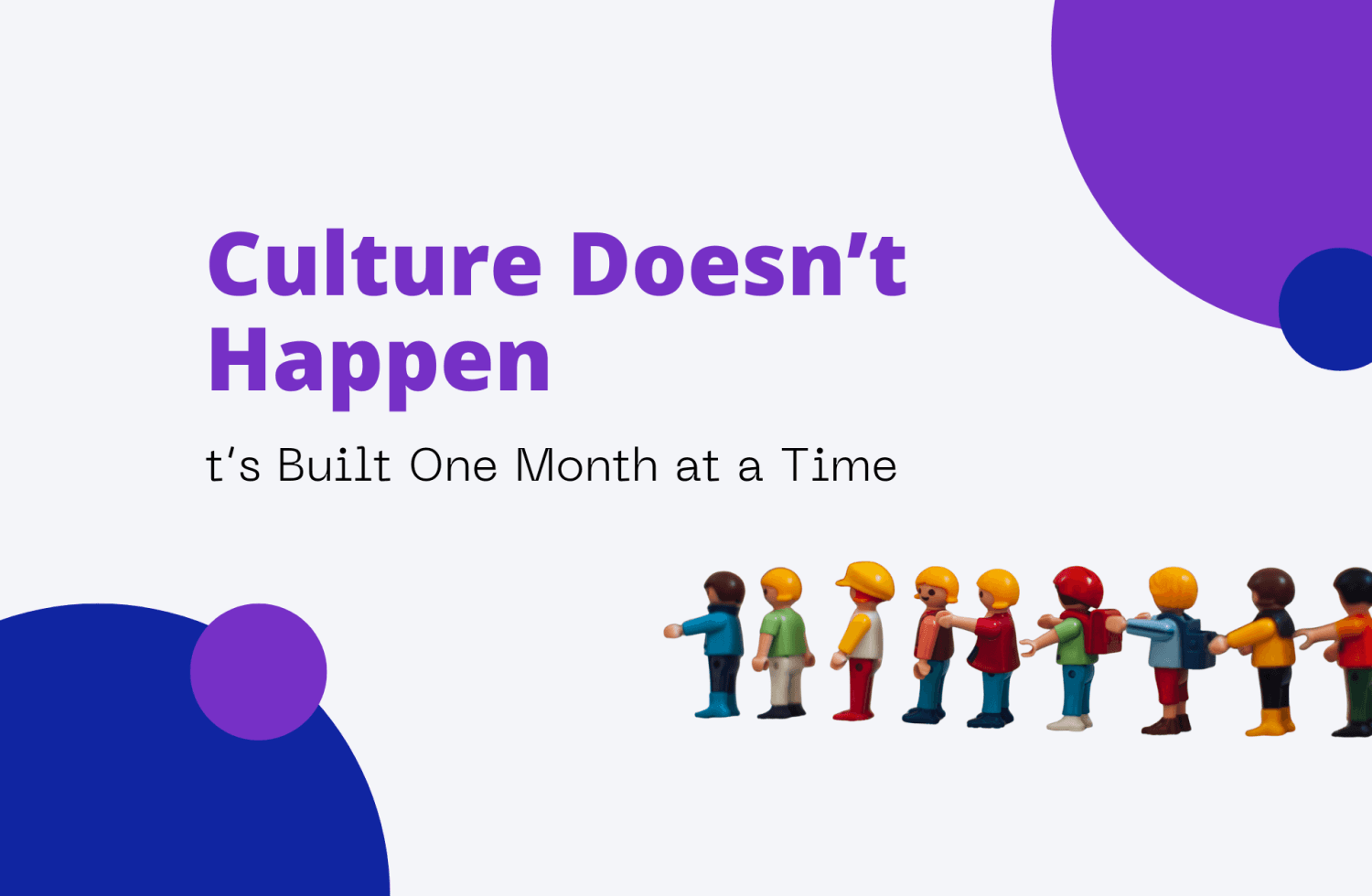
Culture doesn’t happen. It’s built.
Why Culture Feels Invisible—Until It’s Gone
Culture isn’t defined by a mission statement or a values poster.
It shows up in smaller, quieter ways:
- How meetings are run
- Whether growth feels supported
- If people feel safe speaking honestly
- How often reflection actually happens
- Whether effort is noticed or ignored
These moments don’t announce themselves.
But people remember them.
When teams don’t know what to expect, uncertainty grows.
When uncertainty grows, trust erodes.
Structure doesn’t limit culture.
It protects it.
The Problem With One-Off Culture Efforts
Many organizations try to fix culture with a single action.
A team offsite.
A workshop.
A fun event once a year.
These moments can feel good.
But without continuity, they fade quickly.
Culture isn’t built in one moment.
It’s built through rhythm.
That’s why a year-long approach works differently.
Why a Monthly Rhythm Changes Everything
A culture playbook built month by month creates predictability.
When people know what’s coming, they engage differently.
They prepare mentally.
They participate more fully.
Each month having a clear purpose removes guesswork.
Growth months signal investment.
Reflection months signal care.
Structure creates safety.
Fun, when done well, restores connection.
Variety keeps attention from fading.
Consistency builds trust slowly, but reliably.
Culture becomes something teams can rely on, not react to.
What the 2026 Culture Playbook Is Designed to Do
This playbook isn’t about forcing engagement.
It’s about creating space where engagement can happen naturally.
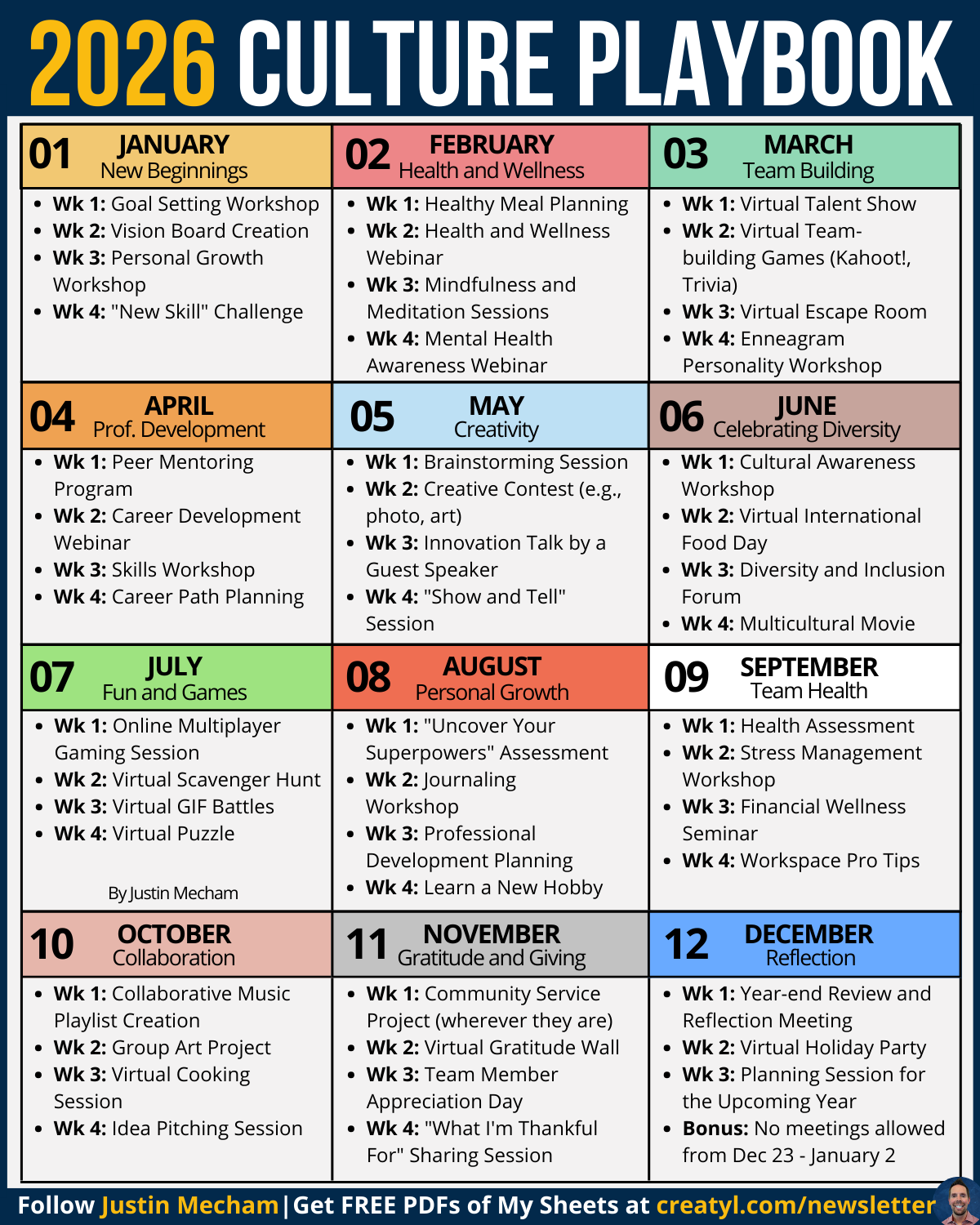
Each month has a clear theme and a simple set of moments that reinforce it.
Nothing feels random.
Nothing feels performative.
The goal is not activity.
The goal is memory.
People remember how work felt during those moments.
A Closer Look at the Yearly Flow
The year begins with clarity and growth.
Teams reset direction and personal development early, when energy is highest.
Mid-year focuses on connection, creativity, and inclusion.
These months counter burnout and monotony before they set in.
Later months emphasize collaboration, gratitude, and reflection.
Work slows slightly, allowing people to close the year with meaning instead of exhaustion.
This arc mirrors how people naturally move through a year.
That alignment matters.
A Real Workplace Example: When Culture Was Left to Chance
They were a distributed team inside a growing company.
Work was moving fast.
Goals were clear.
But morale felt uneven.
Some people were engaged.
Others were quiet.
Meetings felt transactional.
New hires struggled to feel connected.
There was no single issue to fix.
Culture felt vague and inconsistent.
Over time, cracks became visible.
Participation dropped in meetings.
Feedback slowed.
People did their work, but stopped going beyond it.
Leaders sensed disengagement but didn’t know where to start.
Attempts to “fix culture” felt scattered and reactive.
The absence of structure created uncertainty.
They stopped treating culture as a background outcome and started planning it.
A simple monthly rhythm was introduced.
Each month had a purpose people could understand and anticipate.
Growth was supported intentionally.
Reflection became normal instead of rare.
Connection happened without forcing it.
Meetings gained energy because people felt invested again.
Engagement improved because expectations were clear.
Nothing dramatic changed overnight.
But month by month, culture became steadier, clearer, and easier to sustain.
Why This Approach Works Long-Term
Culture isn’t built through intensity.
It’s built through repetition.
Small, consistent moments matter more than big gestures.
Planning ahead removes pressure from leaders and teams alike.
When people know what’s coming, they show up differently.
They contribute more.
They stay longer.
They care more.
Not because they were told to.
But because the environment supports it.
Tools That Support Intentional Culture
The Culture Code explores how trust and safety shape team performance.
Team of Teams explains why structure supports adaptability.
Notion helps document and plan recurring culture rhythms.
creatyl supports turning frameworks into usable resources teams can return to.
Culture Is Not Extra. It Is the Work.
Why Planning for Culture Is a Leadership Responsibility
Culture isn’t something you fix when things go wrong.
It’s something you build when things are going right.
When culture is planned, teams feel steadier.
When it’s ignored, friction grows quietly.
Leaders don’t need more ideas.
They need a rhythm they can rely on.
One month at a time.
One clear purpose at a time.
One moment people remember.
That’s how culture lasts.
Download the 2026 Culture Playbook (PDF)
Culture is easier to build when the plan already exists.
The 2026 Culture Playbook lays out a full year of intentional moments, giving teams a simple rhythm they can rely on without overthinking or starting from scratch.
Download the 2026 Culture Playbook (PDF)
It’s a practical way to turn culture from an abstract idea into something real, consistent, and sustainable.