Click Here to Download the PDF.
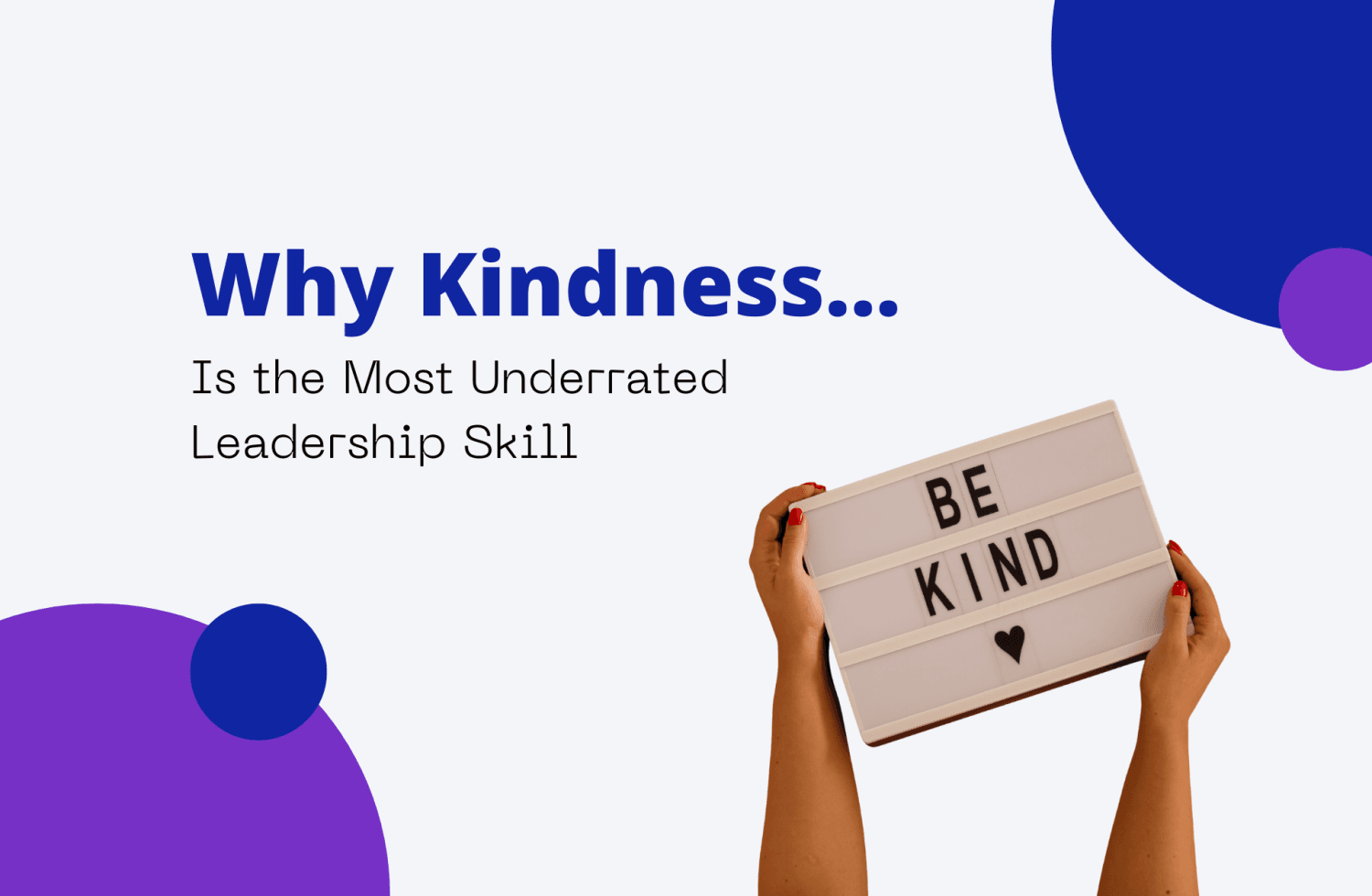
The Most Effective Leaders Choose Kindness on Purpose
The most successful people I’ve worked with all have one thing in common.
They are kind—but not by accident.
Not when it’s easy.
Not when it’s convenient.
Not when someone is watching.
They choose it deliberately, even under pressure.
And that choice compounds.
Kindness, when it works, is not random.
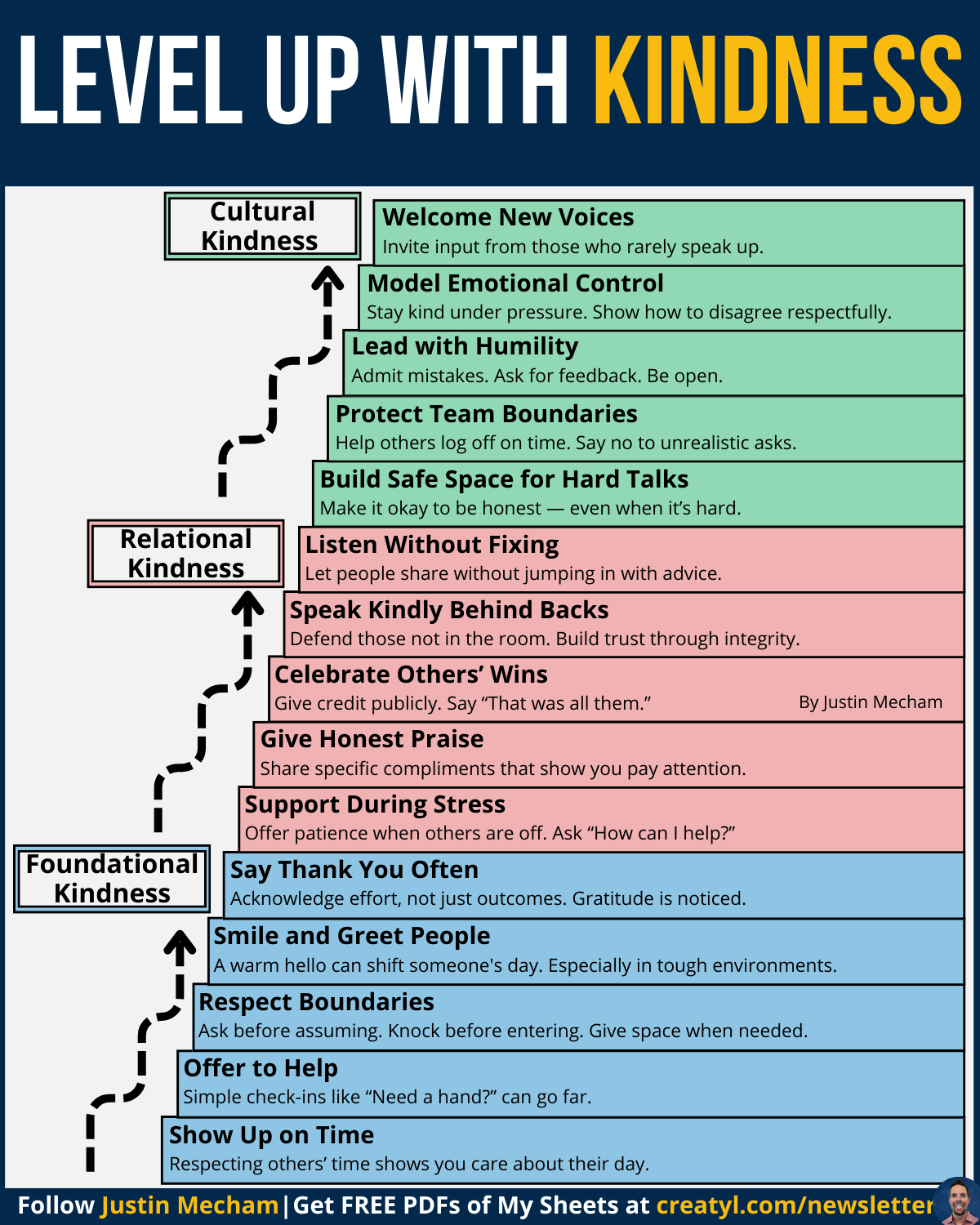
It is built in layers.
If the base layer is missing, everything above it collapses.
Why Kindness Gets Misunderstood at Work
Kindness is often treated like personality.
Something you either have or you don’t.
Something nice, but optional.
That belief causes problems.
Because kindness at work is not about being agreeable.
It is about how people experience you over time.
People don’t trust words.
They trust patterns.
And patterns are built through behavior, not intention.
Level 1: Foundational Kindness Builds Trust Before Anything Else
The first layer of kindness is not inspiring.
It is practical.
It shows up in small, repeatable behaviors that signal respect.
Showing up on time.
Helping without being asked.
Respecting space and time.
Making eye contact.
Saying thank you and meaning it.
This is where trust begins.
Not in vision statements.
Not in values decks.
But in how people feel treated during ordinary moments.
When this layer is missing, nothing above it holds.
Level 2: Relational Kindness Creates Safety
Once trust exists, the next layer becomes possible.
This is how you show up for people when things are real.
Listening without jumping in to solve.
Giving praise that is specific and earned.
Sharing credit openly.
Showing patience when stress rises.
Speaking well of others when they are not in the room.
This layer changes how people show up.
People stop guarding themselves.
They stop filtering ideas.
They stop conserving energy.
Safety unlocks honesty.
And honesty improves work faster than pressure ever will.
Level 3: Cultural Kindness Shapes Leadership Under Pressure
The final layer only appears when stakes are high.
This is kindness that shows up in leadership moments.
Inviting quieter voices into the conversation.
Staying calm when decisions matter.
Admitting mistakes without delay.
Protecting time and boundaries.
Making hard conversations feel human.
This is how culture forms.
Not through slogans.
But through moments people remember.
Culture is built when people watch how leaders behave under stress.
A Real Workplace Example: When Performance Looked Like a People Problem
They were part of a fast-moving team under constant deadlines.
Results mattered.
Pressure was high.
The work was demanding.
On paper, performance was fine.
But something felt off.
People hesitated to speak up.
Meetings felt tense.
Feedback was taken personally.
Burnout showed up quietly, not dramatically.
Leadership pushed harder, thinking effort was the issue.
It wasn’t.
The base layer of kindness had cracks.
Instead of adding new initiatives, the team focused on behavior.
Leaders became consistent about time and boundaries.
Credit was shared publicly and often.
Listening replaced fixing.
Hard conversations slowed down and became more direct.
Quieter voices were invited in intentionally.
Nothing flashy changed.
But within weeks, trust returned.
People spoke more freely.
Energy stabilized.
Work felt lighter without becoming slower.
Kindness didn’t reduce standards.
It made them sustainable.
Why Kindness Only Scales When the Base Is Real
People know when kindness is performative.
They feel it immediately.
If it’s fake, it creates distance.
If it’s real, it spreads naturally.
Kindness scales through example, not instruction.
When people see it practiced consistently, they copy it.
That’s how culture compounds.
Final Thought: Kindness Is Practiced Strength
Why the Best Leaders Build It Daily
Kindness is not softness.
It is discipline.
It requires awareness, restraint, and intention—especially when pressure is high.
The strongest leaders don’t use kindness as a mood.
They use it as a standard.
And over time, that standard shapes trust, safety, and performance in ways no policy ever could.
Download the “Level Up With Kindness” Infographic (PDF)
If you want a visual guide to the layers of kindness covered in this article, download the infographic connected to it.
Download the Level Up With Kindness infographic (PDF)
It’s a simple reminder that real leadership is built one choice at a time.