Click Here to Download the PDF.
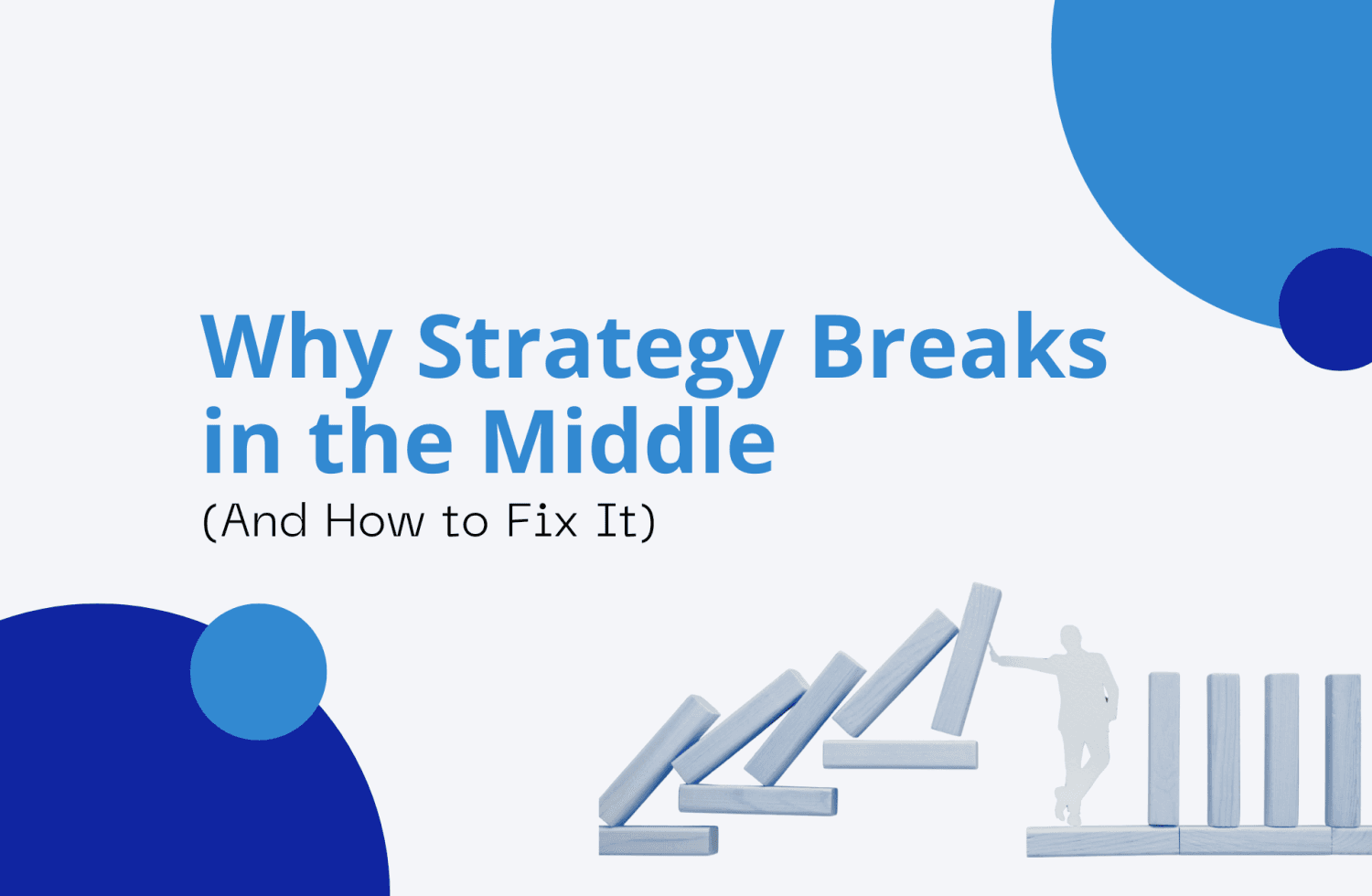
Strategy Rarely Fails at the Start or the End
Strategy usually breaks in the middle.
Right where calendars are full.
Right where people feel busy.
Right where effort is high but movement is low.
That middle zone is dangerous because it looks productive.
Meetings happen.
Plans exist.
Tasks get checked off.
Yet results stall.
The issue isn’t motivation or talent.
It’s a broken chain.
Why Strategy Is Not a Single Decision
Many teams treat strategy as a moment.
A big idea.
A planning session.
A deck that gets approved.
But strategy doesn’t live in a moment.
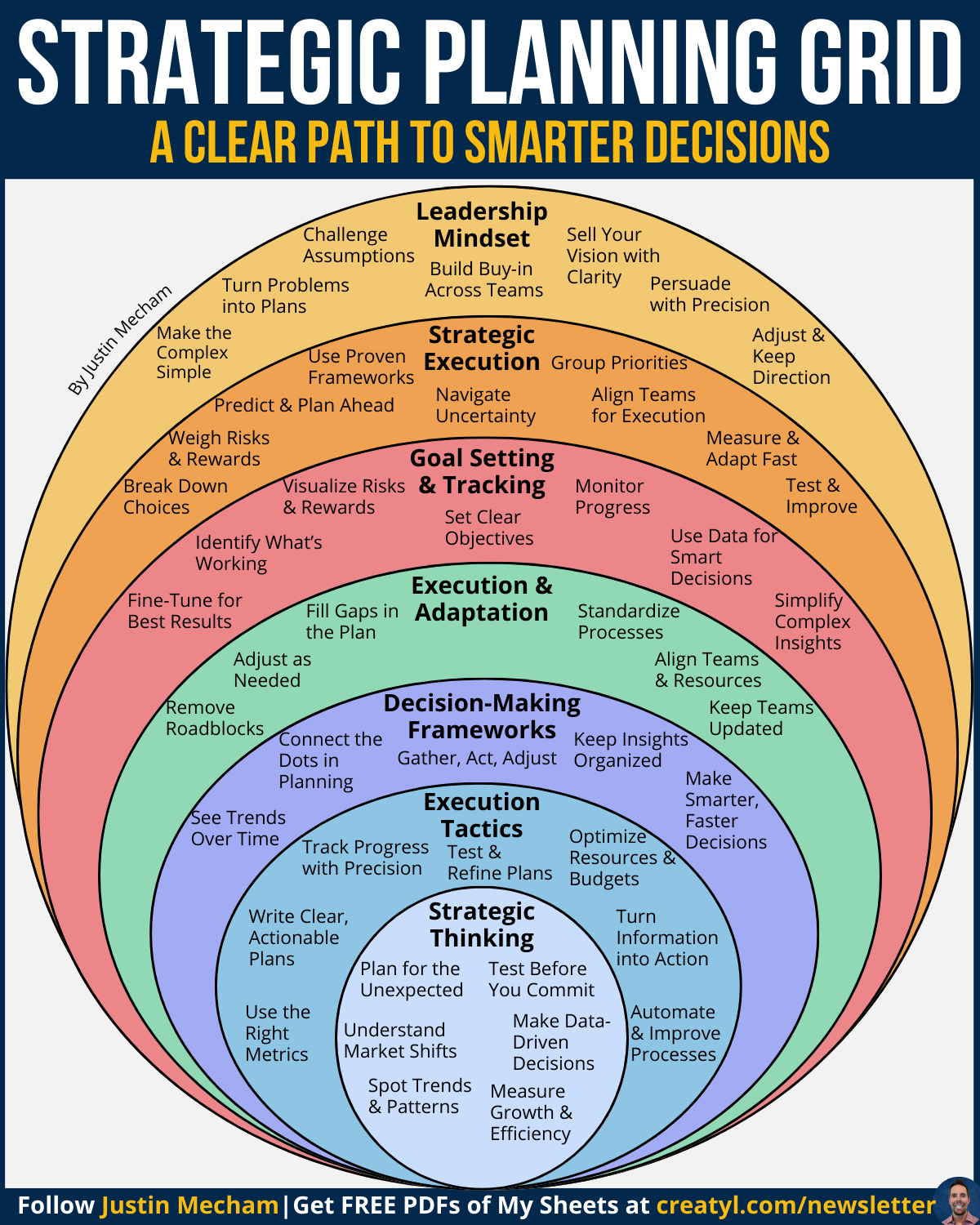
It lives in layers.
Each layer depends on the one before it.
When one layer weakens, everything above it suffers—even if no one notices right away.
Layer 1: Clear Thinking Comes First
Every strategy begins with thinking.
This is where most problems quietly start.
Clear thinking requires noticing patterns instead of reacting to noise.
It means questioning what feels obvious.
It relies on data rather than gut feelings alone.
It assumes conditions will change.
When thinking is rushed or lazy, decisions downstream inherit those flaws.
Bad inputs always lead to bad outputs.
Layer 2: Choosing Wisely Turns Thought Into Motion
Thinking alone does not create progress.
Choice does.
This layer is about deciding with intention.
Gather only what matters.
Make the decision.
Review results quickly.
Adjust without ego.
Teams that avoid decisions often confuse caution with care.
Speed paired with reflection moves work forward.
Layer 3: Doing the Work That Actually Matters
This is where many strategies lose credibility.
Ideas are still discussed instead of executed.
Plans remain abstract.
Activity replaces progress.
This layer demands discipline.
Plans must turn into clear steps.
Only meaningful metrics get tracked.
Tests stay small and fast.
Time is spent where results appear.
Busy schedules do not equal progress.
Movement does.
Layer 4: Execution and Adaptation Reduce Friction
Once work begins, reality shows up.
Blockers appear.
Resources misalign.
People drift out of sync.
This layer exists to handle that reality.
Remove obstacles quickly.
Lock in what works.
Re-align people and resources.
Keep information flowing.
Clarity here prevents frustration.
When teams know what’s changing and why, resistance drops.
Layer 5: Tracking Goals Keeps Strategy Honest
What isn’t tracked cannot be fixed.
This layer prevents wishful thinking.
Targets must be clear.
Progress must be reviewed weekly.
Noise must be removed.
Improvements must happen quickly.
Tracking is not about control.
It’s about learning.
Simple tracking beats clever systems every time.
Layers 6 and 7: Execution and Leadership Hold the Chain Together
The final layers multiply everything below them.
This is where leadership shows up.
Create buy-in by explaining the why.
Challenge habits that no longer serve the goal.
Correct course early instead of waiting.
Keep direction visible.
Leadership doesn’t replace strategy.
It protects it.
Without leadership, even good strategy drifts.
A Real Workplace Example: When Strategy Looked Busy but Stuck
A cross-functional team had a clear plan and strong support.
Goals were defined.
Meetings were frequent.
Workloads were heavy.
Yet progress slowed.
People felt overwhelmed.
Tasks piled up.
Decisions took longer.
Momentum faded despite long hours.
Frustration grew because effort wasn’t translating into results.
Instead of adding more tools or meetings, the team mapped the layers.
Clear thinking was solid.
Execution effort was high.
But the choice layer was weak.
Decisions were delayed and rarely revisited.
Once that layer was fixed, progress returned.
Fewer decisions were made, but they were clearer.
Work aligned quickly.
Results followed.
Fixing the missing layer restored the entire chain.
How to Use This Without Overthinking It
This framework is not meant to add complexity.
It removes it.
When something feels stuck:
Pick one decision that isn’t moving.
Identify which layer is missing or weak.
Fix that layer first.
Nothing else needs to change yet.
Why Strong Strategy Feels Calm, Not Chaotic
Good strategy reduces noise.
It creates focus.
It removes guesswork.
It aligns effort.
When layers are connected, work feels lighter—even when goals are ambitious.
Strong Strategy Is Connected
Why Seeing the Layers Changes Everything
Strategy doesn’t fail because teams don’t care.
It fails because connections break quietly.
Once the layers are visible, problems become easier to fix.
Not by working harder.
But by fixing the right layer first.
Strong strategy is not complex.
It’s connected.
And once that’s seen, it can’t be unseen.
Download the Strategic Planning Grid (PDF)
For a visual guide to the layers covered in this article, download the infographic connected to it.
Download the Strategic Planning Grid (PDF)
It’s designed to help teams spot broken links and restore momentum without starting over.