

Click Here to Download the PDF.
Hard Work Used To Be The Advantage. Now It’s The Entry Fee.
There was a time when working harder felt like the answer.
Stay late.
Say yes to every request.
Take on more responsibility.
Be the most dependable person in the room.
I did all of it.
And for a while, it felt right.
People appreciated the effort.
Managers noticed the commitment.
But there was a quiet truth underneath it that took me too long to see.
Effort alone did not make me irreplaceable.
I was reliable.
I was helpful.
I was busy.
But I was still replaceable.
The people moving ahead were not necessarily grinding longer hours.
They were stacking skills that traveled across roles.
Skills that applied whether the title changed or the tools shifted.
That’s when I started paying attention to a bigger pattern.
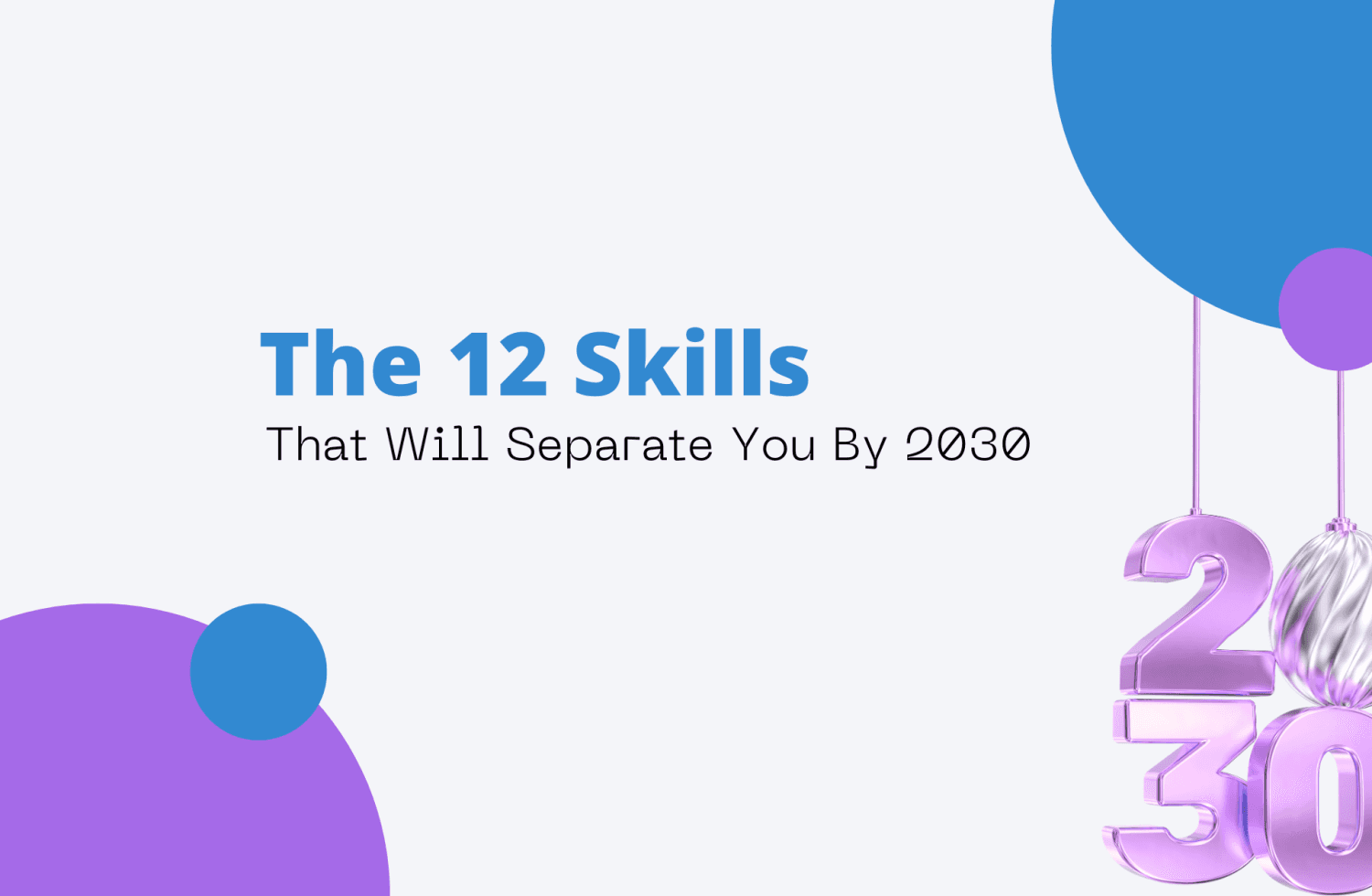
By 2030, most roles will not disappear.
They will evolve.
The real gap will not be effort.
It will be skills.
And not just technical skills. Transferable ones.
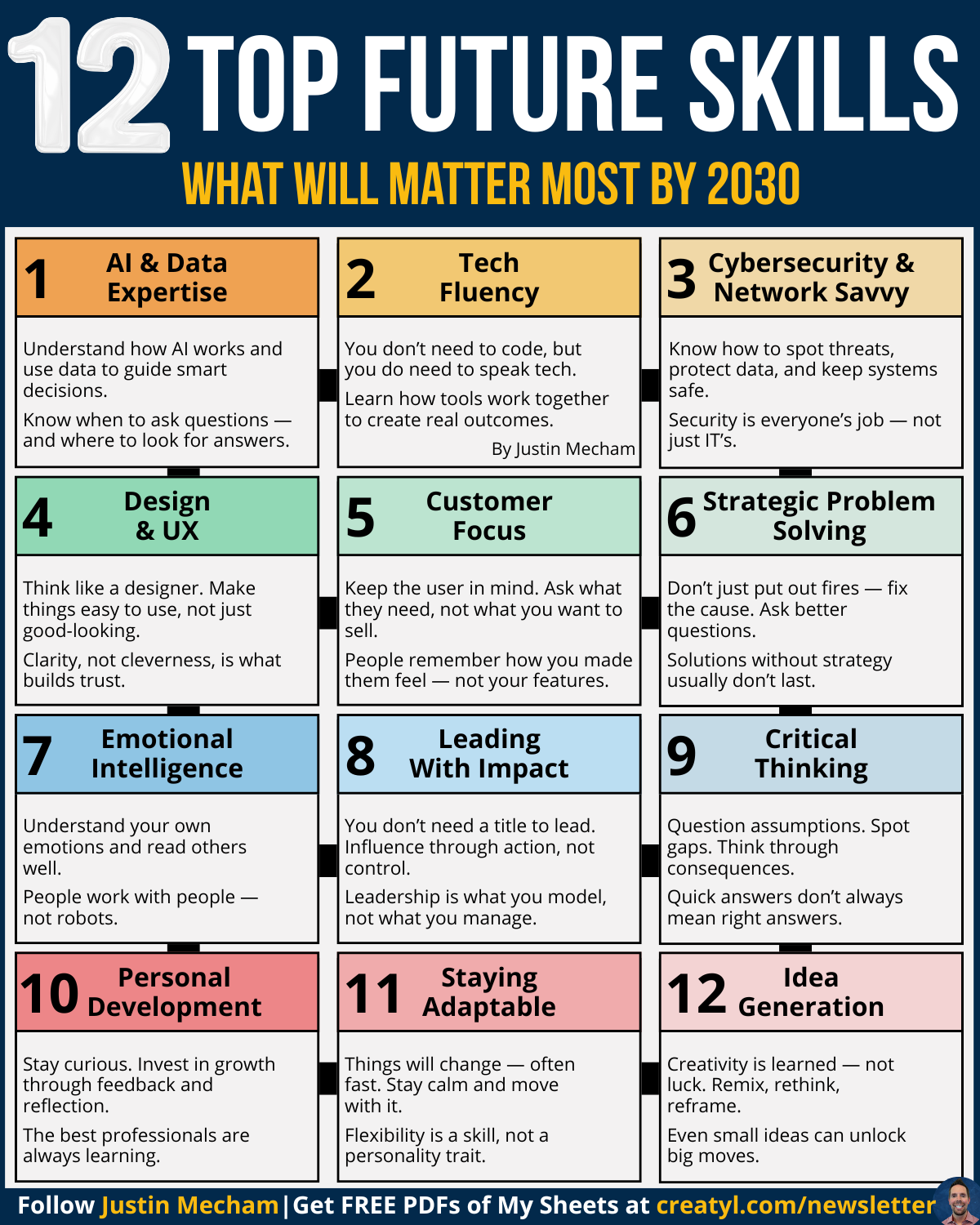
The World Economic Forum has highlighted a set of future skills that are rising in importance.
But what matters most is not memorizing the list.
It’s understanding how to apply these skills in your current role today.
Let’s break them down properly.
1) AI & Data Expertise
You Don’t Need To Build It. You Need To Understand It.
You don’t need to become a machine learning engineer to stay relevant.
But you do need to understand how AI and data shape decisions.
In many workplaces, data is already influencing hiring, marketing, budgeting, and strategy.
AI tools are writing drafts, analyzing trends, predicting demand, and flagging risks.
The professionals who stand out are not the ones who can code the system.
They are the ones who can ask better questions of the system.
Action Lesson:
- Learn how your company uses data to make decisions.
- Ask what metrics truly drive outcomes.
- Practice turning vague questions into measurable ones.
For example, instead of asking, “Is this campaign working?” ask, “What data tells us this campaign is moving the right behavior?”
Th
at shift alone separates contributors from decision-makers.
2) Tech Fluency
You Don’t Need To Code. You Need To Connect Tools.
Tech fluency is not about mastering every platform.
It’s about understanding how tools work together.
Can you explain how your CRM connects to your email marketing?
Do you understand how automation saves time?
Can you choose the right tool for the job instead of defaulting to what you’ve always used?
Tech fluency makes you faster. It reduces friction. It helps you design smarter workflows.
Action Lesson:
- Map the tools you use weekly.
- Identify one manual task that could be automated.
- Learn one new feature in a tool you already use.
This isn’t about becoming technical. It’s about becoming adaptable.
3) Cybersecurity & Network Savvy
Security Is Everyone’s Job Now.
There was a time when security was “IT’s problem.”
That time is gone.
Phishing emails, weak passwords, careless data sharing — these are human errors more than technical ones.
Security awareness is becoming a baseline expectation.
Action Lesson:
- Use password managers.
- Question unexpected links.
- Understand what sensitive data you handle.
Knowing what to protect and how to spot risk is no longer optional.
It’s professional hygiene.
4) Design & UX
Clear Beats Clever.
You don’t need to be a graphic designer to think like one.
Design today is about clarity. It’s about making things easy to use, not flashy.
Can someone understand your slide in 10 seconds?
Can they navigate your document without asking questions?
Is your proposal structured clearly?
Design thinking builds trust. When things are easy to use, people assume competence.
Action Lesson:
- Simplify your next presentation.
- Cut unnecessary text.
- Ask, “Is this obvious to someone new?”
Ease is a competitive advantage.
5) Customer Focus
People Remember How You Made Them Feel.
Features matter.
But feelings last longer.
The professionals who grow are the ones who think beyond the task and focus on the experience.
Are you solving what the customer needs, or what you want to build?
Are you listening to feedback, or defending your work?
Action Lesson:
- After your next project, ask one customer: “What would have made this easier for you?”
- Observe patterns in complaints.
Customer focus is empathy in action.
6) Strategic Problem Solving
Fix The Cause, Not The Fire.
Many professionals are great at reacting.
Fewer are great at diagnosing.
If a project misses a deadline, do you patch the timeline? Or do you investigate the root cause?
Strategy asks better questions:
- Why did this happen?
- What system allowed this?
- What prevents it next time?
Action Lesson:
- When a problem appears, write down three possible causes before suggesting a solution.
- Choose the cause that, if fixed, prevents repetition.
That habit alone elevates you from executor to thinker.
7) Emotional Intelligence
Work Is Still Human.
AI may grow. Automation may expand.
But work is still people.
Emotional intelligence means reading the room.
Knowing when someone is overwhelmed.
Knowing when to push and when to pause.
It also means understanding your own triggers.
Action Lesson:
- Notice your reaction in your next tense meeting.
- Ask yourself, “What am I feeling, and why?”
- Respond intentionally, not instantly.
The calm professional in a tense moment becomes trusted quickly.
8) Leading With Impact
Influence Beats Authority.
You don’t need a title to lead.
Leadership today is modeling behavior, not controlling it.
It’s owning outcomes. Taking initiative. Following through. Giving credit.
Action Lesson:
- Take ownership of one project beyond your job description.
- Share progress clearly.
- Invite input instead of demanding agreement.
Influence grows through action.
9) Critical Thinking
Fast Answers Are Not Always Right.
We live in a world of quick replies and hot takes.
But strong professionals slow down.
They question assumptions. They think through consequences.
Action Lesson:
- Before agreeing with a popular idea, ask, “What’s the downside?”
- Practice outlining pros and cons before major decisions.
Critical thinking protects you from reactive choices.
10) Personal Development
Growth Is A Habit.
The best professionals are always learning.
Not randomly.
Intentionally.
Action Lesson:
- Choose one skill to deepen this quarter.
- Track progress.
- Ask for feedback regularly.
Learning is no longer optional. It’s survival.
11) Staying Adaptable
Change Rewards Calm Movers.
Roles will shift. Tools will evolve. Industries will pivot.
The question is not whether change will happen.
It’s how you respond.
Action Lesson:
- When plans shift, focus first on what remains in your control.
- Build the habit of adjusting quickly instead of resisting.
Flexibility is a skill.
12) Idea Generation
Creativity Is Practiced.
Ideas are not luck.
They are trained.
Remix. Rethink. Reframe.
Small ideas, applied consistently, open large doors.
Action Lesson:
- Set a weekly goal to generate 10 ideas related to your work.
- Don’t judge them immediately.
- Review and refine later.
Range of thinking becomes range of opportunity.
A Real Workplace Example
From Hard Worker To Skill Stacker
I worked with a mid-level manager who was exhausted.
They worked long hours. Took on extra tasks. Stayed responsive at all times.
Yet promotions passed them by.
They were dependable but not distinctive.
The frustration grew.
They felt overlooked. Under-recognized. Replaceable.
Their manager valued them — but didn’t see them as strategic.
That label stuck.
We shifted focus from effort to skill stacking.
First, we identified two future-focused skills: strategic problem solving and tech fluency.
Instead of simply completing tasks, they began mapping root causes when issues arose.
Instead of manually tracking workflows, they automated repetitive processes.
They presented insights, not updates.
They asked sharper questions in meetings.
Within six months, perception changed.
They weren’t just working hard.
They were thinking ahead.
Effort stayed constant.
Skill level changed.
That changed everything.
What Made It Work
Small Moves That Created Big Shift
- They picked two skills and applied them immediately.
- They asked for feedback weekly.
- They focused on visible improvement, not silent growth.
- They treated learning as part of work, not something separate from it.
Stacking skills compounds.
Grinding does not.
The Deeper Shift That Matters
The future does not reward busyness.
It rewards range.
Range of thinking.
Range of tools.
Range of perspective.
Hard work is admirable.
But the professionals who win next are the ones who evolve intentionally.
The future favors those who can connect ideas, adapt calmly, and communicate clearly.
Effort opens doors.
Skills keep them open.
What You Learn Next Matters More Than What You Know Now
There is a quiet confidence that comes from knowing you are growing on purpose.
Not drifting. Not reacting. Not hoping your experience alone will carry you.
Growing.
The world is changing fast. Roles are shifting. Expectations are rising. But that doesn’t have to be threatening.
It can be empowering.
Because the advantage is no longer reserved for the loudest person in the room or the one with the longest tenure.
It belongs to the person who keeps upgrading themselves.
The person who asks better questions.
Who stays curious.
Who adapts without panic.
Who builds skills that travel across titles and industries.
You do not control the market.
You control your development.
And what you learn next will shape what you earn next.
Best Resources For Future Skills
Book: The Future of Jobs Report — World Economic Forum
Why It Fits: A leading global analysis on skills shaping the next decade.
Book: Range — David Epstein
Why It Fits: A powerful case for developing diverse, transferable skills.
TED Talk: The Skill of Self Confidence — Dr. Ivan Joseph
Why It Fits: A grounded perspective on growth and adaptability.
Podcast: The Knowledge Project — Shane Parrish
Why It Fits: Deep thinking on decision-making and mental models.
Tool: Coursera — Founded by Andrew Ng and Daphne Koller
Why It Fits: Access to structured learning across high-demand skill areas.
AI Tool: ChatGPT — OpenAI
Why It Fits: A daily practice tool for improving communication, analysis, and idea generation.
Download The 12 Top Future Skills Infographic (PDF)
If you want a clear visual reference of the 12 skills discussed here, download the PDF version of the infographic.
Use it as a guide while choosing the next skill you will build intentionally.