

Click Here to Download the PDF.
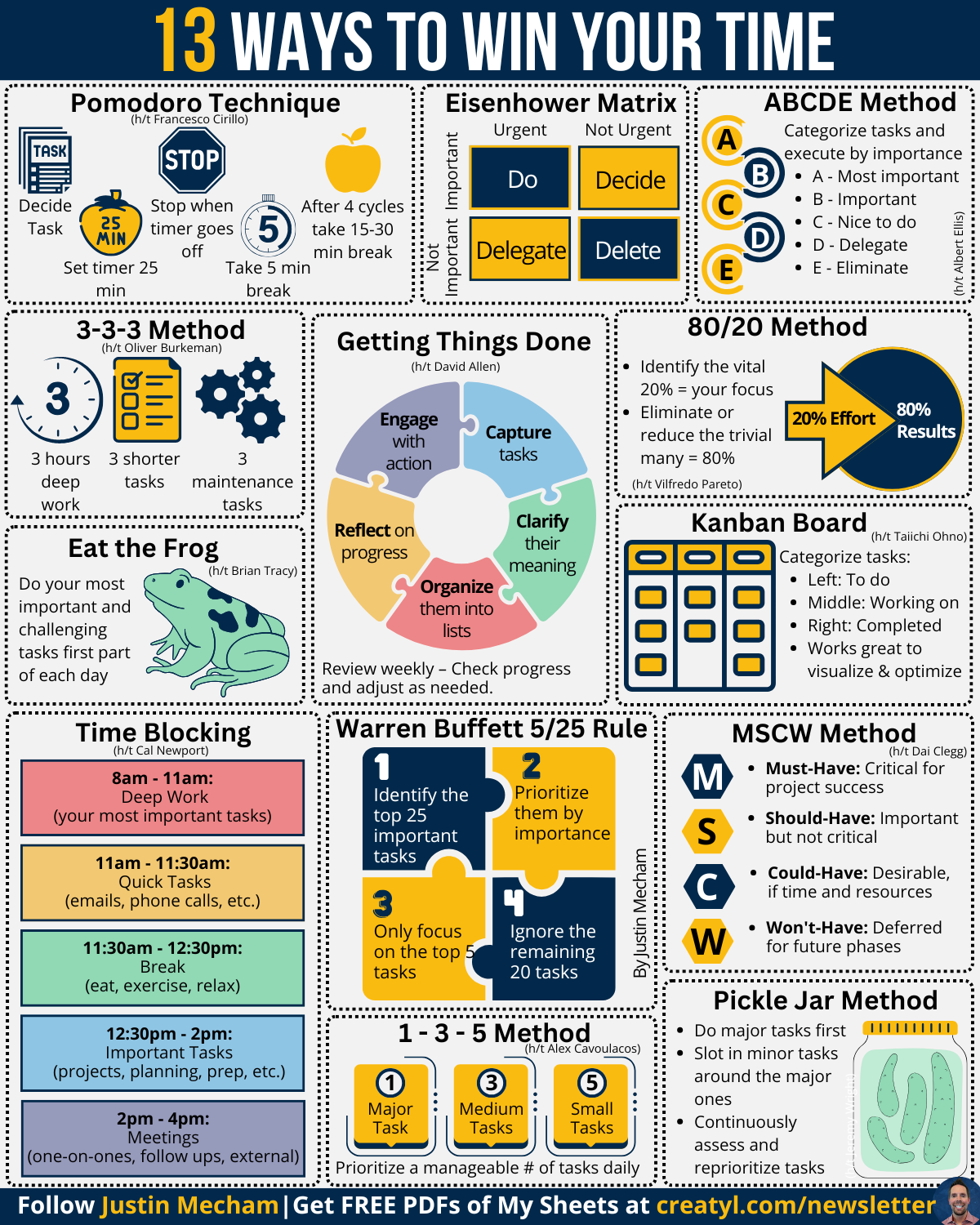
Most People Are Not Losing Time
They Are Losing Attention, Clarity, and Intention
Almost everyone has had this moment before.
You finish a long workday exhausted.
You answered emails.
Joined meetings.
Replied to messages.
Solved small problems.
Moved things around.
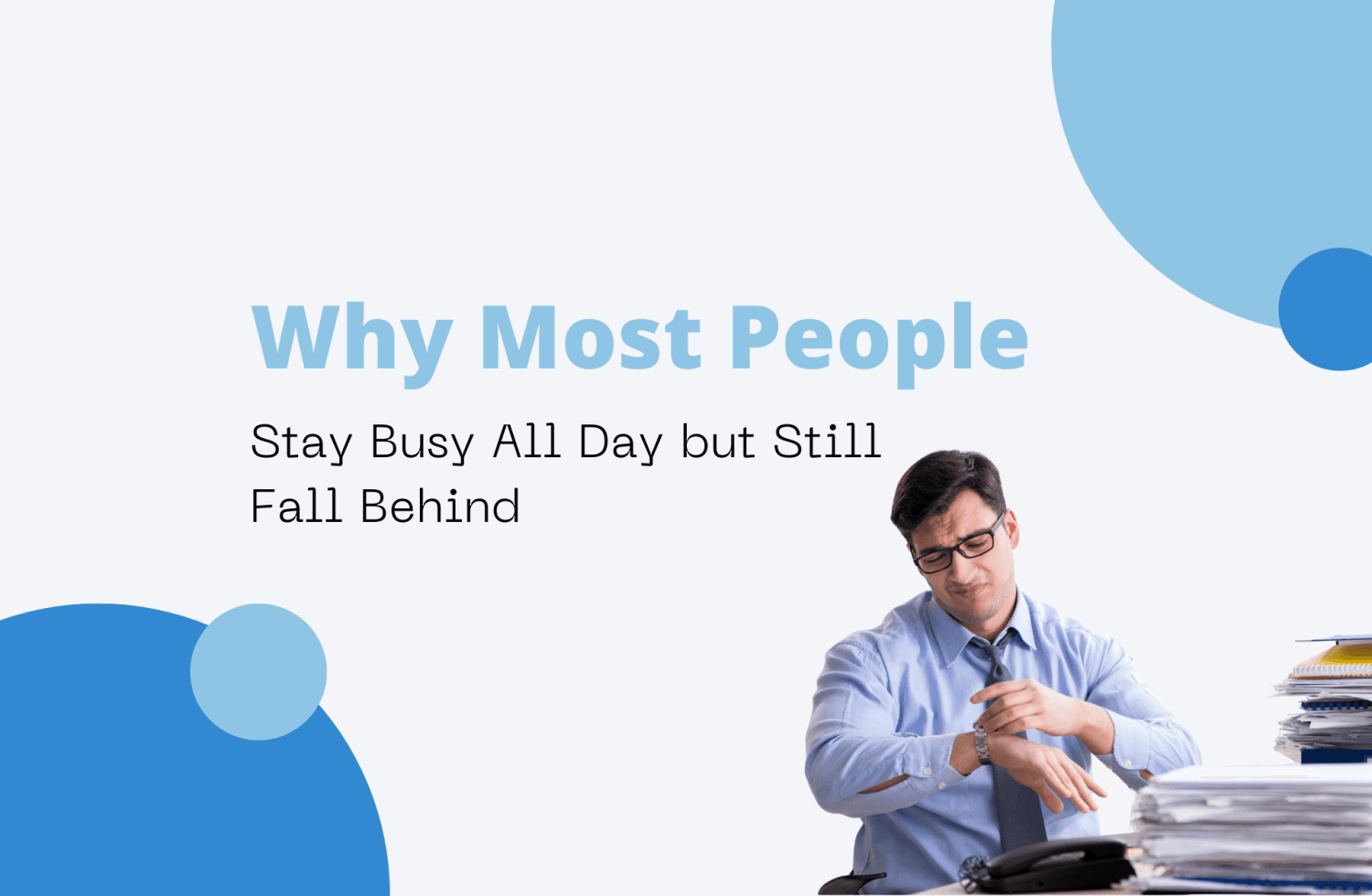
Stayed “busy” from morning until night.
And yet somehow, the work that actually mattered most is still sitting there unfinished.
That feeling is frustrating because it creates the illusion that there is never enough time.
But for most people, the issue is not actually time.
It is decision-making.
It is unclear priorities.
It is allowing urgency to overpower importance.
Modern work environments are built to steal attention constantly.
Notifications interrupt focus.
Meetings break momentum.
Small tasks create fake productivity.
And because many people never intentionally decide what deserves their energy first, the loudest tasks end up controlling the entire day.
That is how people become reactive instead of intentional.
The people who consistently produce meaningful work are not always working longer hours.
They are usually protecting their attention more deliberately.
That distinction changes everything.
Productivity Is Not About Doing More
It Is About Doing What Matters Before Your Energy Disappears
One of the biggest lies people believe about productivity is this:
“Successful people just get more done.”
Not exactly.
Truly productive people often do fewer things than everyone else.
But they do the right things consistently.
They understand something many people never fully learn:
Every “yes” to one task becomes a “no” to another.
Every hour spent reacting is an hour not spent building.
Every unnecessary commitment quietly steals energy from meaningful work.
This is why many highly productive people seem calm while everyone else feels overwhelmed.
They are not trying to manage everything.
They are intentionally deciding:
- what deserves focus
- what can wait
- what should be delegated
- what should be removed entirely
That clarity matters more than motivation ever will.
Because motivation changes daily.
Systems survive mood swings.
Why Most Productivity Advice Fails
A lot of productivity advice becomes overwhelming because people treat systems like identity instead of tools.
Someone discovers:
- time blocking
- Pomodoro
- Kanban
- deep work
- task batching
And suddenly tries to rebuild their entire life overnight.
That usually fails quickly.
Not because the systems are bad.
But because productivity systems only work when they support real behavior.
The goal is not becoming a perfectly optimized robot.
The goal is creating enough structure that your important work stops getting buried underneath constant noise.
That is why the best systems are often surprisingly simple.
They help people:
- prioritize clearly
- focus intentionally
- reduce decision fatigue
- protect attention
- finish meaningful work consistently
The system itself matters less than whether you actually use it consistently.
The Pomodoro Technique
Why Short Focus Beats Endless Grinding
One reason people struggle with focus today is because most brains are overloaded.
People try to multitask constantly:
- checking messages
- replying to notifications
- watching meetings
- switching tabs
- reacting all day
And then wonder why they feel mentally exhausted by lunchtime.
The Pomodoro Technique works because it simplifies attention dramatically.
One task.
One timer.
One period of focused effort.
Traditionally:
- work for 25 minutes
- take a 5-minute break
- repeat four times
- then take a longer break
Simple.
But powerful.
Because focus improves when the brain knows:
- the work session is temporary
- distractions are intentionally removed
- rest is scheduled instead of earned through burnout
Many people resist breaks because they think constant work equals discipline.
In reality, mental recovery improves cognitive performance significantly.
Rest is not laziness.
Rest protects consistency.
The Eisenhower Matrix
One of the Most Important Productivity Lessons Ever Created
Many people confuse urgency with importance.
But they are not the same thing.
Urgent tasks demand attention immediately.
Important tasks create long-term results.
And unfortunately, urgent tasks usually scream louder.
That is why people spend entire days reacting while their meaningful goals quietly stall.
The Eisenhower Matrix forces better decisions by dividing tasks into four categories:
1. Important + Urgent
Do it now.
2. Important + Not Urgent
Schedule it intentionally.
3. Urgent + Not Important
Delegate it if possible.
4. Not Urgent + Not Important
Delete it.
This system matters because many meaningful life improvements live inside the “important but not urgent” category:
- health
- learning
- strategic thinking
- relationship building
- creative work
- long-term business growth
And these are exactly the tasks people postpone most often.
Not because they lack value.
But because they lack urgency.
“Eat the Frog”
Why Doing the Hardest Task First Changes Your Entire Day
People naturally avoid discomfort.
So they often begin the day with:
- easy emails
- low-stakes tasks
- quick wins
- busywork
The issue is that difficult work remains mentally open all day long.
It drains energy quietly in the background.
Brian Tracy’s “Eat the Frog” method solves this simply:
Do the hardest meaningful task first.
Before distractions multiply.
Before fatigue increases.
Before fear grows larger.
This creates momentum because difficult work stops haunting the rest of the day.
Many people discover that once the hardest thing is complete:
- stress decreases
- clarity improves
- confidence rises
- focus becomes easier
Momentum matters more than people realize.
The 3-3-3 Method
Why Balanced Productivity Works Better Than Extreme Productivity
One reason people burn out is because they try turning every day into maximum output.
But sustainable productivity requires rhythm.
The 3-3-3 method creates structure without overwhelming the day:
- 3 hours deep work
- 3 shorter tasks
- 3 maintenance tasks
This matters because not all work requires the same energy level.
Deep work requires:
- concentration
- creativity
- cognitive effort
Maintenance work requires:
- organization
- communication
- administration
Separating these intentionally prevents constant context switching.
And context switching destroys focus faster than many people realize.
The Warren Buffett 5/25 Rule
One of the Hardest Productivity Lessons for Ambitious People
This method sounds simple.
But emotionally, it is difficult.
The process:
- Write your top 25 goals.
- Circle the top 5.
- Avoid the remaining 20.
Not “work on them occasionally.”
Avoid them.
Why?
Because many good opportunities quietly destroy focus on great opportunities.
Ambitious people often struggle here because they want:
- multiple projects
- constant expansion
- endless possibilities
But divided attention weakens progress.
Focus creates depth.
And depth creates meaningful results.
Most people do not fail because they lack ideas.
They fail because they spread themselves across too many priorities simultaneously.
Kanban Boards
Why Visual Progress Changes Motivation
Some people think visually.
For them, invisible progress feels discouraging.
That is why Kanban systems work so effectively.
Tasks move through visible stages:
- To Do
- Doing
- Done
That movement creates psychological momentum.
Progress becomes visible.
Work feels concrete.
Overwhelm decreases because tasks stop living entirely inside the mind.
Kanban systems are especially powerful for:
- teams
- creators
- project managers
- visual thinkers
- multi-step workflows
Clarity reduces stress.
Visual clarity reduces it even faster.
The MoSCoW Method
Because Everything Cannot Be Equally Important
One of the biggest causes of overwhelm is treating every task like an emergency.
The MoSCoW method solves this by forcing prioritization:
Must Have
Critical tasks.
Should Have
Important but not essential immediately.
Could Have
Helpful additions.
Won’t Have
Not necessary right now.
This framework becomes powerful because many people never intentionally eliminate anything.
They just keep adding.
But sustainable productivity depends heavily on subtraction.
Not accumulation.
Productivity Is Emotional, Not Just Practical
This is something many productivity conversations miss entirely.
People do not procrastinate only because of poor planning.
Often they procrastinate because of:
- fear of failure
- perfectionism
- emotional exhaustion
- unclear priorities
- decision fatigue
- overwhelm
- anxiety
That means better productivity often requires emotional clarity too.
Not just better calendars.
A perfectly optimized system cannot fix chronic burnout.
But healthy systems can reduce unnecessary stress significantly.
A Real Workplace Example
How Constant Busyness Quietly Destroyed Real Progress
A team lead felt exhausted constantly.
Every day looked productive:
- endless meetings
- Slack messages
- email replies
- quick requests
- urgent updates
Yet major strategic projects kept falling behind.
The team lead felt confused because they were working nonstop but still feeling behind.
Over time:
- stress increased
- deadlines slipped
- frustration grew
- evenings became work catch-up sessions
- focus deteriorated
The issue was not effort.
The issue was reactive work dominating the day.
Everything urgent was stealing energy from everything important.
The team lead implemented three changes:
- time blocking deep work hours
- using the Eisenhower Matrix weekly
- applying the “Eat the Frog” method daily
Meetings were reduced.
Notifications were limited.
Priority work happened before reactive work.
Within weeks:
- meaningful progress increased
- stress decreased
- strategic projects moved faster
- energy improved dramatically
Nothing magical changed.
Attention simply became intentional again.
A Five-Day Productivity Reset That Actually Works
If your schedule currently feels chaotic, complicated systems are not the answer yet.
Simplicity is.
Try this instead.
Day 1: Write Everything Down
Capture every:
- task
- obligation
- open loop
- commitment
- mental reminder
Most overwhelm becomes smaller once visible.
Day 2: Circle What Actually Matters
Not everything deserves equal energy.
Choose:
- the tasks creating real progress
- the tasks connected to meaningful goals
- the tasks with the highest long-term value
Day 3: Block Time for Important Work
Protect focused time intentionally.
Not after everything else.
Before everything else.
Day 4: Do the Hardest Thing First
Stop carrying difficult work mentally all day.
Remove it early.
Day 5: Eliminate One Thing Entirely
Delete:
- one unnecessary task
- one draining commitment
- one low-value obligation
Productivity improves dramatically when unnecessary friction disappears.
The Most Productive People Protect Their Attention Aggressively
Attention is one of the most valuable resources modern workers possess.
And yet most people give it away constantly.
Every interruption carries cognitive cost.
Every context switch reduces depth.
Every unnecessary task steals energy from meaningful work.
The people who consistently create high-value work are usually not:
- available all the time
- reacting instantly
- multitasking constantly
They protect focus deliberately.
That boundary matters.
Time Does Not Magically Appear — Clarity Creates It
Most people are not actually missing time.
They are missing intentionality.
Because without clear priorities:
- urgency wins
- distraction spreads
- attention fragments
- exhaustion increases
- meaningful work gets postponed again
The goal is not becoming a machine.
The goal is reclaiming enough clarity that your days stop feeling stolen from you.
You do not need:
- 14 complicated systems
- perfect routines
- endless productivity hacks
You need:
- clearer priorities
- protected focus
- better boundaries
- fewer distractions
- intentional decisions
The people who seem most productive are rarely doing everything.
They are simply clearer about what deserves their energy.
And that clarity changes:
- performance
- stress
- creativity
- momentum
- peace of mind
Protect your time long enough, and eventually you stop surviving your days.
You start leading them.
Resources to Explore Further
Book Recommendation
Deep Work by Cal Newport
One of the best books on focus, attention, and producing meaningful work in distracted environments.
TED Talk Recommendation
Inside the Mind of a Master Procrastinator – Tim Urban
A funny but insightful breakdown of procrastination, attention, and human behavior.
Podcast Recommendation
The Diary of a CEO – Productivity & Focus Episodes
Excellent conversations around attention, performance, burnout, and sustainable productivity.
Reflection Exercise
Tonight, ask yourself:
- Which tasks actually moved my life forward today?
- Which tasks only made me feel busy?
- What distracted me most?
- What deserves protected time tomorrow?
- What can I remove completely?
Awareness creates better decisions.
Better decisions create better days.
Download the “13 Ways to Win Your Time” Infographic PDF
Use these frameworks to organize priorities, reduce overwhelm, and protect your time more intentionally throughout the week.