

Click Here to Download the PDF.
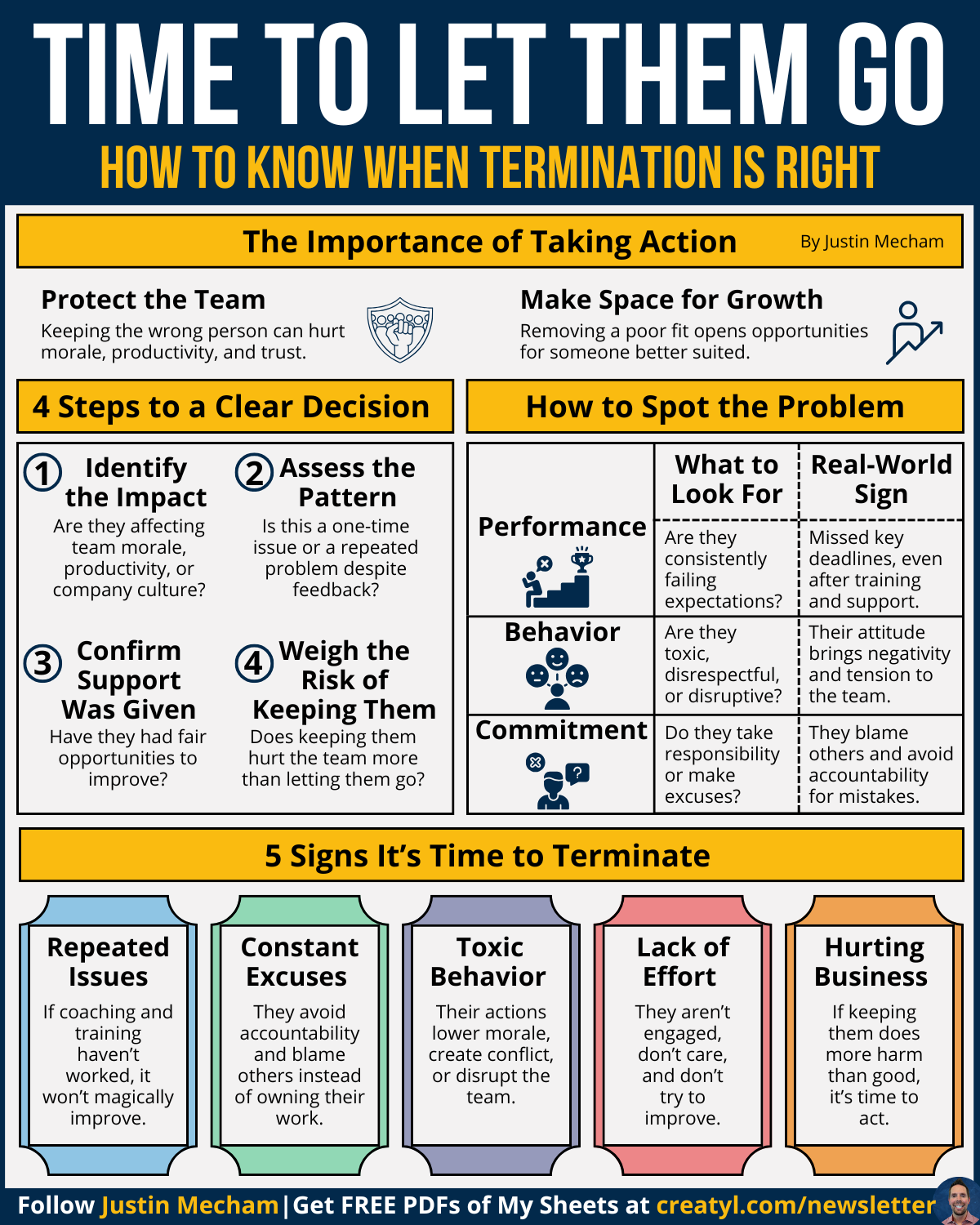
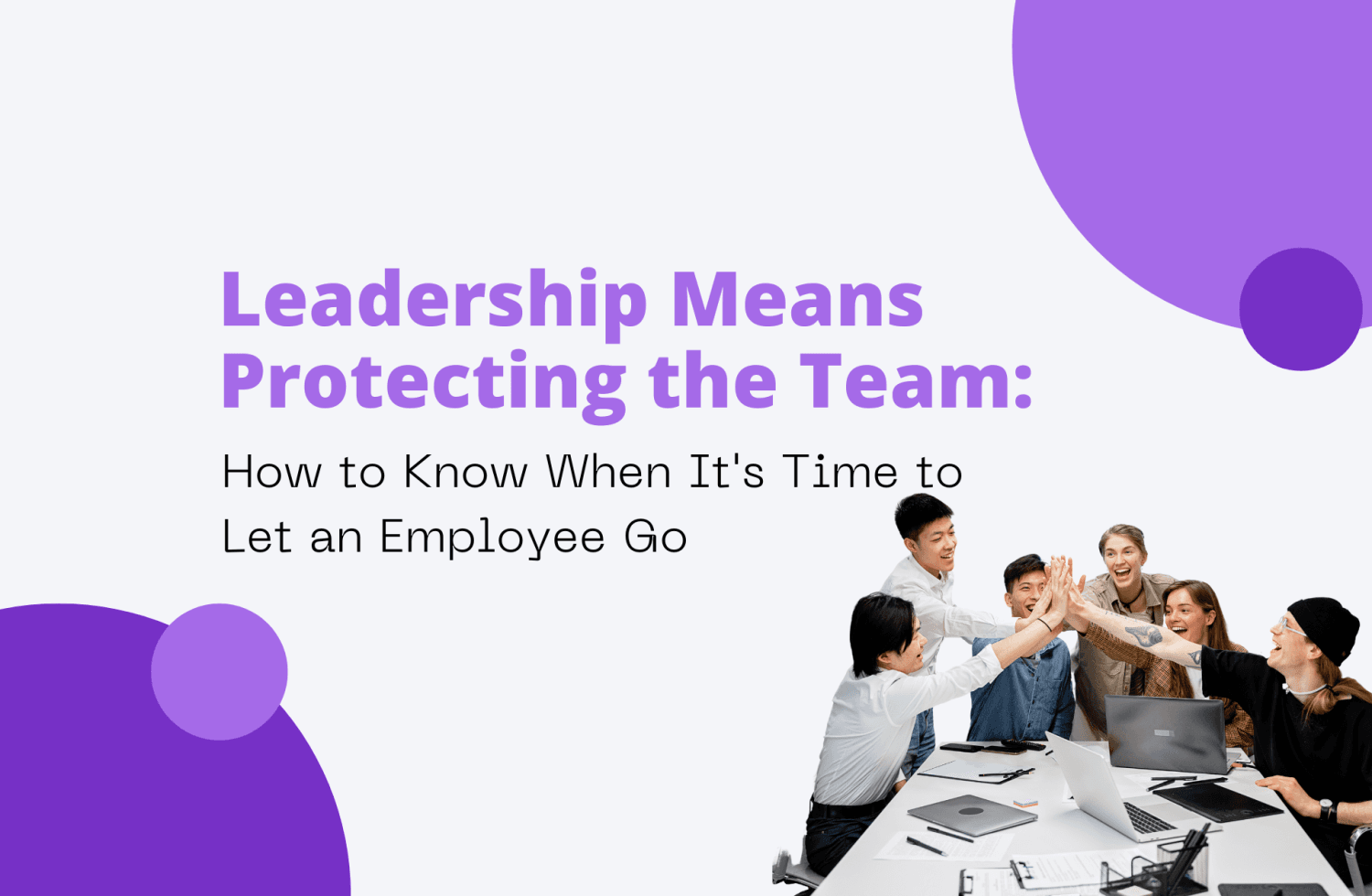
The Hardest Leadership Decision Isn't Hiring Someone. It's Knowing When It's Time to Let Them Go.
Few moments test a leader more than deciding whether to let someone go.
Hiring is exciting.
Promotions are rewarding.
Watching people grow is one of the greatest privileges of leadership.
Termination is different.
It is emotional.
It is uncomfortable.
It often carries weeks or months of second-guessing before the conversation ever happens.
Many leaders delay these decisions, not because they lack courage, but because they genuinely care about people. They see potential where others see problems. They remember the employee's early successes, the difficult personal circumstances they may be facing, or the effort they continue to show despite falling short.
Compassion is an important leadership quality.
But compassion without accountability eventually becomes unfair to everyone else.
Leadership requires balancing care for the individual with responsibility to the entire team.
Sometimes the kindest decision for one person is also the hardest decision for the leader.
And sometimes the hardest decision protects everyone else.
Why Leaders Wait Too Long
Very few leaders terminate employees quickly.
Most wait.
They hope.
They coach.
They encourage.
They extend deadlines.
They give one more chance.
Then another.
And another.
Hope is valuable.
Patterns are more valuable.
Potential is important.
Performance matters too.
Waiting too long rarely benefits anyone.
The struggling employee continues operating without meaningful improvement.
The rest of the team quietly adjusts by carrying more work.
Managers become increasingly frustrated.
Trust begins to weaken.
Eventually, everyone is affected.
The difficult conversation becomes even more difficult because it has been delayed for months.
The problem was not the decision.
The problem was postponing it.
Teams Notice What Leaders Tolerate
One of the biggest misconceptions about leadership is that employees primarily pay attention to what leaders say.
They don't.
They pay attention to what leaders consistently allow.
If poor performance repeatedly goes unaddressed, people begin assuming standards are flexible.
If toxic behavior continues without consequences, employees conclude respect is optional.
If accountability disappears, motivation often follows.
High performers rarely complain immediately.
Instead, they quietly begin asking themselves questions.
Why am I working this hard?
Why am I taking ownership if no one else has to?
Does performance actually matter here?
These questions are dangerous because they usually remain unspoken.
By the time leaders hear them, valuable employees may already be considering opportunities elsewhere.
Leadership is never just about correcting poor performance.
It is also about protecting strong performance.
The Difference Between a Mistake and a Pattern
Every employee makes mistakes.
The best employees do.
The newest employees do.
Even exceptional leaders do.
Mistakes are part of learning.
Patterns are different.
A pattern is behavior that continues despite clarity, coaching, feedback, and support.
This distinction changes everything.
Before making any major personnel decision, ask yourself:
Was this an isolated event?
Or has this become predictable?
If improvement consistently follows feedback, you're seeing growth.
If the same problems return repeatedly, you're seeing a pattern.
Leaders should respond differently to each.
A Four-Step Framework for Difficult Decisions
When emotions are involved, structure helps.
Instead of making decisions based on frustration or sympathy, evaluate the situation objectively.
Step 1: Identify the Impact
Start by asking:
Who is being affected?
Consider areas such as:
- Team morale
- Productivity
- Customer experience
- Collaboration
- Company culture
- Financial performance
Sometimes the issue isn't individual output.
Sometimes it's the ripple effect.
One person's behavior can influence an entire team's performance.
Leaders must evaluate both direct and indirect consequences.
Step 2: Assess the Pattern
Next, separate isolated incidents from ongoing behavior.
Questions to ask include:
Has this happened before?
Did it improve after coaching?
Has accountability been consistent?
Has the employee demonstrated sustained progress?
Patterns reveal far more than promises.
Words create hope.
Behavior creates evidence.
Step 3: Confirm Support Was Given
Before considering termination, leaders should honestly evaluate their own role.
Did the employee clearly understand expectations?
Were goals measurable?
Was feedback specific?
Did they receive coaching?
Were they given reasonable time and resources to improve?
People deserve the opportunity to succeed.
Termination should never come as a surprise.
Employees should understand where they stand and what improvement looks like.
Fairness isn't about avoiding difficult decisions.
It's about making those decisions transparently.
Step 4: Weigh the Cost of Waiting
This is often the question leaders forget to ask.
What happens if nothing changes?
Who absorbs the additional workload?
Who loses motivation?
Who begins questioning leadership?
Every delayed decision has a cost.
The only question is who pays it.
Too often, the answer is your highest performers.
The Three Areas Leaders Should Evaluate
When performance concerns arise, they usually fall into one of three categories.
Performance
Can the employee consistently meet expectations?
Occasional mistakes are normal.
Repeated missed deadlines despite support require attention.
Performance should always be evaluated over time rather than based on isolated moments.
Behavior
Technical skills matter.
Behavior matters just as much.
Warning signs include:
- Disrespect toward colleagues
- Persistent negativity
- Refusal to collaborate
- Creating unnecessary conflict
- Damaging trust within the team
One highly skilled employee with consistently toxic behavior can create more long-term damage than several average performers.
Culture compounds.
Both positively and negatively.
Commitment
Commitment shows itself through ownership.
Employees who consistently:
- Accept responsibility
- Learn from mistakes
- Seek improvement
- Follow through
usually continue growing.
Employees who repeatedly:
- Shift blame
- Avoid accountability
- Resist feedback
- Make excuses
often struggle regardless of technical ability.
Mindset frequently determines long-term success more than talent.
Five Signs It May Be Time to Let Someone Go
No single sign should automatically lead to termination.
However, several together deserve careful attention.
1. Repeated Issues Despite Coaching
The employee understands expectations.
Has received support.
Has been coached.
Yet improvement remains temporary or absent.
2. Constant Excuses
Everyone faces challenges.
The difference is ownership.
Excuses explain.
Ownership improves.
3. Toxic Behavior
High performance never excuses destructive behavior.
Teams remember how people made them feel.
Leaders must protect psychological safety alongside productivity.
4. Lack of Effort
Skill gaps can often be developed.
Effort gaps are far more difficult.
Curiosity, engagement, and willingness to improve usually predict future success.
Apathy rarely does.
5. Keeping Them Hurts Everyone Else
Sometimes retaining one employee costs multiple others.
Leaders must consider the entire system, not just one individual.
Compassion for one person should never become unfairness toward everyone else.
Here’s An Example…
Michael managed a team of twelve.
One employee consistently missed deadlines, resisted feedback, and created tension during meetings.
Despite multiple conversations, little changed.
Michael delayed making a decision because he remembered how enthusiastic the employee had been when joining the company.
He believed more time might solve the problem.
Over the following months, something unexpected happened.
The strongest team members began quietly expressing frustration.
Projects slowed because others repeatedly stepped in to compensate.
One high performer eventually resigned.
During the exit interview, she shared something Michael hadn't expected.
She wasn't leaving because of the difficult employee.
She was leaving because leadership never addressed it.
That realization stayed with him.
Michael reviewed the situation objectively.
He confirmed expectations had been clear.
Support had been provided.
Feedback had been documented.
The issues were no longer isolated incidents.
They had become established patterns.
After handling the termination respectfully and professionally, the team gradually recovered.
Collaboration improved.
Accountability increased.
Trust returned.
The lesson wasn't that termination solved every problem.
It was that avoiding necessary decisions had been creating far greater ones.
Before Making the Final Decision, Ask Yourself These Questions
Before moving forward, pause and honestly answer:
- Am I responding to one event or a repeated pattern?
- Have expectations been clearly communicated?
- Has meaningful support been provided?
- Has enough time been allowed for improvement?
- Is this person improving, or simply promising to improve?
- What message does keeping this situation send to the rest of the team?
- Who is paying the price for my hesitation?
These questions remove emotion from the process without removing empathy.
How to Handle the Conversation with Respect
If termination becomes necessary, professionalism matters.
Approach the conversation with:
Clarity
Avoid vague language.
State the decision respectfully and directly.
Respect
Treat the individual with dignity.
Avoid blame or humiliation.
Compassion
Acknowledge that the conversation is difficult.
People deserve kindness, even during hard moments.
Professionalism
Focus on facts.
Avoid personal attacks.
Discuss behaviors, expectations, and documented performance.
Leaders are remembered not only for the decisions they make but for how they make them.
Resources for Leaders
Book
The Five Dysfunctions of a Team by Patrick Lencioni
An excellent resource for understanding accountability, trust, and healthy team dynamics.
Podcast
Coaching for Leaders with Dave Stachowiak
Practical conversations on leadership, performance management, difficult conversations, and building
stronger teams.
AI Tool
ChatGPT
Use AI to prepare coaching plans, document feedback conversations, draft performance improvement plans,
and practice difficult conversations before having them.
Leadership Practice
Schedule quarterly talent reviews.
Instead of waiting until problems become crises, regularly evaluate performance, growth, engagement, and future potential across your team.
Consistent evaluation leads to better leadership decisions.
Great Leadership Is Measured by the Standards You Protect
One of the greatest misconceptions about leadership is that kindness means avoiding difficult conversations.
Real kindness looks different.
It provides clarity instead of confusion.
Feedback instead of silence.
Standards instead of uncertainty.
Support before consequences.
And accountability when improvement no longer happens.
The best leaders never enjoy letting someone go.
But they understand something important.
Every leadership decision affects far more people than the individual sitting across the table.
It affects trust.
Culture.
Motivation.
Performance.
And the belief employees have in the standards their leaders claim to value.
Keeping someone in the wrong role for too long rarely protects them.
More often, it delays the growth they need while placing an invisible burden on everyone around them.
Leadership is not measured by how long you avoid difficult decisions.
It is measured by whether you make those decisions fairly, thoughtfully, and with genuine respect for every person involved.
Because in the end, protecting one individual should never come at the cost of losing an entire team.
Download the Related Infographic
Want a practical framework for evaluating difficult performance decisions with fairness and consistency?
Download the Time to Let Them Go infographic and use it as a reference before making high-impact leadership decisions. It provides a simple framework for separating emotion from evidence, evaluating patterns instead of isolated moments, and protecting both your people and your team culture.