

Click Here to Download the PDF.
The Biggest Interview Myth Is Costing People Great Jobs
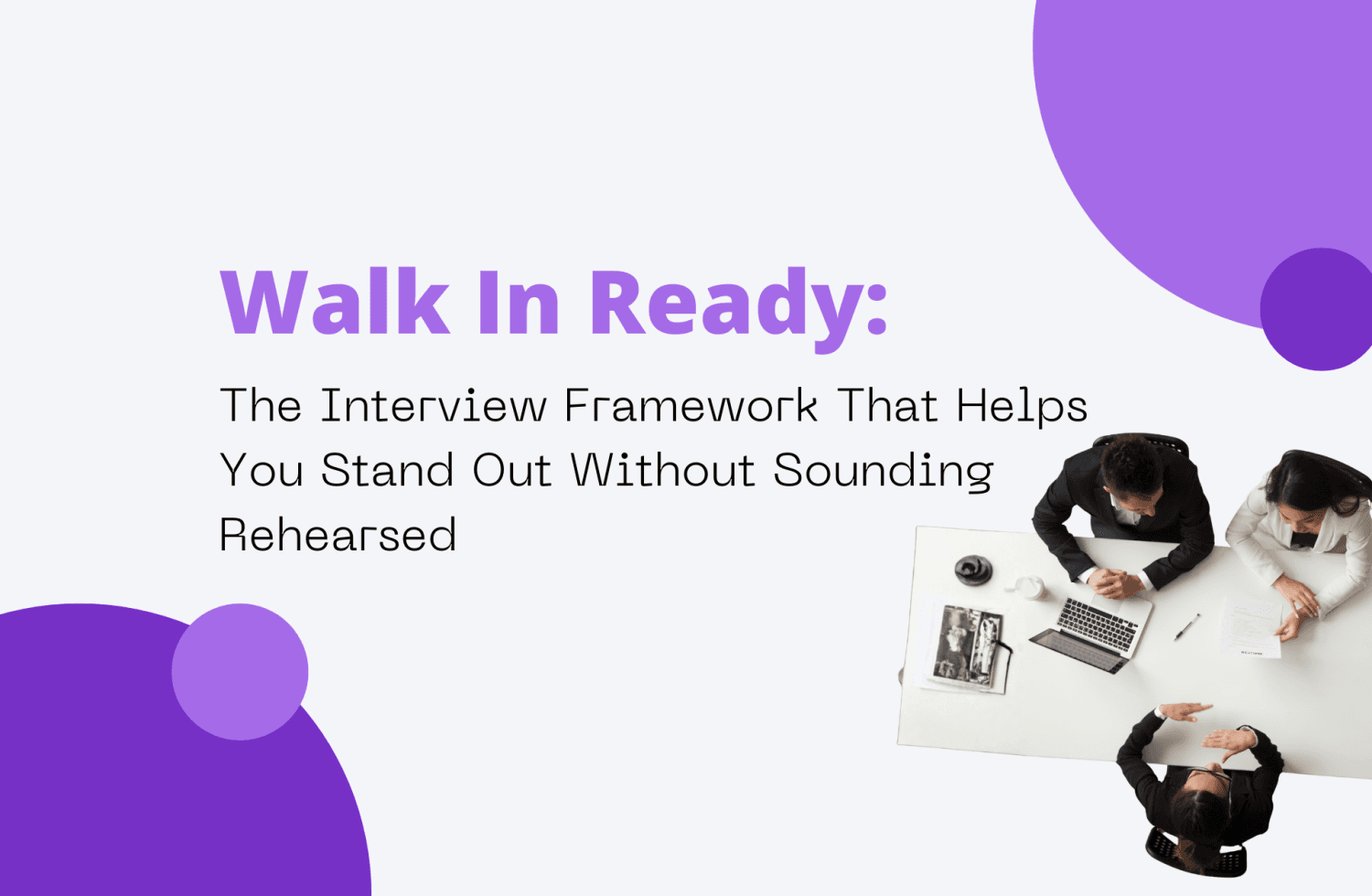
Many people think job interviews are tests.
They walk into the room expecting an exam.
Every question feels like a trap.
Every answer feels like it must be perfect.
Every pause feels dangerous.
So they spend hours memorizing responses.
They rehearse corporate-sounding phrases.
They try to sound impressive.
Then something strange happens.
The interview starts.
The script falls apart.
Their confidence disappears.
And the person who seemed less qualified gets the offer.
Why?
Because interviews are rarely won by the person with the most knowledge.
They are usually won by the person who communicates their value most clearly.
Hiring managers are not looking for a walking encyclopedia.
They are looking for someone they can trust.
Someone who solves problems.
Someone who can work with people.
Someone who learns.
Someone who communicates.
Someone who feels believable.
That is why preparation matters.
Not because preparation helps you memorize answers.
Because preparation helps you tell better stories.
And stories are what people remember.
Why Most Interview Advice Fails
A lot of interview advice focuses on answers.
The best candidates focus on evidence.
There is a huge difference.
Weak interview answer:
"I am a great leader."
Strong interview answer:
"Last year I inherited a struggling project that was behind schedule. I reorganized priorities, improved communication across teams, and helped deliver the project three weeks early."
One is a claim.
The other is proof.
Interviewers hear claims all day.
They remember proof.
The goal is not convincing people you are talented.
The goal is helping them see your talent through examples.
The Hidden Purpose Behind Every Interview Question
Most interview questions are asking one of four things:
- Can you do the job?
- Can people work with you?
- Can you solve problems?
- Can we trust you?
Once you understand this, interviews become much easier.
Because every answer should help demonstrate one of those four qualities.
Let's break down the questions most candidates struggle with.
Tell Me About Yourself
This is one of the most common questions.
It is also one of the most misunderstood.
Many candidates start telling their life story.
The interviewer did not ask for that.
They want a professional snapshot.
A simple structure works best:
Present
What are you doing now?
Past
What experiences prepared you for this role?
Future
Why does this opportunity make sense?
Example:
"I currently work as a project coordinator where I manage cross-functional initiatives and improve team workflows. Before that, I worked in operations where I developed strong process improvement and communication skills. I'm excited about this opportunity because it allows me to combine those experiences while continuing to grow in a leadership-focused environment."
Notice the difference.
Clear.
Relevant.
Focused.
How Do You Handle Difficult People?
Interviewers are not looking for conflict.
They are looking for maturity.
Avoid answers that position you as the victim or hero.
Instead demonstrate:
- Listening
- Empathy
- Communication
- Problem-solving
A strong approach:
"I start by understanding their perspective. Most workplace challenges come from misunderstandings, competing priorities, or communication gaps. I focus on listening first, identifying common goals, and keeping discussions focused on solutions rather than personalities."
This shows professionalism.
And professionalism scales.
Tell Me About A Mistake
Many candidates panic here.
They try to disguise strengths as weaknesses.
Interviewers see right through it.
Nobody believes:
"My biggest mistake is caring too much."
Instead:
Choose a real mistake.
Show ownership.
Show learning.
Show improvement.
The formula:
Mistake → Action → Lesson → Improvement
The mistake matters less than the lesson.
Why Do You Want To Work Here?
This question reveals whether you prepared.
Generic answers immediately weaken credibility.
Strong answers include:
- The company's mission
- Products or services
- Industry reputation
- Growth opportunities
- Cultural alignment
Research is one of the easiest competitive advantages available.
Most candidates simply do not do enough of it.
Why Do You Want This Job?
This answer should connect three things:
- What you're good at
- What you enjoy
- Where you're heading
Interviewers want to see alignment.
When your strengths, interests, and career goals intersect, motivation becomes believable.
Why Should We Hire You?
This is not the time to list personality traits.
Focus on outcomes.
Employers buy outcomes.
Not adjectives.
Instead of:
"I am hardworking."
Say:
"In my previous role, I reduced reporting time by 30% through process improvements, allowing the team to spend more time on strategic work."
Specific wins create confidence.
What Can You Bring To The Company?
This question is about contribution.
The strongest candidates discuss:
- Results they've delivered
- Problems they've solved
- Value they've created
Think impact.
Not activity.
Many candidates describe what they did.
Great candidates explain what changed because they did it.
What Is Your Greatest Strength?
Choose one strength.
Not five.
One.
Then support it with evidence.
A strength without proof is just an opinion.
A strength with a story becomes believable.
What Is Your Greatest Weakness?
This question measures self-awareness.
Choose:
- A real weakness
- One that isn't critical to the role
- One you're actively improving
The goal is not perfection.
The goal is growth.
Self-awareness consistently ranks among the most respected professional traits.
Tell Me About A Challenge You Faced
This is where the STAR framework shines.
Situation
What happened?
Task
What needed to be done?
Action
What did you do?
Result
What happened?
Stories help interviewers visualize your capabilities.
And visualization drives confidence.
Describe A Time You Missed A Deadline
Accountability matters.
Avoid blaming others.
Avoid making excuses.
Instead explain:
- What happened
- What you learned
- What system you created afterward
The best candidates demonstrate resilience, not perfection.
Tell Me About A Time You Were Criticized
This question tests emotional maturity.
Can you accept feedback?
Can you improve?
Can you separate ego from growth?
The strongest answers show:
- Openness
- Reflection
- Action
- Better results
Feedback is often one of the fastest paths to professional growth.
Interviewers know this.
The Five Career Stories Every Candidate Should Prepare
Before your next interview, prepare five stories.
These five stories can answer dozens of questions.
Story 1: A Major Success
Shows achievement.
Story 2: A Challenge
Shows resilience.
Story 3: A Mistake
Shows accountability.
Story 4: Team Collaboration
Shows interpersonal skills.
Story 5: Leadership Or Initiative
Shows growth potential.
Each story should include:
- Situation
- Action
- Result
- Lesson
Once prepared, you'll stop memorizing answers.
You'll start telling stories.
A Real-Life Workplace Example
Daniel had applied for over twenty management positions.
His experience was strong.
His performance reviews were excellent.
Yet interviews consistently ended the same way.
Positive conversations.
No offers.
The feedback was frustratingly vague.
"Great candidate."
"Strong background."
"We went in another direction."
After reviewing mock interviews with a mentor, a pattern appeared.
Daniel answered every question with information.
Not stories.
When asked about leadership, he listed responsibilities.
When asked about challenges, he discussed general situations.
When asked about success, he shared broad accomplishments.
Nothing felt memorable.
Nothing felt human.
Nothing helped interviewers picture him in action.
Daniel spent two weeks building five career stories.
Each story followed a clear structure.
Challenge.
Action.
Result.
Lesson.
During his next interview cycle, everything changed.
Instead of describing leadership, he demonstrated it.
Instead of claiming resilience, he proved it.
Instead of saying he solved problems, he walked interviewers through examples.
Within six weeks he received two offers.
His experience hadn't changed.
His storytelling had.
The 15-Minute Interview Prep Framework
If you have an interview tomorrow, do this:
Minute 1-3
Research the company.
Minute 4-6
Review the job description.
Minute 7-10
Write five career stories.
Minute 11-13
Match stories to common questions.
Minute 14-15
Practice speaking naturally.
Not perfectly.
Naturally.
Resources To Help You Improve Interview Performance
Book
The 2-Hour Job Search by Steve Dalton
One of the most practical books for job seekers looking to improve both networking and interview outcomes.
TED Talk
Your Body Language May Shape Who You Are – Amy Cuddy
A powerful lesson on confidence, presence, and performance under pressure.
AI Tool
ChatGPT
Practice interview questions, refine stories, identify weak answers, and simulate mock interviews before the real conversation.
Podcast
Career Contessa Podcast
Excellent insights on interviewing, career growth, confidence, and professional development.
The Best Candidates Don't Sound Perfect
Most people think confidence means having all the answers.
It doesn't.
The strongest candidates are often the ones who are comfortable being human.
They do not try to sound flawless.
They do not try to impress everyone.
They do not memorize twenty pages of answers.
They tell real stories.
They explain real lessons.
They demonstrate real growth.
Because hiring managers are not looking for perfection.
They are looking for evidence.
Evidence that you can learn.
Evidence that you can solve problems.
Evidence that you can work with people.
Evidence that you can handle challenges when things inevitably go wrong.
The next great opportunity in your career may come down to one conversation.
Not because that conversation determines your worth.
But because it determines whether someone else can clearly see it.
The candidates who stand out are rarely the loudest.
They are rarely the smartest.
They are usually the clearest.
And clarity is something anyone can learn.
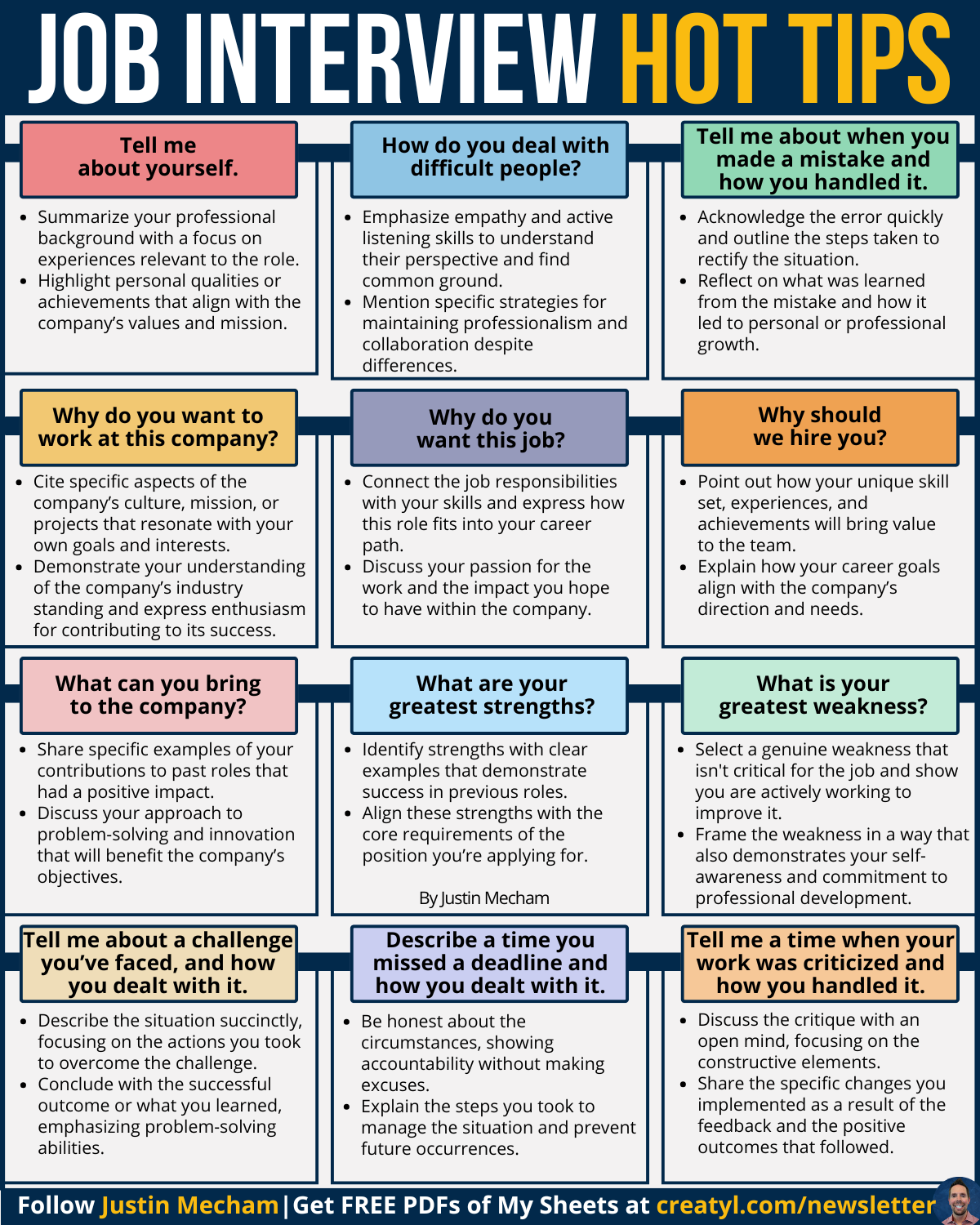
Download The Related Infographic
Want a visual version of these interview frameworks and common interview questions?
Download the Job Interview Hot Tips infographic and keep it nearby before your next interview for a quick confidence and preparation reset.