

Click Here to Download the PDF.
The Problem Is Not That You Feel Too Much
Most people spend years trying to organize their emotions into clean categories.
Good or bad.
Strong or weak.
Positive or negative.
Right or wrong.
But human emotions rarely work that neatly.
You can feel grateful for an opportunity and exhausted by it at the same time.
You can deeply love someone and still feel hurt by them.
You can feel proud of your growth while quietly grieving the version of yourself that no longer exists.
You can feel calm externally while uncertainty still lives underneath the surface.
And when those emotions collide, many people immediately assume something must be wrong with them.
“I should not feel this way.”
“Why am I emotional when things are going well?”
“Why do I feel excited and terrified at the same time?”
“Why can’t I just pick one feeling?”
Because you are human.
That is why.
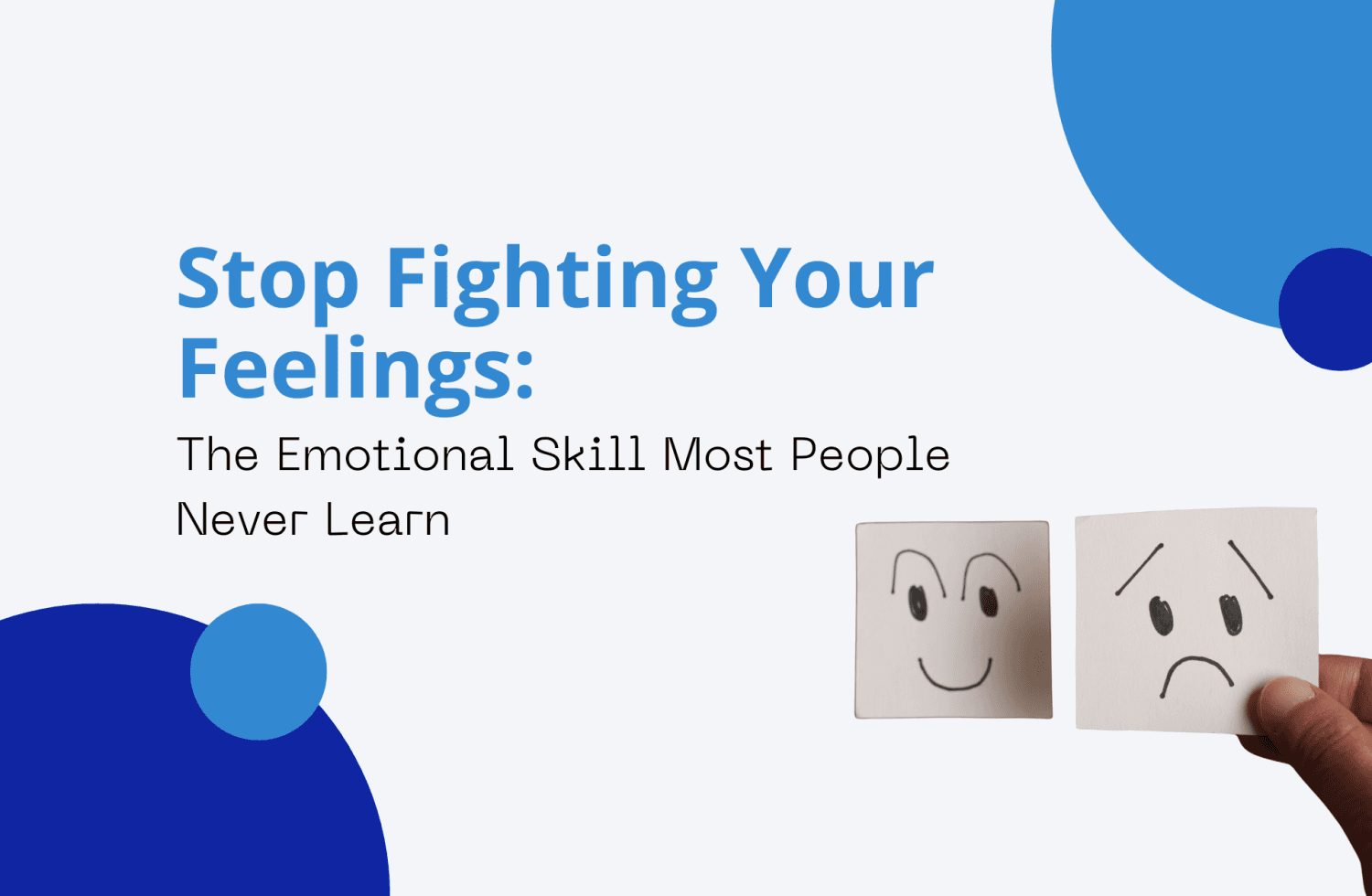
The truth about emotions is that they are not always separate experiences.
Very often, they overlap.
And sometimes the healthiest emotional growth happens not when one emotion disappears, but when two emotions learn how to exist together without fighting for control.
That changes the way people understand themselves completely.
Most People Were Never Taught Emotional Literacy
Many adults know how to explain:
- deadlines
- business strategy
- budgets
- performance metrics
- schedules
- responsibilities
But they struggle to explain what they are actually feeling.
Not because they are unintelligent.
Because emotional literacy was never taught clearly.
Many people grew up learning:
- sadness is weakness
- anger is bad
- fear means failure
- vulnerability is dangerous
- confidence means never doubting yourself
So instead of learning how to understand emotions, people learned how to suppress them.
The problem with suppression is that emotions do not disappear simply because they are ignored.
They become louder.
They leak into:
- stress
- burnout
- resentment
- irritability
- overthinking
- withdrawal
- anxiety
- emotional numbness
The emotions people judge most harshly are often the emotions trying hardest to protect them.
Fear tries to protect safety.
Anger tries to protect boundaries.
Sadness tries to process loss.
Anxiety tries to prepare for uncertainty.
None of those emotions are enemies.
They are signals.
And signals become much easier to manage once they are understood instead of attacked.
Why Opposite Emotions Can Exist Together
One of the most important emotional truths people eventually discover is this:
Opposite feelings can coexist without canceling each other out.
That is not dysfunction.
That is emotional depth.
For example:
You can feel joy and sadness simultaneously when a child grows older, when a season of life ends, or when a meaningful chapter changes.
You can feel excitement and anxiety before a new opportunity because growth often carries uncertainty.
You can feel anger and compassion together when someone hurts you but you still understand their pain.
Emotionally mature people learn that emotional complexity is not weakness.
It is awareness.
The goal is not emotional simplicity.
The goal is emotional honesty.
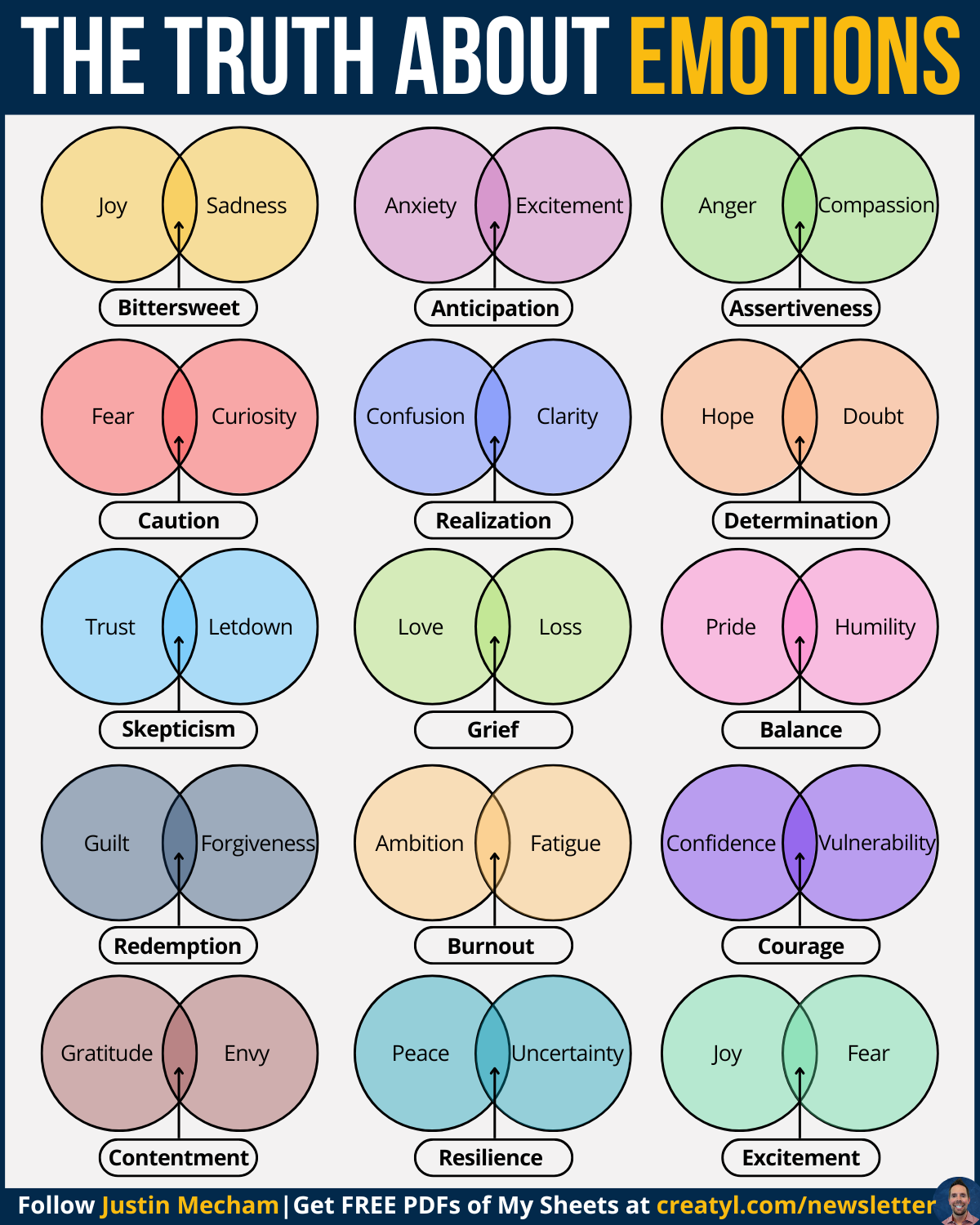
Joy + Sadness = Bittersweet
Some moments carry happiness and grief at the same time.
Graduations.
Career changes.
Moving to a new city.
Watching children grow.
Leaving a workplace that mattered.
Ending a season of life you once prayed for.
People often feel confused in these moments because they believe happiness should erase sadness completely.
But bittersweet experiences are deeply human.
The sadness does not mean the moment is bad.
It often means the moment mattered.
People grieve what was meaningful.
That is part of love.
Anxiety + Excitement = Anticipation
This emotional combination confuses many people because the body experiences anxiety and excitement very similarly physically:
- elevated heart rate
- adrenaline
- nervous energy
- heightened focus
That is why major life transitions often feel emotionally mixed.
New jobs.
New relationships.
Launching a business.
Speaking publicly.
Starting something meaningful.
The brain senses uncertainty while another part of you senses possibility.
Both feelings are real.
This is why emotionally resilient people do not wait to feel fearless before acting.
They learn how to move forward while carrying uncertainty.
Anger + Compassion = Assertiveness
Many people were taught that anger is automatically unhealthy.
But healthy anger can actually protect:
- boundaries
- dignity
- fairness
- emotional safety
The danger is not anger itself.
It is unmanaged anger.
Compassion without boundaries creates self-abandonment.
Anger without compassion creates destruction.
But when compassion and anger work together, something healthier appears:
Assertiveness.
The ability to say:
“This hurt me.”
“This is not okay.”
“I need something different.”
“I can care about you without abandoning myself.”
That is emotional maturity.
Fear + Curiosity = Caution
Fear is often treated like weakness.
But fear is not always trying to stop you.
Sometimes it is trying to help you move carefully.
Fear becomes destructive when it completely controls behavior.
But paired with curiosity, fear can become wisdom.
That combination allows people to:
- assess risk thoughtfully
- stay alert
- ask better questions
- move carefully instead of recklessly
Emotionally healthy people do not eliminate fear entirely.
They learn how to listen to it without surrendering to it.
Confusion + Clarity = Realization
One of the strangest emotional experiences is realizing something painful and liberating simultaneously.
Sometimes clarity hurts before it heals.
You realize:
- a relationship is unhealthy
- a job is draining you
- a friendship has changed
- you outgrew a version of yourself
- you need different boundaries
- your current path no longer fits
Realization often arrives carrying confusion and clarity together.
That emotional tension is normal.
Growth rarely feels clean while it is happening.
Hope + Doubt = Determination
People often assume confident people never experience doubt.
That is rarely true.
Most determined people feel doubt constantly.
The difference is that hope remains present too.
Determination is often born from the coexistence of:
- uncertainty
- fear
- hope
- persistence
Emotionally strong people are not always certain.
They simply decide uncertainty will not stop movement.
Love + Loss = Grief
Grief exists because love existed first.
People often try to rush grief away because it feels uncomfortable.
But grief is not emotional weakness.
It is emotional evidence.
It proves something mattered.
And grief does not only appear after death.
People grieve:
- old identities
- lost relationships
- broken dreams
- former versions of life
- lost time
- changed futures
Trying to suppress grief usually extends suffering.
Acknowledging grief allows healing to begin.
Pride + Humility = Balance
Healthy confidence is not arrogance.
And humility is not self-erasure.
Balanced people learn how to:
- recognize growth
- appreciate progress
- acknowledge strengths without believing they are above growth or feedback.
Pride says:
“I worked hard.”
Humility says:
“I still have more to learn.”
Together they create grounded confidence.
Why Naming Emotions Changes Everything
One of the most powerful emotional skills a person can build is emotional naming.
Because vague emotional overwhelm becomes easier to manage once it becomes specific.
Instead of:
“I feel off.”
You begin identifying:
- disappointed
- anxious
- overstimulated
- lonely
- uncertain
- hopeful
- exhausted
- frustrated
- disconnected
Research consistently shows that naming emotions reduces emotional intensity.
Why?
Because awareness creates regulation.
Emotions become louder when ignored.
They calm down when understood.
A Real Workplace Example
How Emotional Suppression Quietly Created Burnout
A high-performing manager was leading a growing team during a stressful expansion period.
Externally, everything looked successful.
Internally, the manager felt:
- proud of the growth
- exhausted constantly
- grateful for the opportunity
- resentful about workload
- excited about the future
- anxious about sustainability
Instead of acknowledging these mixed emotions, they tried forcing themselves to “just stay positive.”
Over time, emotional suppression created:
- irritability
- emotional exhaustion
- short patience
- disconnection from the team
- growing resentment
Because the manager never processed what they were feeling honestly, the emotions surfaced indirectly through stress responses.
The harder they tried to ignore the emotions, the louder the emotional exhaustion became.
Eventually they started practicing emotional reflection daily.
Instead of asking:
“How do I stop feeling this?”
They began asking:
“What are these emotions trying to tell me?”
That shift changed everything.
They realized:
- pride was showing them progress mattered
- exhaustion was signaling unsustainable pacing
- anxiety was asking for better systems
- resentment was highlighting missing boundaries
Once the emotions were understood instead of suppressed, healthier decisions followed:
- workload adjustments
- clearer delegation
- better recovery habits
- more honest communication
The emotions were never the enemy.
Ignoring them was.
The Emotional Reset Practice
The next time you feel emotionally overwhelmed, try this process instead of immediately reacting or shutting down.
Step 1: Name the Two Main Emotions
Avoid vague language.
Be specific.
For example:
- hopeful and afraid
- proud and exhausted
- angry and hurt
- grateful and overwhelmed
Specificity creates clarity.
Step 2: Ask What Each Emotion Is Protecting
Every emotion usually serves a purpose.
Fear may protect safety.
Anger may protect dignity.
Sadness may protect attachment.
Anxiety may protect preparedness.
Understanding the protective function reduces emotional shame.
Step 3: Notice Where the Emotions Overlap
This is often where insight appears.
For example:
- excitement and anxiety may both point toward growth
- sadness and gratitude may both point toward meaning
- frustration and care may both point toward unmet needs
Step 4: Choose One Kind Action
Not a perfect solution.
Just one healthy next step.
That may mean:
- resting
- having a conversation
- setting a boundary
- journaling
- asking for help
- slowing down
- clarifying expectations
Healing often begins through small actions repeated consistently.
Step 5: Stop Shaming the Feeling
Many people suffer twice:
- once from the emotion itself
- again from judging themselves for having it
Emotions are information.
Not moral failure.
Emotional Intelligence Is Not About Staying Calm All the Time
This is one of the biggest misconceptions about emotional health.
Emotionally intelligent people are not emotionless.
They still:
- get hurt
- feel anxious
- experience grief
- become frustrated
- feel uncertain
The difference is that they understand what they are feeling more honestly and respond more intentionally.
That awareness changes relationships, leadership, communication, and mental well-being dramatically.
Your Emotions Are Not Trying to Ruin You
Many people spend years fighting themselves internally.
Trying to eliminate:
- fear
- sadness
- uncertainty
- anger
- vulnerability
But emotions are rarely trying to destroy you.
Most of them are trying to protect something important.
The goal is not becoming emotionless.
The goal is becoming emotionally aware enough to listen before reacting.
Because emotions that are ignored often become louder.
Emotions that are understood usually become clearer.
You are not weak for feeling multiple things simultaneously.
You are not broken because emotions overlap.
You are not failing because uncertainty exists beside hope.
That is part of being deeply human.
And often, the moment people stop shaming what they feel is the exact moment healing quietly begins.
Resources to Go Deeper
Book Recommendation
Atlas of the Heart by Brené Brown
One of the most practical books available for understanding emotions, emotional language, vulnerability, and human connection.
TED Talk Recommendation
Susan David – The Gift and Power of Emotional Courage
An excellent talk about emotional agility, difficult emotions, and why emotional honesty matters.
Podcast Recommendation
The Happiness Lab with Dr. Laurie Santos
Insightful conversations around emotional well-being, resilience, relationships, and mental health.
Reflection Exercise
Tonight, write down:
- Two emotions you felt today
- What each emotion may have been protecting
- One situation that triggered emotional tension
- One thing you needed emotionally but did not ask for
- One kind thing you can do for yourself tomorrow
Emotional awareness grows through practice, not perfection.
Download the “Truth About Emotions” Infographic PDF
Use this infographic as a reminder that emotions are not enemies to silence, but signals to understand with honesty and care.