

Click Here to Download the PDF.
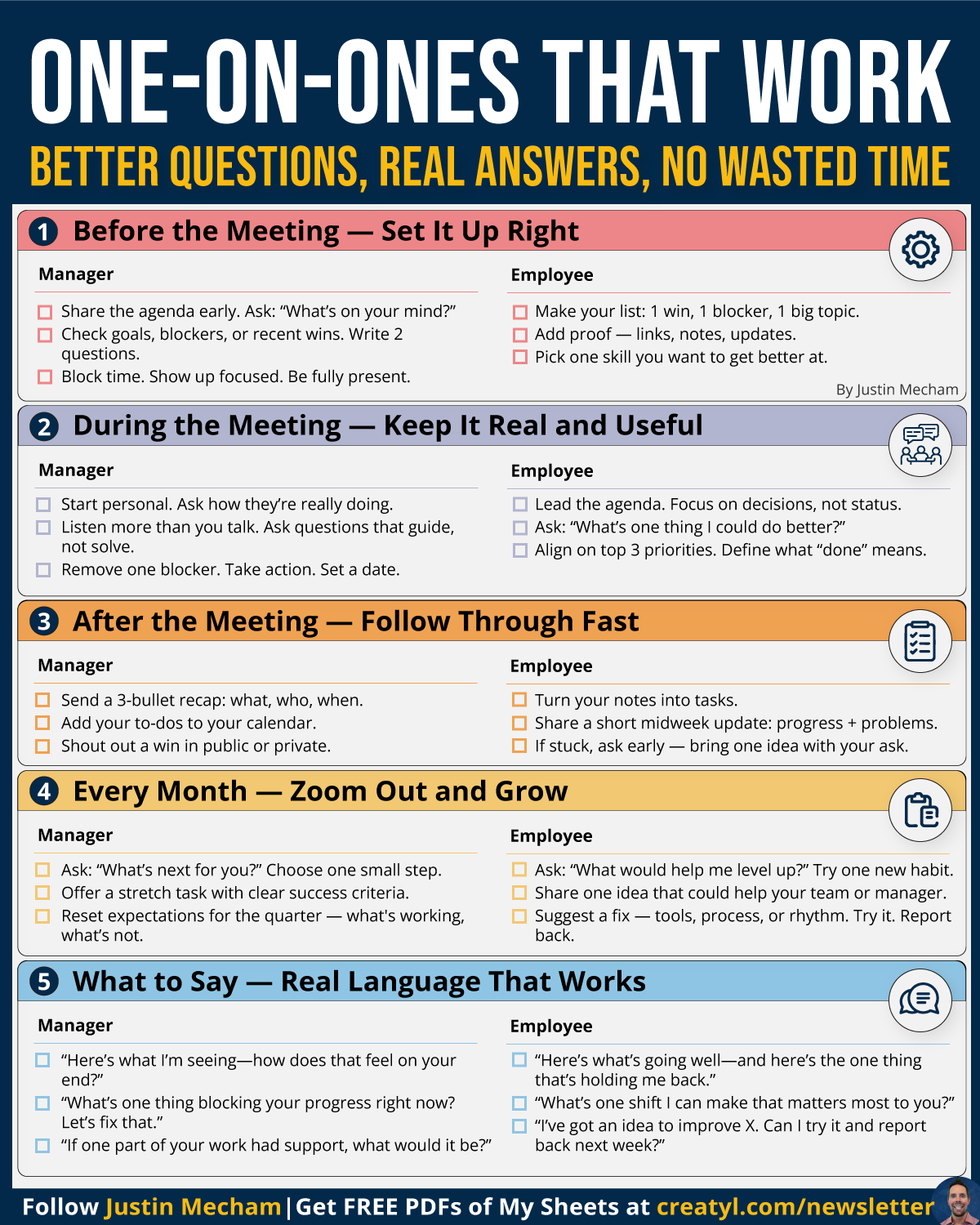
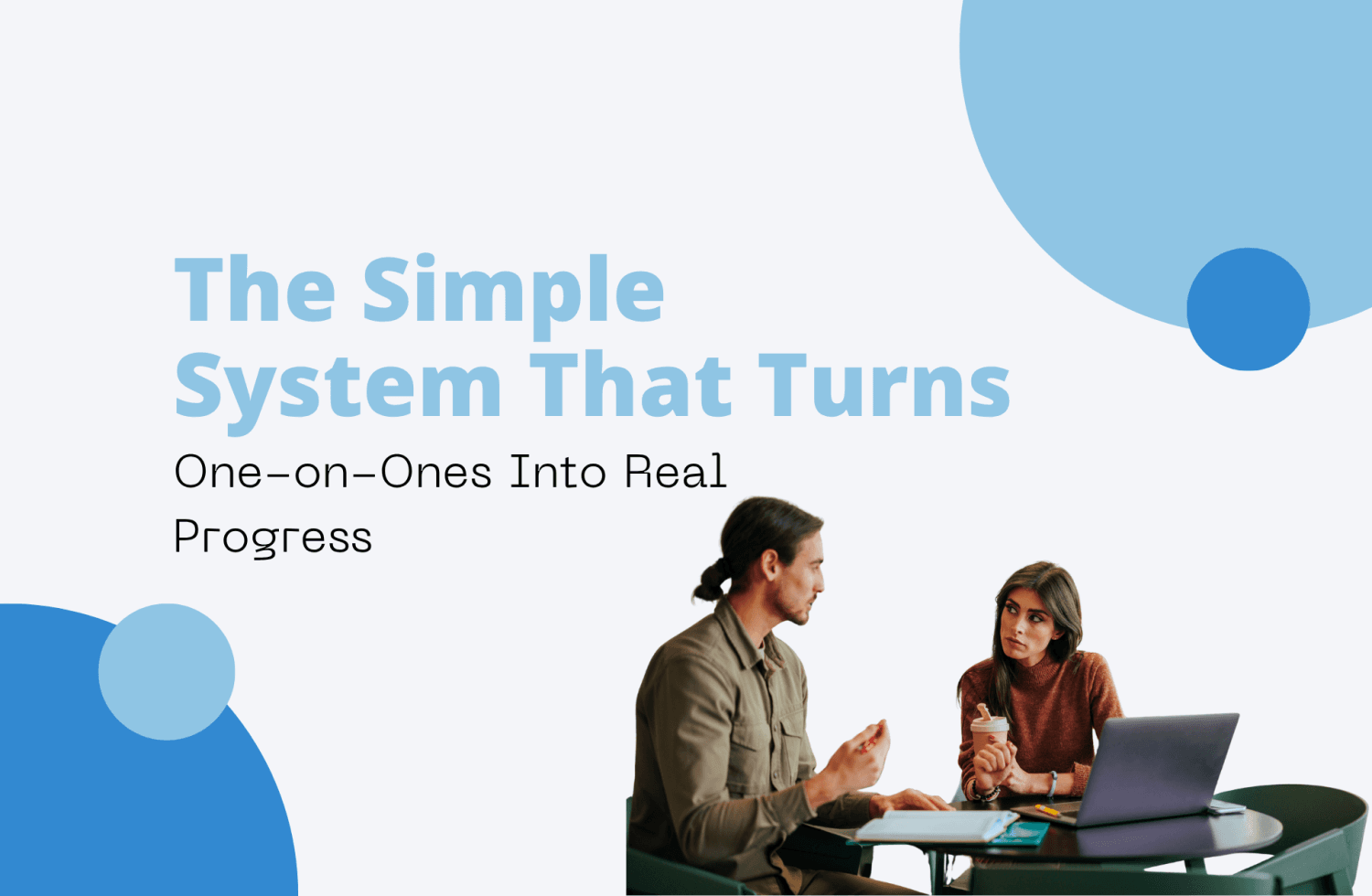
The Meeting Everyone Has… But Few Get Right
Most managers think a bad one-on-one is the employee’s fault.
They assume the person was not prepared.
Not engaged.
Not proactive enough.
But the truth is harder to admit.
The meeting failed before it even started.
No agenda.
No clarity.
No purpose.
Just two people showing up and hoping something useful happens.
And what follows is predictable.
Surface-level updates.
Polite nodding.
No real honesty.
No clear outcomes.
Time gets spent.
Nothing moves forward.
Teachable Moment:
A bad one-on-one is not a communication problem.
It is a structure problem.
Why Most One-on-Ones Feel Like a Waste
The biggest issue is not effort.
It is lack of intention.
Without structure, the meeting becomes reactive.
People talk about what is easy.
Avoid what is uncomfortable.
Leave without direction.
And when that happens repeatedly, trust starts to fade.
Because people are not looking for more meetings.
They are looking for clarity.
Teachable Moment:
If a meeting does not create clarity, it creates frustration.
The Shift That Changes Everything
Strong one-on-ones are not about talking more.
They are about asking better questions and following a clear rhythm.
The difference is simple:
Weak meetings focus on updates.
Strong meetings focus on progress.
That shift requires structure before, during, and after the meeting.
Before the Meeting
Set It Up So It Actually Works
Most one-on-ones fail here.
Because no one prepares.
And without preparation, the conversation has no direction.
On the manager side:
Send the agenda early.
Ask a simple question:
“What is on your mind?”
Review goals, blockers, and recent progress.
And most importantly, show up focused.
Not distracted.
Not rushed.
Present.
On the employee side:
Come prepared with three things:
One win.
One blocker.
One important topic.
Bring proof.
Notes, links, updates.
And identify one skill you want to improve.
Teachable Moment:
Preparation signals respect.
Lack of preparation signals indifference.
Action Strategy:
Before every meeting, write down one outcome you want from it.
During the Meeting
Keep It Real and Useful
This is where most meetings drift.
Because people talk without direction.
Strong one-on-ones follow a simple principle:
Less talking. More clarity.
Managers should:
Start human.
Ask how the person is really doing.
Listen more than they speak.
Ask questions that guide, not control.
Focus on removing one real blocker.
And set a clear timeline for action.
Employees should:
Lead with decisions, not updates.
Share what matters.
Ask one key question:
“What is one thing I could do better?”
Align on top priorities.
And define what “done” actually means.
Teachable Moment:
Clarity removes confusion.
Confusion slows everything down.
Action Strategy:
At the end of the meeting, both sides should be able to answer:
“What are the top 3 priorities right now?”
After the Meeting
Follow Through Fast
This is where trust is either built or lost.
Because without follow-through, the meeting becomes meaningless.
Managers should:
Send a short recap.
Three lines:
What
Who
When
Add actions to the calendar.
And recognize progress.
Publicly or privately.
Employees should:
Turn notes into tasks.
Not intentions.
Tasks.
Send a short update midweek.
Progress and problems.
And if stuck, ask early.
Always bring one idea when asking for help.
Teachable Moment:
Follow-through is what turns conversation into progress.
Action Strategy:
Send a recap within the same day.
Speed matters.
Monthly Reset
Step Back to Move Forward
One-on-ones are not just about weekly updates.
They are about long-term growth.
That requires stepping back regularly.
Managers should:
Ask:
“What is next for you?”
Assign one stretch opportunity.
Reset expectations.
Review what is working and what is not.
Employees should:
Ask:
“What would help me grow?”
Bring one idea that helps the team.
Suggest one improvement.
Test it.
Report back.
Teachable Moment:
Growth happens when reflection is built into the system.
The Words That Actually Build Trust
What you say in a one-on-one matters.
But how you say it matters more.
For managers:
“Here is what I am seeing.
How does it feel on your side?”
“What is blocking you right now?
Let’s solve it together.”
For employees:
“Here is what is going well,
and here is what is slowing me down.”
“What is one change I can make
that would matter most to you?”
These are not scripts.
They are signals.
They show openness, ownership, and clarity.
A Real Workplace Example
Turning Pointless Meetings Into Real Progress
A team held weekly one-on-ones, but nothing changed.
Meetings felt repetitive.
The same issues came up.
No clear actions followed.
The frustration built quietly.
Managers felt like they were not getting honest input.
Employees felt like nothing improved.
The meetings became something to “get through.”
Not something that helped.
We introduced a simple structure.
Before:
Agendas were shared.
Both sides came prepared.
During:
The focus shifted to one blocker and clear priorities.
After:
Every meeting ended with a recap and defined actions.
Within a few weeks, the tone changed.
Conversations became more honest.
Problems were addressed faster.
And progress became visible.
What Makes One-on-Ones Actually Work
The difference is not personality.
It is consistency.
Clear preparation.
Focused conversation.
Reliable follow-through.
These three elements turn meetings into momentum.
Teachable Moment:
Meetings do not build trust.
What happens after them does.
The Deeper Truth About Leadership
One-on-ones are not just meetings.
They are signals.
They show people how much you care.
How seriously you take their growth.
How committed you are to clarity.
When done well, they create alignment.
When done poorly, they create distance.
Trust Is Built Between the Meetings
Most people think the one-on-one is the moment that matters.
It is not.
What matters is everything around it.
The preparation before.
The honesty during.
The follow-through after.
That is where trust is built.
Because trust does not come from talking.
It comes from consistency.
When people know you will show up prepared…
When they know you will listen…
When they know you will follow through…
They stop holding back.
And that is when real progress begins.
Best Resources For Better One-on-Ones
Book: Radical Candor — Kim Scott
Why It Fits: Teaches how to give clear, honest feedback while building strong relationships.
Book: The Coaching Habit — Michael Bungay Stanier
Why It Fits: Focuses on asking better questions instead of giving more advice.
Podcast: Coaching for Leaders — Dave Stachowiak
Why It Fits: Practical insights on improving conversations and leadership habits.
TED Talk: How to Speak So That People Want to Listen — Julian Treasure
Why It Fits: Helps improve clarity and impact in communication.
Tool: Fellow — Founded by Aydin Mirzaee
Why It Fits: Helps structure one-on-ones with agendas, notes, and follow-ups.
AI Tool: ChatGPT — OpenAI
Why It Fits: Useful for preparing questions, structuring agendas, and improving communication.
Download The “One-on-Ones That Work” Infographic (PDF)
If you want a clear, step-by-step guide for running better one-on-ones, download the infographic as a PDF.
Use it before, during, and after every meeting to stay consistent and focused.