Click Here to Download the PDF
Most people don’t lose their peace because of big conflicts.
They lose it in moments that seem small — a tense tone in a meeting, a rushed email that feels dismissive, a colleague’s mood that shifts the room.
We tell ourselves we’re “just reacting,” but that reaction often has a cost.
A single emotional trigger can derail an entire day, turning calm judgment into defense mode.
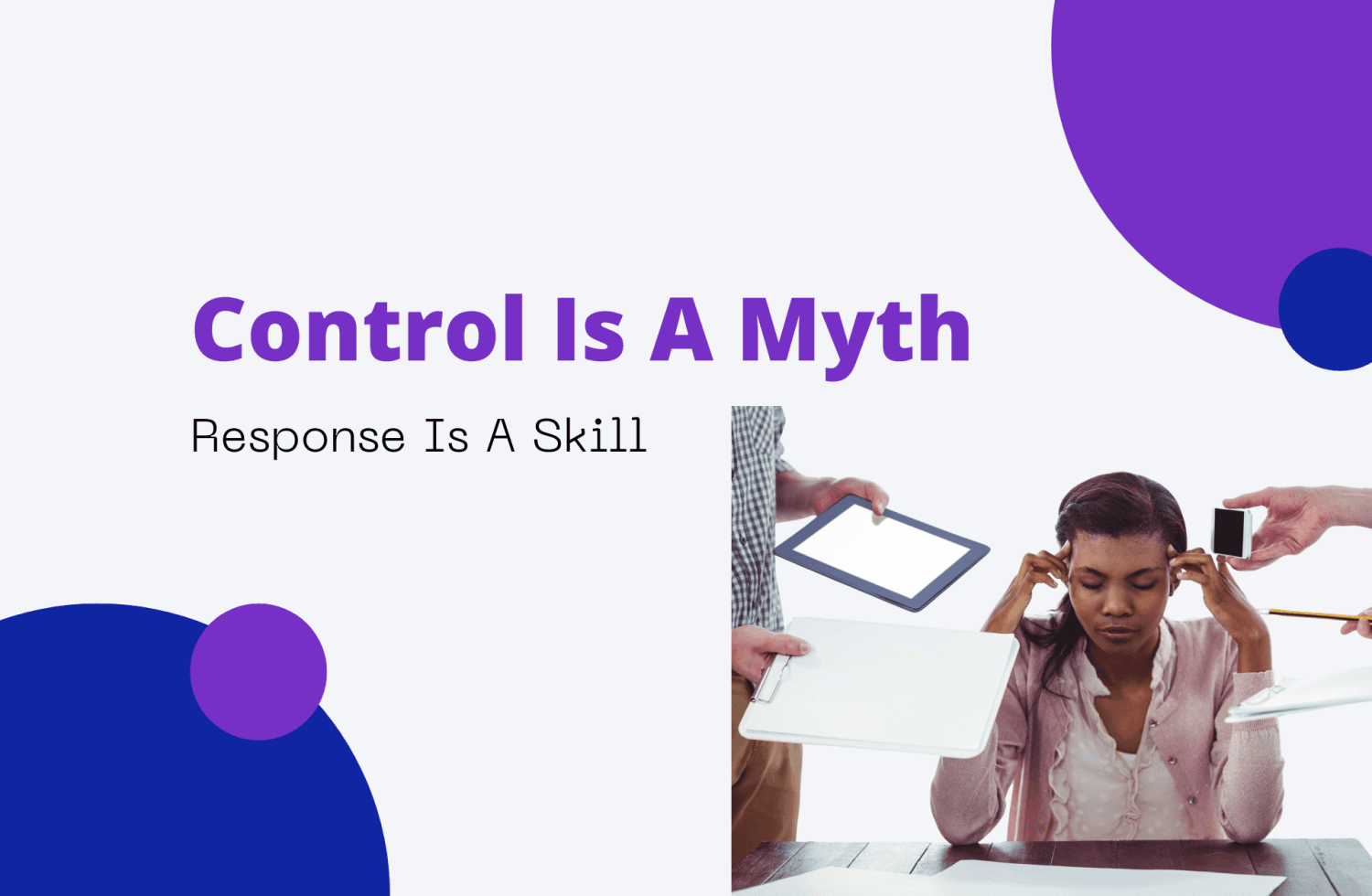
Here’s the truth: control is an illusion, but response is a skill.
You can’t stop people from saying what they say or doing what they do.
You can’t erase stress, tone, or pressure.
But you can train yourself to respond instead of react — and that’s where real strength begins.
This isn’t about pretending things don’t bother you.
It’s about understanding what triggers you, choosing your response, shifting your mindset, and practicing calm daily — until peace becomes your default setting.
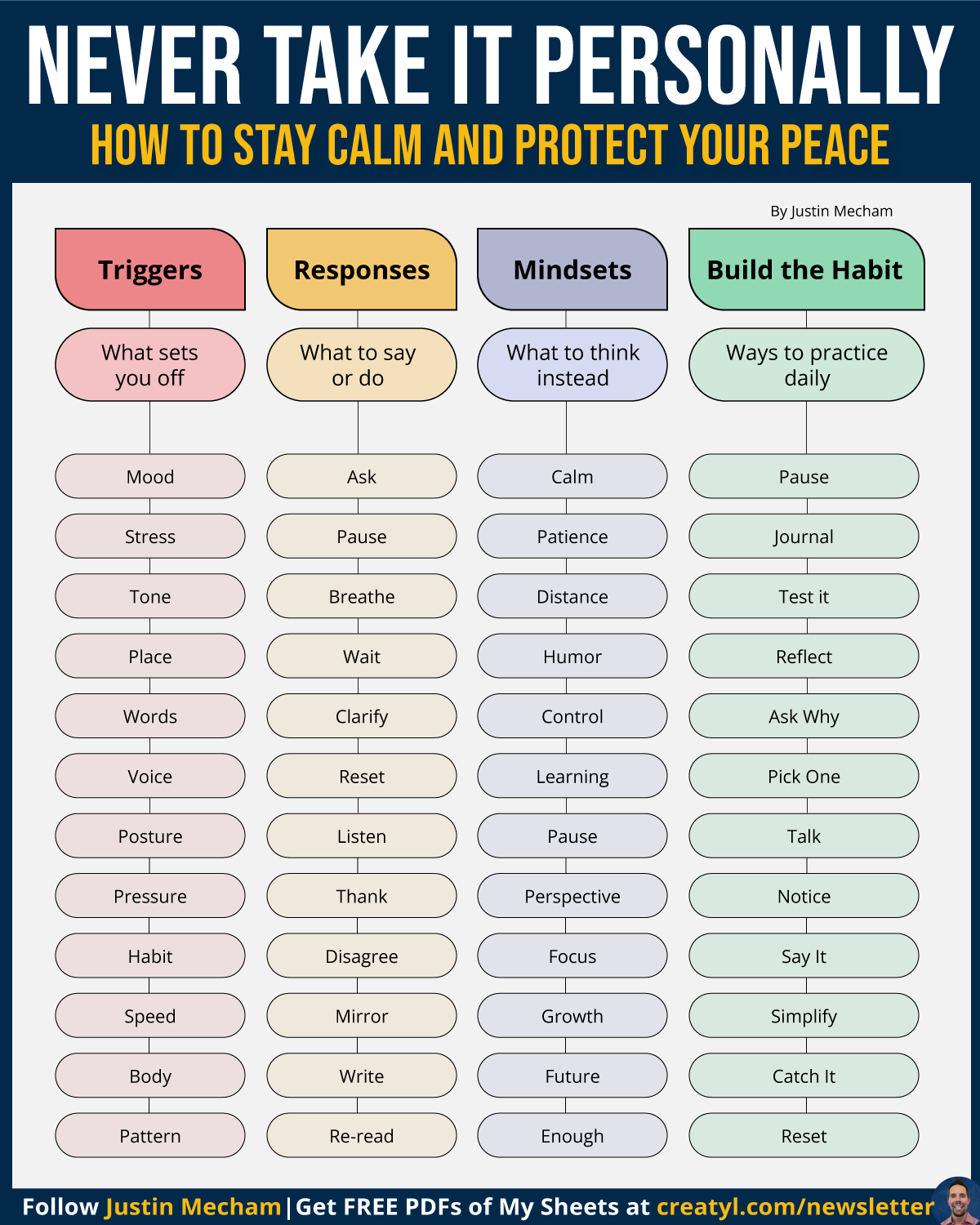
The Framework: How To Stay Calm And Protect Your Peace
The system is simple but powerful. It’s built on four connected parts that help you understand your emotional triggers and train your reactions over time.
1. Know Your Triggers
Every reaction starts with a trigger — something that sets off an emotional response before you even know it’s happening.
For some, it’s tone. For others, it’s pressure, habit, or speed.
A sharp word.
A dismissive look.
A pattern that feels familiar.
When you can name your triggers, you regain awareness before the emotion takes over.
The key is curiosity, not judgment.
Instead of thinking, “Why am I overreacting?” ask, “What is this touching in me?”
Common triggers:
- Words: The way something was said, not just what was said.
- Stress: Feeling cornered or overwhelmed.
- Habits: The same patterns that repeat with the same people.
- Pressure: Expectations that feel unfair or unspoken.
Awareness is the first step. You can’t change what you don’t see.
2. Shift Your Response
Once you recognize a trigger, the next move is to interrupt your autopilot.
That pause — the space between stimulus and response — is where peace lives.
The skill is simple:
- Pause. Even three seconds can save a conversation.
- Breathe. It sounds small, but it resets your nervous system.
- Ask, don’t assume. Clarity often replaces conflict.
- Listen, then respond. It’s hard to stay defensive when you’re focused on understanding.
You don’t have to say something wise in the moment. You just have to not say something you’ll regret.
The pause gives you power. It turns reaction into reflection.
Micro-drill to try today (10 seconds):
- Name it: “This is a trigger.”
- Pause it: One deep breath.
- Reframe it: “What else could this mean?”
You don’t control what others do.
You control the distance between what happens and what you choose to do next.
3. Change the Mindset
Emotional calm isn’t about avoiding discomfort — it’s about reframing it.
When you start to see triggers as information instead of irritation, everything shifts.
A stressful moment stops being an attack and starts being feedback. It shows you where you still react on autopilot.
Some powerful mindset shifts:
- Calm over control. You can’t control people. You can only manage your peace.
- Patience over power. Waiting before responding often gets better results.
- Distance over defense. Most blow-ups aren’t personal — they’re proximity.
- Perspective over pride. Ask: Will this matter in a week?
- Growth over grievance. Every moment you manage your reaction, you get stronger.
You don’t rise above emotion by ignoring it — you rise by understanding it, then choosing a better response.
4. Build the Habit
Calm isn’t a personality trait. It’s a muscle.
And like any muscle, it gets stronger the more you use it.
If you wait until you’re triggered to practice calm, you’ll lose every time.
You have to train peace daily, when you’re not in crisis.
Here’s how:
- Journal what triggers you — patterns reveal what awareness hides.
- Reflect after tense moments — not to criticize, but to understand.
- Simplify your days — fewer inputs mean fewer stress points.
- Reset often. Take five-minute pauses between meetings or transitions.
- Catch it early. When you feel tension rise, don’t let it run the show.
Over time, your default reaction shifts. The same words that once made you spiral now barely move you.
That’s the power of repetition: calm becomes instinct.
How I Helped a Team Protect Their Peace
A few months ago, I worked with a small team that had incredible talent — and constant tension.
The problem wasn’t ability; it was emotional energy.
Meetings often turned defensive.
Feedback felt personal.
One raised voice could derail collaboration for a week.
Everyone wanted to improve communication, but they were caught in cycles of reaction.
So we tried something simple: a “Response Reset Week.”
Here’s what we did:
- Day 1: Everyone listed their top three triggers. They shared them privately with me, not each other.
- Day 2: We practiced the “pause” — one deep breath before speaking in tense discussions.
- Day 3: Managers started feedback with curiosity instead of correction. (“Can you tell me what happened there?” instead of “Why did you do that?”)
- Day 4: Each person wrote one reflection after every meeting — what went well, what triggered them, and what they did differently.
- Day 5: We reviewed the week, focusing only on wins — moments where someone paused instead of reacting.
The result?
By week’s end, conversations slowed down.
People started clarifying instead of clashing.
The tone changed.
Not because the work got easier — but because the team learned to separate the situation from the story they told themselves about it.
That’s the real skill: knowing when something is about you, and when it isn’t.
Tools That Help You Build Calm
A few resources make this training easier — practical, relatable, and backed by psychology.
Book: Emotional Agility by Susan David
A powerful look at how to handle emotions with curiosity and compassion instead of control.
TED Talk: How to Make Stress Your Friend by Kelly McGonigal
A viral talk that reframes stress as something you can work with — not run from.
Podcast: The Calm Collective by Cassandra Eldridge
A thoughtful, reflective series about slowing down, finding inner steadiness, and responding with grace in real life.
AI Tool: Headspace AI or Calm
Both use AI-guided prompts to help you track emotional triggers and practice daily mindfulness. They make emotional fitness part of your normal routine.
The Deeper Reflection: Training Peace in a Reactive World
Your Power Is in the Pause
The world rewards speed — quick replies, fast decisions, instant reactions.
But the truth is, speed without self-awareness leads to regret.
Calm is not the absence of emotion. It’s the mastery of it.
You can’t silence every trigger, but you can refuse to let it decide who you become in the moment.
When you start practicing this daily — naming your triggers, pausing, breathing, reframing — you begin to notice something profound: peace isn’t fragile anymore. It’s durable.
You stop being at the mercy of moods, stress, or tone. You stop matching other people’s chaos with your own.
And in that stillness, you start to see clearly.
You speak more thoughtfully. You work more steadily. You lead with more clarity.
The calmest person in the room isn’t detached — they’re just not owned by the moment.
That’s not control.
That’s peace built from practice.
Download the Infographic
Want to keep this system handy as a reminder?
You can download the Never Take It Personally: How to Stay Calm and Protect Your Peace infographic as a free, printable PDF below.
Click here to download the infographic PDF
Keep it close — on your desk, on your phone, or wherever tension tends to find you.
It’s a visual cue that calm isn’t a reaction. It’s a choice you can make every day.